A SEARCH FOR GOLD HAS TAKEN AN UNEXPECTED TURN!
Rick and Marty Lagina returned to the Money Pit believing that previous underground signals could finally lead them toward something extraordinary.
But instead of a straightforward treasure recovery, Season 14, Episode 3, “The Golden Ratio,” has exposed a mystery that could be even more important: an apparently undocumented underground passage nearly 137 feet beneath Oak Island.
While sensational gold-bar speculation captures attention, the real discovery raises a much bigger question.
WHAT IF THE TEAM HAS FOUND AN UNEXPECTED ROUTE LEADING TOWARD THE ORIGINAL TREASURE VAULT?
THE GOLDEN RATIO SHOCK — RICK LAGINA’S SEARCH FOR BURIED GOLD REVEALS SOMETHING NOBODY EXPECTED
The Money Pit has never surrendered its secrets easily.
For more than two centuries, treasure hunters have pursued the possibility that an extraordinary fortune remains concealed beneath Oak Island.
Some have sacrificed their resources, others have lost years of their lives, and countless investigations have ended with more unanswered questions than definitive results.
But Rick Lagina has never abandoned the possibility that the biggest discovery is still waiting.
In Season 14, the Fellowship returns to the heart of the Money Pit with an important objective: investigate previously detected gold indications deep underground.
The team’s attention turns toward the area surrounding exploratory shaft RP1, where earlier investigations have identified unusual underground features and water-filled voids.
The expectation is straightforward.
If gold has genuinely been detected at depth, the team needs to determine where those indications originate and whether they correspond to anything physically significant.
Yet the operation quickly becomes more complicated.
Instead of simply following a promising gold signal, Rick encounters evidence of another underground feature that appears to be missing from the historical records.
A possible tunnel.
And its reported position makes the discovery particularly intriguing.
According to the episode investigation, the suspected passage lies approximately 137 feet underground, less than five feet from the RP1 caisson.
Think about that for a moment.
For generations, treasure hunters have concentrated their attention on the Money Pit, excavating and drilling in an effort to reach whatever might have been concealed beneath it.
Yet a potentially important underground passage may have remained undocumented in the plans available to researchers.
Could previous explorers have overlooked it?
Was it created during an earlier excavation operation, or does it belong to a much older phase of activity on Oak Island?
And most importantly, where does it lead?
Rick knows that identifying an underground anomaly is only the beginning.
The team needs to establish whether the feature is actually a constructed tunnel, determine its direction, and investigate its relationship with the surrounding structures.
Still, the timing is remarkable.
The Fellowship entered the Money Pit searching for evidence connected to gold.
Instead, the operation has introduced a new possibility that could completely change how researchers approach the legendary treasure location.
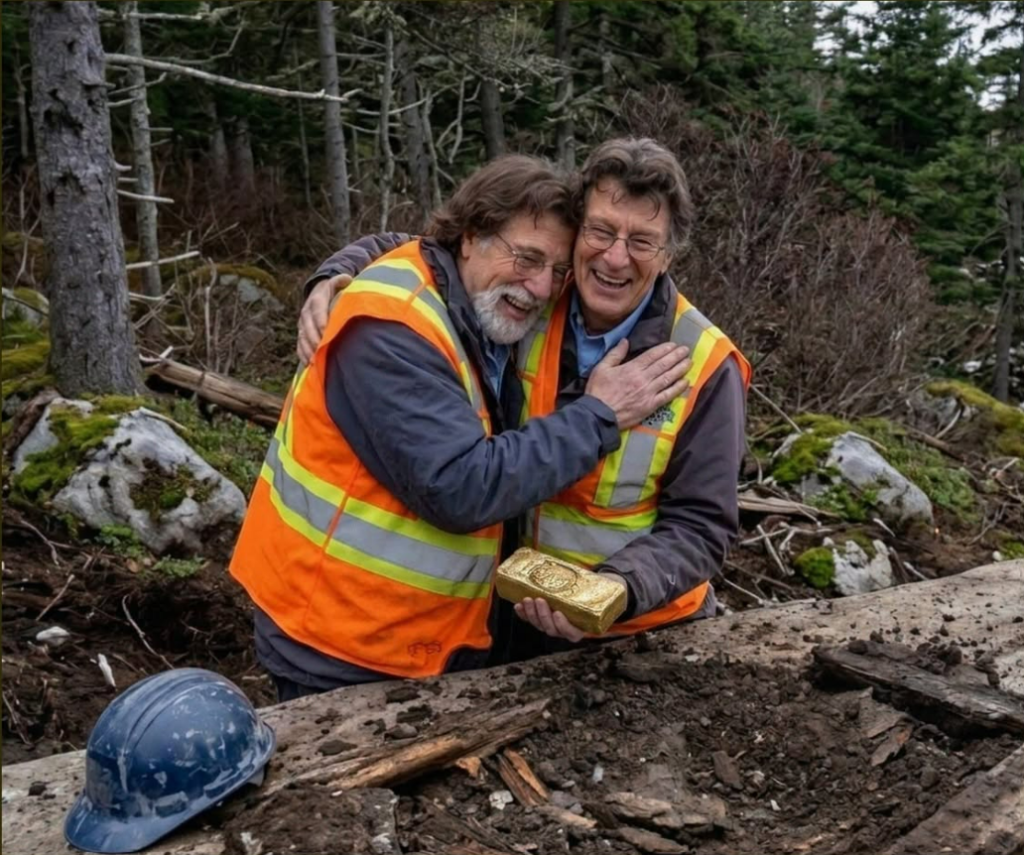
The gold-bar story circulating among fans would certainly be an extraordinary revelation.
However, neither HISTORY’s episode description nor the detailed Episode 3 recap confirms that a solid gold bar was recovered.
What the investigation has actually revealed is potentially just as fascinating.
An unexplained underground passage that nobody on the team can immediately account for.
And the historical records surrounding the Money Pit may contain an important clue to its identity.
THE 137-FOOT UNDERGROUND TUNNEL — A FORGOTTEN CONNECTION TO THE ORIGINAL MONEY PIT?
The most extraordinary part of the discovery emerges when Doug Crowell and Rick Lagina begin examining historical documents.
Their investigation turns toward the records of the Oak Island Treasure Company and its previous excavation attempts.
One historical operation becomes particularly important: Shaft E, which was excavated during the 1890s in an attempt to reach the legendary Chappell Vault.
According to the historical plans discussed in the episode, Shaft E was driven toward a vault reportedly encountered by Frederick Blair’s drilling operation in 1897.
The old drilling record placed that reported vault at approximately 153 feet.
But the operation encountered a familiar Oak Island problem.
Water.
The shaft flooded before the company could reach its intended target.
Historical drawings also indicated another deeper flood tunnel approaching from the southern shoreline.
However, Doug’s research found no additional documented tunnel corresponding to the newly identified feature near RP1.
This raises an extraordinary possibility.
Could the team have encountered a passage that earlier researchers never properly recorded?
If the tunnel is original construction, its relationship to the Money Pit could be enormously important.
It might represent part of an earlier underground water-management system, an abandoned excavation route, or another constructed feature whose original purpose has been lost.
The direction of the passage becomes the next major challenge.
Surveyor Steve Guptill proposes drilling another hole several feet to the south to intersect the suspected tunnel again.
The objective is to establish its orientation.
A single intersection can identify a possible underground void, but additional drilling points could help researchers determine whether the feature continues in a consistent direction.
In the episode, the subsequent borehole reaches the expected depth.
The recovered core material contains the same unusual slushy clay observed in the earlier investigation.
There is no wood in this sample, but the arrangement of the clay suggests to Rick that the space may once have been open and allowed water to move through it.
That observation is extremely important.
If an actual passage existed, it could help explain some of the complicated water movement that has challenged investigators throughout the Money Pit’s history.
Could it connect to another section of the underground system?
Might it represent part of an older drainage arrangement?
Or could it be related to one of the flood tunnels described in the historical records?
The team still needs additional intersections to establish its direction and extent.
Rick therefore wants further drilling, with the next targets adjusted toward approximately 150 feet.
This is where the investigation becomes particularly exciting.
For years, the Fellowship has wondered whether the Money Pit contains structures that previous excavations never fully understood.
Now, a possible undocumented passage has given the team another target that can be investigated through modern drilling and geological analysis.
And the implications extend beyond the immediate search for gold.
Imagine if researchers could establish that the passage was deliberately constructed during a period preceding the modern treasure hunt.
That would create an entirely new historical question.
Who built it?
What purpose did it serve?
Was it intended to carry water, provide access, or protect something concealed nearby?
And could its direction lead toward a location that has never received the attention it deserves?
The tunnel has not yet revealed its destination.
But the possibility that it represents an overlooked part of the original underground system is enough to keep the entire Fellowship focused on the Money Pit.
Meanwhile, another discovery on Lot 5 is introducing an equally fascinating historical mystery.
BEYOND THE MONEY PIT — THE STONE WELL, NOLAN’S CROSS AND A POSSIBLE CONNECTION TO MEDIEVAL HISTORY
The most remarkable aspect of “The Golden Ratio” is that the underground tunnel is not the only development demanding attention.
While the Money Pit investigation continues, the Fellowship is also examining historical structures and archaeological clues elsewhere on Oak Island.
On Lot 5, Jack Begley and Craig Tester return to a mysterious stone feature discovered near the shoreline.
Initially, it appears to resemble a wall or another type of stone construction.
But after the team removes water from the structure, something unexpected becomes visible.
The stones turn around a corner and curve inward.
The feature is not simply a wall.
It appears to be a circular, stone-lined well extending farther underground.
Rick immediately recognizes another reason to investigate it.
Its appearance resembles the well discovered on Lot 26, where a twig recovered from the bottom was previously dated to approximately 1028–1172 AD.
Could the two structures represent similar periods of activity?
That possibility would be extraordinarily interesting, although the Lot 5 well requires its own archaeological examination and dating before any historical connection can be established.
Marty sees another reason to believe that Lot 5 may have served as an important encampment.
But the archaeologists are careful.
Before investigating the interior further, Laird Niven emphasizes the need to remove loose stones and stabilize the surrounding structure.
The well could contain fragile evidence that needs to be preserved.
Then comes another fascinating development in the War Room.
Oak Island researcher Corjan Mol and researcher Chris Morford present their latest work examining the relationship between dated artifacts and Nolan’s Cross.
Their analysis identifies a smaller concentration of artifact dates between approximately 1200 and 1250 AD.
That period is particularly intriguing because it overlaps with the proposed date for Nolan’s Cross developed by Italian archaeoastronomer Professor Adriano Gaspani in 2022.
The researchers then introduce a historical comparison involving Montsaunès, a former Knights Templar commandery in southern France.
Its church contains medieval artwork and geometric patterns that the researchers believe have intriguing similarities to the design of Nolan’s Cross.
One element attracts particular attention: a grid of five by eight squares, with a three-by-three section marked in one corner.
Chris Morford explains how the pattern can be connected to a golden spiral and then compared with the arrangement of Nolan’s Cross.
When the proposed geometry is overlaid onto the island’s formation, it produces several possible excavation locations.
Marty is immediately interested in having new targets to investigate.
Rick wants to test the theory through physical excavation.
And the first test leads the team back to Lot 8.
At a selected corner of the proposed geometric arrangement, Gary Drayton detects another unusual metal object before the excavation begins.
Then Billy Gerhardt’s heavy equipment exposes a pocket of dark material beneath the surface.
Archaeologist Fiona Steele identifies the material as rock that appears to have been cracked and blackened by intense heat, raising the possibility of historical industrial activity.
Samples are collected for laboratory analysis.
Rick begins wondering whether the feature could represent an old signal fire associated with the proposed geometric arrangement.
The dating of the material becomes the next important question.
Could the fire have been connected to the construction or use of the surrounding features?
Or will laboratory analysis reveal a completely different explanation?
These are precisely the kinds of questions that make Season 14 so compelling.
The Money Pit may hold an unexplained underground passage.
Lot 5 has revealed another mysterious stone-lined well.
And the geometric investigation surrounding Nolan’s Cross has produced new locations that the Fellowship can test through excavation.
Suddenly, the island’s discoveries appear to be creating several interconnected historical investigations.
But the team still has to prove that these features belong to the same story.
A geometric resemblance does not establish Templar involvement.
An underground passage does not automatically indicate a treasure vault.
And evidence of intense heat does not independently identify the people who created it.
The next laboratory results and archaeological examinations will be essential.
For Rick and Marty, however, these discoveries provide another reason to continue.
The search is no longer simply about finding a mysterious object and declaring victory.
It is about understanding the underground structures, the people who may have built them, and the historical events that could explain why Oak Island became such an extraordinary place.
A gold signal brought the Fellowship back to the Money Pit.
An undocumented tunnel has now introduced a new mystery nearly 137 feet underground.
And the discoveries on Lot 5 and Lot 8 may offer additional clues about an unexpectedly complicated historical past.
The gold bar remains an unverified claim.
But the most important question may be much bigger:
If this hidden passage really belongs to an older underground system, what was it connected to—and could it finally lead Rick Lagina closer to the treasure vault that generations of explorers have failed to reach?