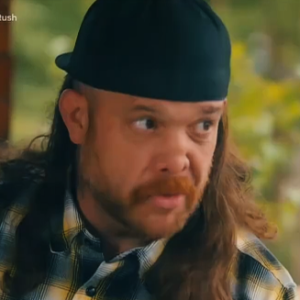
Gold Rush Season 17 just pushed fan-favorite underdog Rick Ness into a suffocating battle for credibility inside his own camp—where his biggest obstacle in Episode 8 wasn’t frozen permafrost or rival bosses, but a skeptical crew refusing to buy into his Snake River Cut gamble. Standing on the edge of committing thousands of dollars in fuel, road construction, and heavy stripping before seeing a single ounce of gold, Rick’s team drew a hard line in the Yukon mud: no more gut feelings—prove it with cold, hard numbers or risk burying the entire season.
With time bleeding away before winter frost locks the valley solid, Rick was forced into a nerve-shredding proving test plagued by unreliable machinery, a mysterious cosmic omen, and razor-thin financial math that held the fate of his entire operation in the balance.
A Skeptical Crew Demands Proof Before Spending Another Dime
Inside a lean, margin-starved operation like Rick Ness’s camp, opening a brand-new cut isn’t as simple as sinking an excavator bucket into fresh gravel. Stripping away thousands of yards of barren overburden, carving access roads, and hauling heavy wash plants into position drains massive capital and irreplaceable weeks before the first flake ever hits the sluice box. If the paydirt beneath Snake River turned out to be barren, that investment would vanish into an insurmountable financial hole.
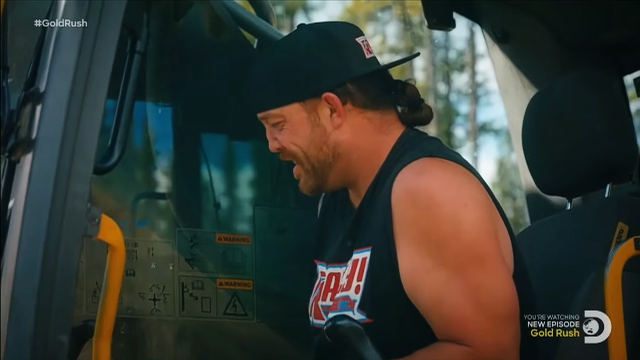
Burned by past setbacks and acutely aware of how little autumn daylight remained, Rick’s crew refused to march blindly on hope alone. To win back their belief and unlock the cut, Rick had to dig six scattered test holes—pulling three yards of dirt from each across wide sections of the ground to prove whether gold ran consistently or existed only in one lucky pocket.
Mechanical Sabotage Strikes Mid-Test—Until Curtis Demeyer Saves the Day
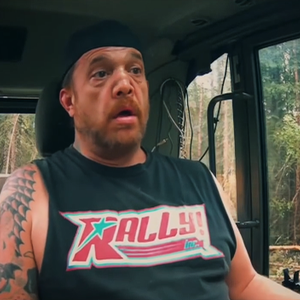
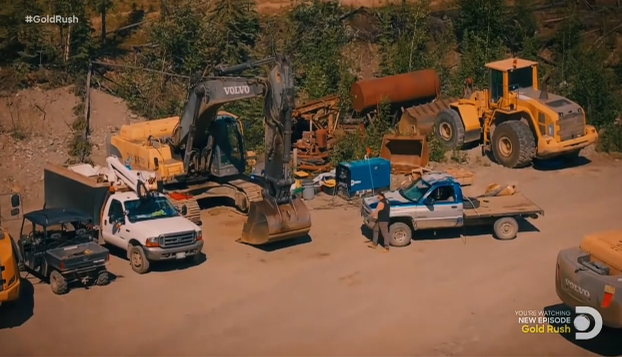
Just as Rick’s make-or-break test got underway, the fragile reality of running aging, high-hour iron struck with brutal timing: his excavator broke down right in the middle of the sampling run.
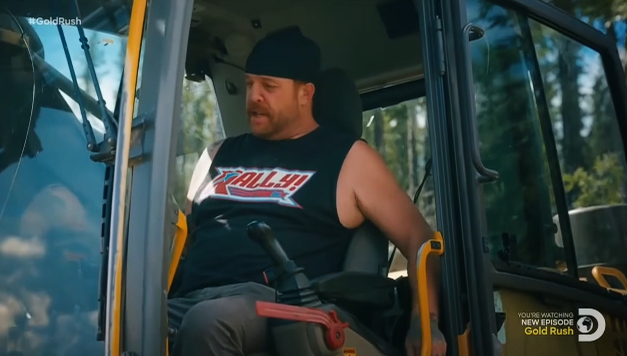
In an operation already operating on borrowed time, a dead excavator threatened to wipe out an entire day of critical testing while leaving his crew’s doubts festering overnight. Stepping straight into the fire was new mechanic Curtis Demeyer—whose rapid field repair got the machine roaring back to life, only for the crippled rig to fail a second time moments later. Refusing to let the test die, Curtis dove back under the iron and pulled off a second lightning-fast fix, limiting total downtime to roughly one single hour. That high-tension rescue exposed how dangerously fragile Rick’s machinery remains—and proved that without Curtis Demeyer’s wrench work, the entire Snake River test could have collapsed before yielding a single answer.
The Mysterious “AU” Omen and the $60,000-a-Day Verdict
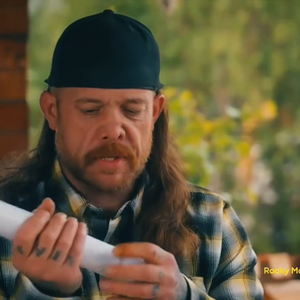
With the sample gravel finally fed through a compact test trommel, Rick spotted something startling staring back at him from the dirt: an old bottle stamped with the letters “AU”—the exact chemical symbol for gold. For a battle-weary mine boss fighting uphill against impossible odds, the discovery felt like a powerful spiritual sign from the universe whispering that fortune waited beneath his boots.
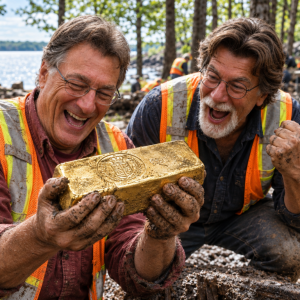
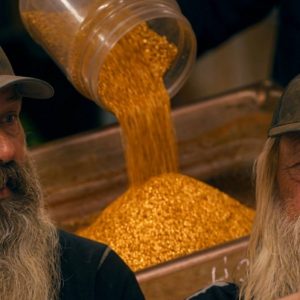
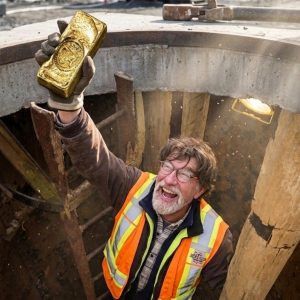
Yet in the unforgiving Klondike, cosmic signs don’t pay diesel bills—only the scale does. When the official cleanout numbers finally hit the table, the verdict landed at 1.2 ounces of gold per 100 yards. At roughly $5,000 per ounce, that modest-sounding figure translates to $6,000 for every 100 yards washed—meaning if Rick can push 1,000 yards a day, Snake River can generate $60,000 in daily gold before operating costs. It isn’t a monster bonanza like Tony Beets’ Midas Cut, yet for a tight, hungry crew fighting to survive, it is enough to cover fuel, pay off iron, and turn a real profit. Armed with undeniable proof, Rick Ness made the call: Snake River Cut is officially a go.