After centuries of searching beneath Oak Island’s mysterious landscape, Rick and Marty Lagina may be facing a possibility that challenges everything they thought they knew about where the island’s greatest secrets were hidden.
As intriguing developments at Lot 5 and the Money Pit renew hopes for a historic breakthrough, an emerging Knights Templar theory raises the possibility that an extraordinary piece of the puzzle could lie astonishingly close to the surface.
But the most unsettling question is not simply what might be buried there, but whether a long-overlooked connection could finally lead investigators toward the legendary fortune that generations have failed to recover.
The SHOCK Beneath Lot 5: Could a Forgotten Templar Secret Be Hiding Just Three Feet Underground?
For more than two centuries, Oak Island has challenged treasure hunters with a mystery built around extraordinary depths, mysterious tunnels, and the possibility of immense riches concealed beneath the earth.
Yet the latest direction of the Season 14 investigation raises a possibility that could turn one of the island’s most enduring assumptions completely upside down.
What if an important clue to the legendary treasure was not hidden hundreds of feet below the Money Pit, but buried only three feet beneath the surface?
That provocative possibility has become part of the growing speculation surrounding Lot 5, where archaeological discoveries have already encouraged investigators to reconsider the island’s earliest history.
The area’s unusual stone features, foundations, and recovered artifacts have created an increasingly complicated picture of human activity that may predate the famous treasure searches.
For Rick Lagina, whose fascination with the island began decades before the arrival of television cameras, these discoveries represent something far more meaningful than another collection of curious objects.
They offer a possible route toward identifying the people who occupied Oak Island before its legendary Money Pit entered the historical record.
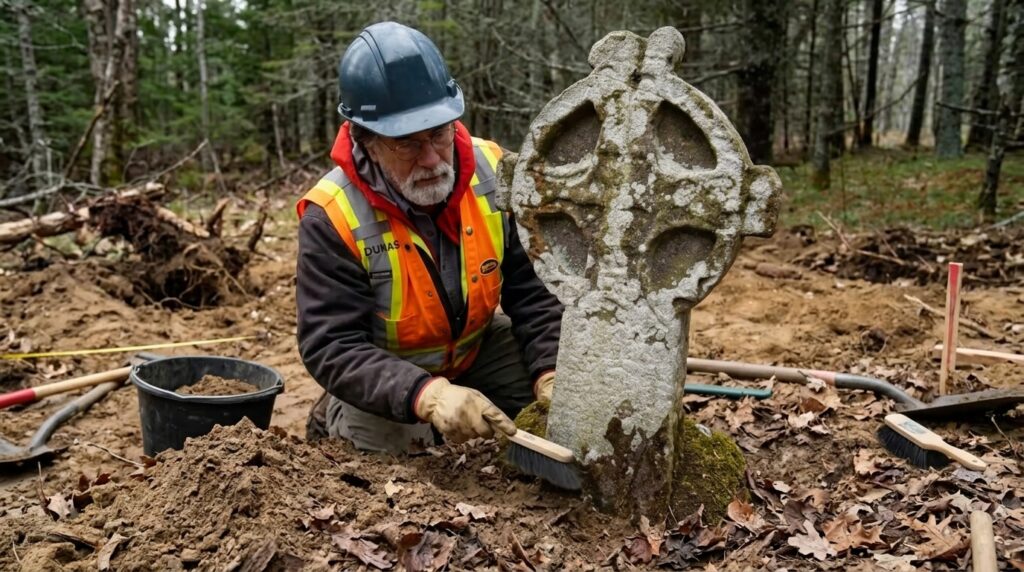
The Knights Templar theory has long occupied a particularly controversial position within that search, connecting the mysterious medieval order with the possibility of valuable objects transported across the Atlantic.
Now, anticipation surrounding new discoveries at Lot 5 has renewed questions about whether physical evidence might eventually support some connection to that remarkable historical narrative.
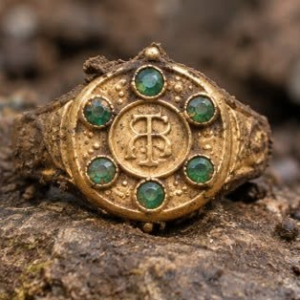
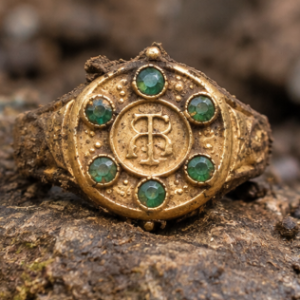
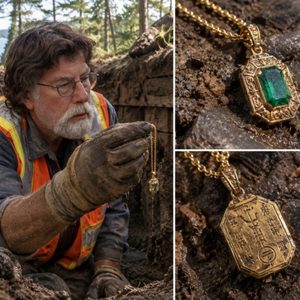
One particularly dramatic possibility concerns an unidentified relic lying approximately three feet underground, a depth so shallow that its discovery would seem almost unbelievable after generations of deep excavation.
Although no authenticated Templar artifact matching that description has been publicly confirmed, the scenario illustrates why even relatively shallow archaeological investigations can carry enormous historical significance.
If an object with verifiable medieval origins were discovered in a securely documented archaeological context, it could challenge established assumptions about the timing of certain activities on the island.
But identifying an artifact as genuinely connected to the Knights Templar would require far more than an unusual shape, mysterious symbol, or resemblance to medieval craftsmanship.
Its age, origin, archaeological surroundings, and historical connections would all need to withstand careful examination before such an extraordinary interpretation could be established.
That uncertainty creates the tension surrounding Lot 5, where every newly exposed feature could either strengthen an ambitious historical theory or reveal a far more ordinary explanation.
For the Lagina brothers, the stakes are especially high because the search has reached a point where understanding the island’s earliest visitors may be just as important as locating the treasure itself.
And if Lot 5 eventually produces convincing evidence of a previously unknown medieval presence, the investigation could enter an entirely different chapter.
The TEMPLAR CONNECTION: Could Lot 5 Reveal the Missing Path to the Money Pit?
The most captivating aspect of the emerging mystery is the possibility that Lot 5 and the Money Pit are not separate archaeological puzzles, but fragments of a much larger historical story.
For years, the Money Pit has remained the emotional and geographical center of the treasure hunt, drawing enormous resources toward its mysterious underground structures.
Yet repeated discoveries elsewhere on the island have challenged the assumption that every important answer must be located directly beneath that legendary excavation site.
Lot 5 has become particularly significant because its unusual features suggest that activities on this part of Oak Island may deserve an entirely different historical interpretation.
If investigators eventually establish a credible relationship between discoveries at Lot 5 and the deeper structures around the Money Pit, the implications could be extraordinary.
Such a connection might help explain whether different parts of the island served related purposes during a period of organized human activity.
The Knights Templar theory offers one possible interpretation, rooted in the enduring legend that members of the medieval order transported valuable religious objects or treasure beyond Europe.
Following the suppression of the order during the early fourteenth century, countless stories emerged about the possible fate of its wealth and sacred possessions.
Some Oak Island theorists have proposed that a group connected to the Templars could have crossed the Atlantic and concealed valuable cargo in an isolated location.

However, historians have not established that the medieval Templars visited Oak Island, and the theory remains a speculative explanation rather than a verified chapter of its history.
The discovery of a genuinely medieval object would not automatically prove the Templar connection, but it could justify further examination of early Atlantic contacts.
What makes the possibility especially intriguing is the idea that the most important artifact might function as a historical signpost rather than a valuable object in its own right.
A small fragment, carved stone, or architectural remnant could potentially reveal how an unfamiliar group used the island and whether other locations were involved.
If a credible connection emerged between Lot 5 and the Money Pit, investigators might begin to reconstruct movements across the island that have remained hidden for centuries.
That would transform the significance of the archaeological work, turning scattered discoveries into possible evidence of a broader, organized operation.
For Marty Lagina, who has openly acknowledged moments of uncertainty about continuing the search, such a development could provide powerful motivation to keep investigating.
For Rick, it would offer something equally meaningful: the possibility of moving beyond isolated clues toward a more complete understanding of the island’s mysterious origins.
But the theory also carries an uncomfortable risk, because the more ambitious the historical interpretation becomes, the stronger the evidence required to support it.
A remarkable-looking artifact could generate enormous excitement while ultimately proving unrelated to the medieval order or the Money Pit.
And that uncertainty leaves the team confronting a familiar Oak Island dilemma, where the promise of an extraordinary breakthrough must compete with the possibility of another frustrating dead end.
Yet one question continues to drive the investigation forward: if the island’s earliest secrets truly began at Lot 5, could they eventually point toward something much larger beneath the Money Pit?
The $50 MILLION TREASURE Mystery: Is Oak Island Approaching Its Most Important Turning Point?
The possibility of a connection between medieval activity, Lot 5, and the Money Pit inevitably revives the most tantalizing question surrounding Oak Island’s extraordinary history.
Could the island still conceal a fortune of such immense value that its discovery would transform one of the world’s most famous treasure mysteries?
Speculation about a treasure worth $50 million offers a dramatic illustration of what is at stake in the public imagination, although no verified discovery establishes that amount.
For generations, estimates of Oak Island’s supposed wealth have depended on legend, disputed historical accounts, and theories about what unknown visitors might have concealed.
The possibility of Templar involvement adds another layer of fascination because the medieval order has long been associated in popular mythology with lost riches and sacred objects.
But the true significance of any authenticated medieval discovery would extend far beyond the financial value of whatever treasure might eventually be recovered.
It could provide evidence capable of reshaping the island’s historical timeline and challenging assumptions about the identities of its earliest visitors.
That possibility gives the continuing investigations at Lot 5 and Money Pit an urgency that cannot be measured through excavation costs alone.
Every structure examined and every artifact recovered offers another opportunity to determine whether the island’s scattered mysteries belong to a coherent historical narrative.
The upcoming developments in Season 14 are expected to bring renewed encouragement to the team, particularly as discoveries in both locations intersect with intriguing historical research.
However, the actual nature of those findings remains unrevealed, leaving questions about their age, significance, and relationship to one another unanswered.

For the Lagina brothers, this uncertainty creates a difficult emotional balance between renewed confidence and the knowledge that Oak Island has disappointed generations of treasure hunters before them.
After years of massive excavations and increasingly sophisticated scientific analysis, the greatest breakthrough might emerge from a place that earlier investigators underestimated.
Perhaps the next important clue will be discovered deep beneath the Money Pit, where mysterious structures have frustrated attempts to uncover their original purpose.
Or perhaps it will come from the shallow ground of Lot 5, where an ordinary-looking object could open an extraordinary investigation into the island’s medieval theories.
Either possibility could influence how the team interprets discoveries made elsewhere and where they choose to concentrate future excavations.
If convincing evidence eventually connects the two locations, the search might shift from chasing individual anomalies toward reconstructing a deliberate sequence of historical events.
But if the discoveries prove unrelated, the fellowship could face another painful reminder of how easily Oak Island’s mysteries resist even the most determined attempts at explanation.
For Rick and Marty, that is the extraordinary gamble at the heart of Season 14, where every promising lead carries the possibility of changing everything or delivering another disappointment.
The existence of a $50 million treasure remains unproven, and the suggested Templar relic has yet to be authenticated as a genuine discovery.
Nevertheless, the possibility of unlocking an ancient historical connection continues to give the search its extraordinary emotional and intellectual appeal.
Because the greatest revelation may not be a fortune hidden beneath the island, but the discovery of who first created its mysterious structures and why.
And if the clues emerging from Lot 5 and the Money Pit eventually converge, the brothers could find themselves confronting an astonishing possibility that has haunted Oak Island for centuries.
The answer they have spent so long pursuing might be closer than anyone imagined, while the most important part of the island’s story remains buried just beyond their reach.