Deep beneath the Polish countryside, Josh Gates and the Expedition Unknown team enter the vast Międzyrzecki Rejon Umocniony, or MRU, a World War II tunnel network built by Nazi Germany. What begins as a search for stolen wartime treasure quickly becomes a dangerous journey through flooded passages and collapsed chambers. Then the team uncovers an old wooden-and-glass picture frame, raising a tantalizing question: could these forgotten tunnels once have been used to hide valuable artwork as the Third Reich collapsed?
The Tunnels Were Built for War — But Their Darkest Secrets May Have Come Later
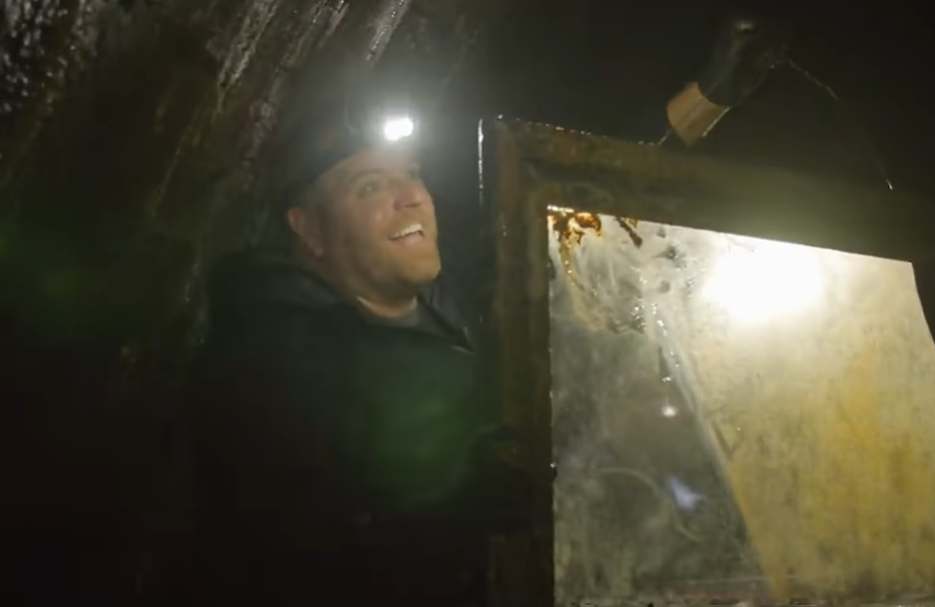
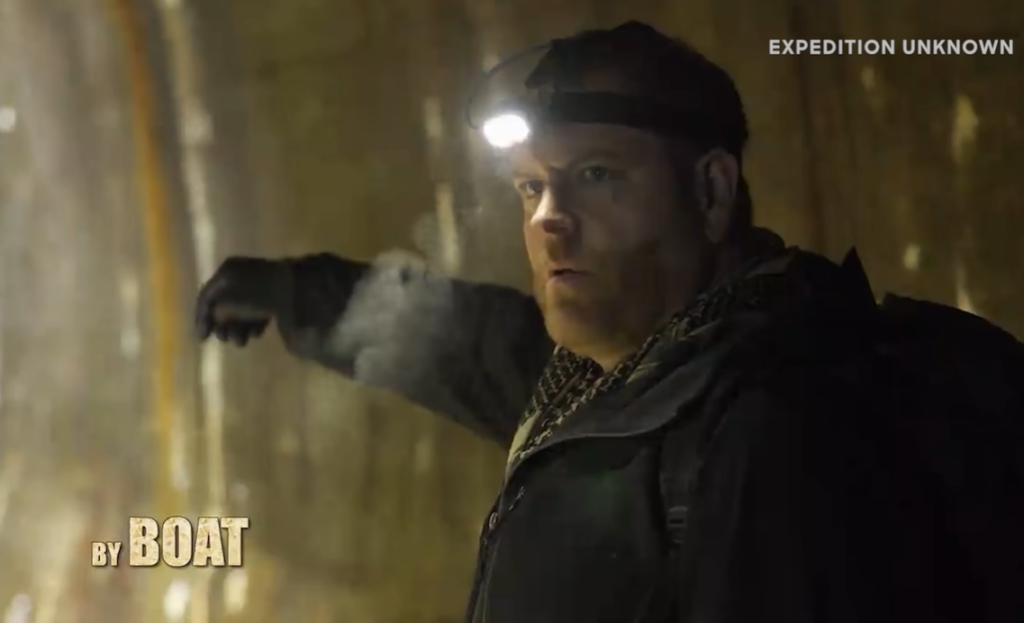
The MRU does not look like the kind of place where history would quietly disappear. Beneath the forests of western Poland lies an enormous defensive network built by Nazi Germany, with tunnels, bunkers, and underground structures stretching across the landscape. The scale is difficult to comprehend. What appears to be ordinary countryside above ground conceals an entirely different world below it. Discovery has described the network as a vast underground system, while episode material places Josh Gates deep inside it, pursuing evidence connected to Nazi weapons programs and wartime plunder.
That contrast is part of what makes the investigation so gripping. Above ground, the war is long gone. Below ground, its physical footprint remains. The tunnels are dark, isolated, and in many places unstable. Water has accumulated in abandoned sections, ceilings have collapsed, and rusting structural elements remind anyone entering them that these were never ordinary passageways. They were engineered for a war that ended nearly eight decades ago, then left behind to decay in silence.
But Gates is not entering the MRU simply to explore a military relic. The deeper question concerns what may have happened inside these tunnels during the final months of the Third Reich. The episode examines the possibility that underground facilities were connected to secret wartime projects and that stolen art and other valuable material may have been moved or concealed there. Discovery has explicitly framed the episode around the search for Nazi-plundered art and treasure.
That possibility gives the tunnels a second identity. They were built as a defense system, but they may also have become a refuge for things the Nazis wanted hidden from advancing Allied forces.
And that is where the mystery begins.
Inside the MRU, the Environment Becomes an Enemy
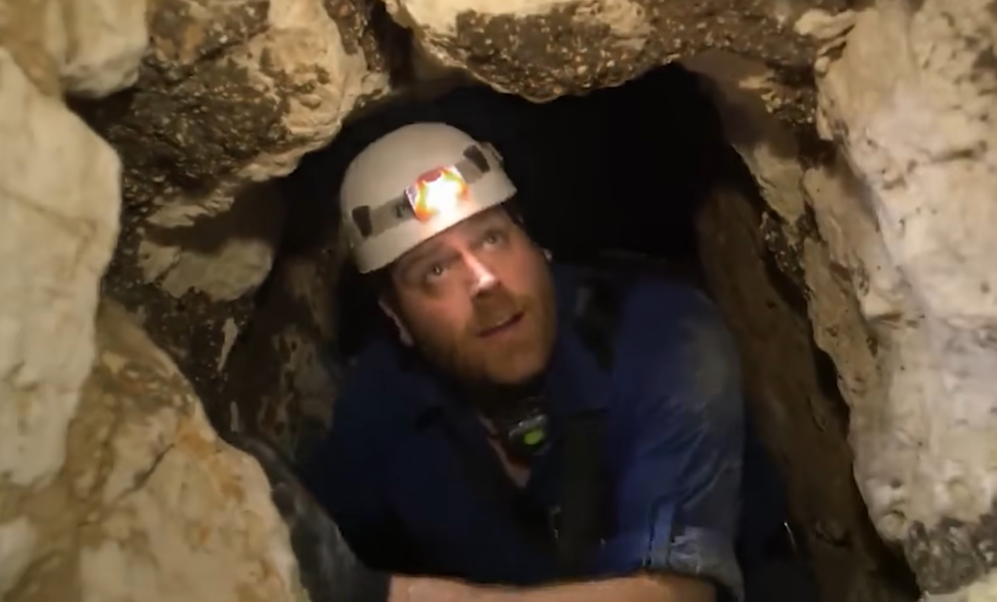
There is something unsettling about entering an abandoned underground complex nearly eighty years after its original purpose disappeared. The danger is not dramatic in the conventional sense. It is quieter than that. The ceiling may have weakened. Steel supports may be corroded. Water can conceal holes and debris. A passage that once had a clear purpose may now end suddenly in a collapse.
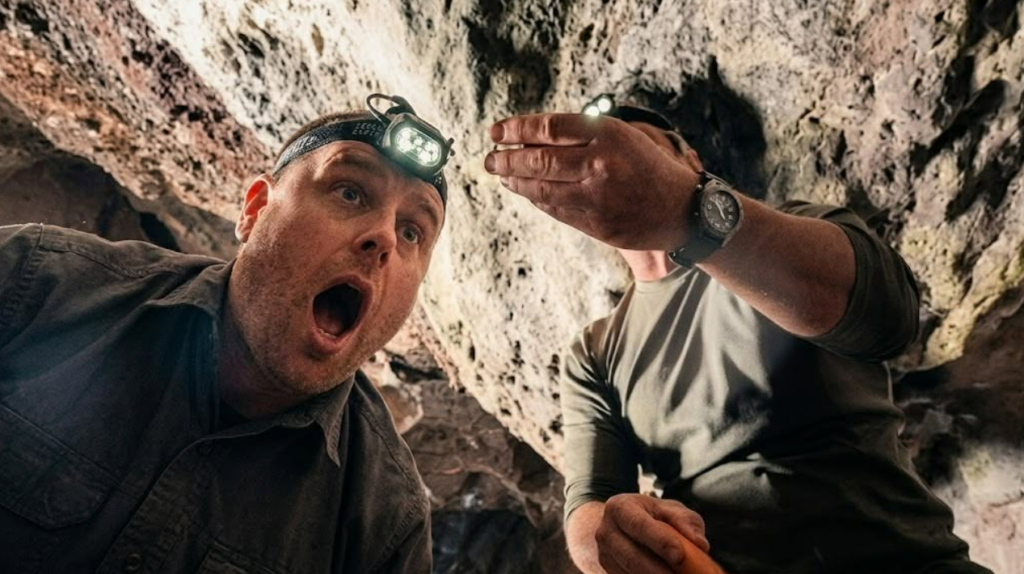
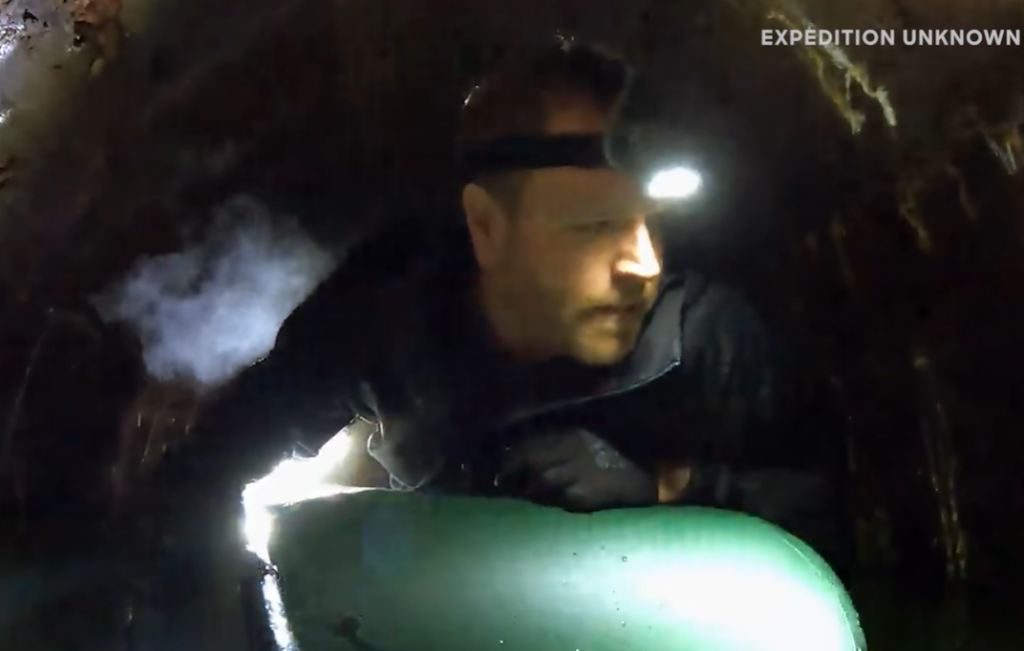
In the episode, Gates and his team encounter precisely that kind of environment. At one point, a section of the tunnel system is found to have collapsed, blocking further progress. Yet even that apparent failure produces an important discovery: the team has reached a portion of the MRU that had not previously been documented in this way. Gates uses advanced 3D scanning technology to map the chambers before leaving, creating a digital record that can help researchers continue the search beyond the collapse.
That moment captures something essential about real exploration. A mission does not have to end with the treasure to be successful. Sometimes discovering where the road stops is itself valuable.
The MRU investigation becomes a story of patience rather than instant gratification. Gates cannot simply force open every sealed section. He has to work with the evidence the tunnels allow him to collect. Every photograph, scan, structural detail, and artifact becomes part of a larger historical puzzle.
And then the team finds something unexpectedly personal.
A picture frame.
The Picture Frame May Be Small, But the Question Behind It Is Huge
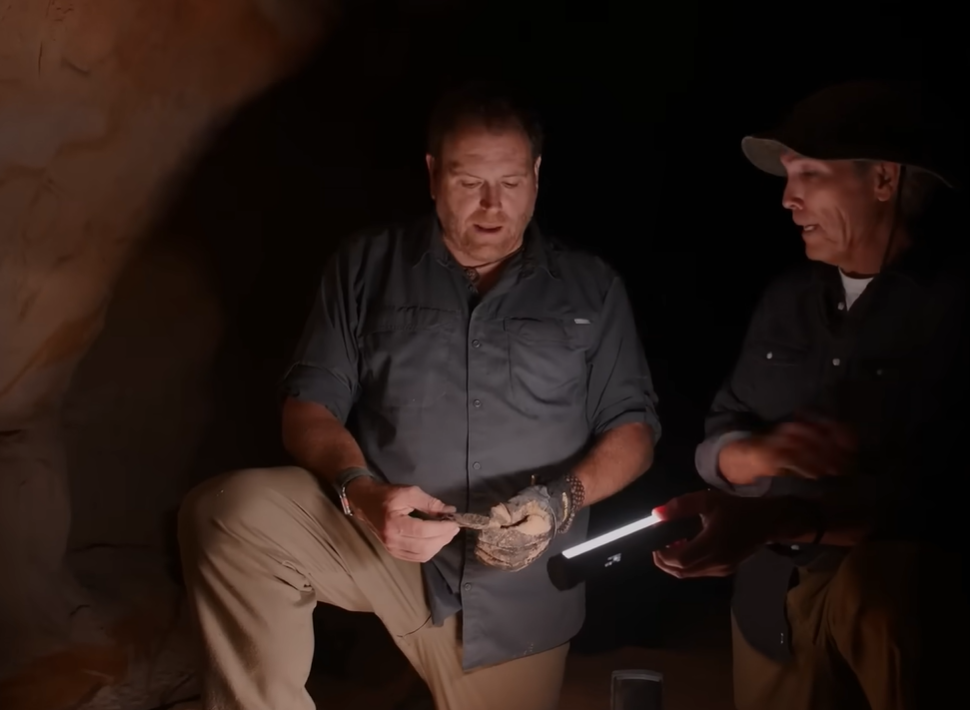
Among all the military structures and industrial debris surrounding the investigation, the discovery of a decaying wooden-and-glass frame stands out precisely because it looks so ordinary. Discovery’s own archive identifies the object as a picture frame found inside the Nazi tunnel system. That small artifact changes the emotional character of the search. A weapon component is evidence of war. A frame suggests something else: a picture once hung inside it. A person once looked at that picture. Someone cared enough about it to display it.
And suddenly, the treasure theory feels different.
If the frame had belonged to an artwork displaced during the war, then the tunnels may have been connected not merely to military infrastructure, but to the movement or concealment of cultural property. The episode itself explores precisely that possibility, asking whether stolen artwork could have been hidden in the underground complex as the war approached its final stages.
The frame does not prove that a missing masterpiece is buried somewhere nearby.
That distinction matters.
But it does provide a physical clue that deserves attention.
A treasure legend can survive for decades on rumor alone. It can pass from one generation to another, becoming more dramatic every time it is retold. Archaeology changes the equation. Once an artifact appears in a location that fits the historical story, researchers gain something much more useful than excitement: a reason to investigate further.
That is what makes the frame so intriguing.
It does not solve the mystery.
It gives the mystery a place to stand.
The Real Discovery May Be the History of What Happened Here
It is tempting to make this story entirely about Nazi treasure. That would be the easiest headline, but it would also miss what makes the investigation genuinely interesting.
The deeper mystery is what the MRU became during the final stages of the war.
The tunnels were part of an enormous military project. Nazi Germany constructed underground facilities partly to protect important operations from Allied bombing, and the wartime underground industry depended heavily on forced labor. The surviving evidence therefore carries a darker significance than treasure hunting alone. The tunnels are reminders not only of secrecy and technological ambition, but also of the human cost of the regime that built them.
This is where Gates’ investigation becomes more than a hunt for valuables. Every artifact forces a question about who used the space and why. Every collapsed passage raises the possibility that entire sections remain undocumented. Every object recovered from the water or rubble helps reconstruct a world that disappeared with the collapse of the Third Reich.
The frame is compelling because it sits at the intersection of all those questions.
Was it part of a stolen artwork shipment?
Was it simply personal property left behind by someone working in the complex?
Did it come from an office, a residence, or a hidden storage area?
At this stage, the answer remains unknown.
But uncertainty does not make the artifact less important. It makes it more interesting.
The Treasure May Still Be Missing — and That Is What Keeps the Story Alive
The most satisfying aspect of the MRU investigation is that it refuses to manufacture a conclusion that the evidence does not support.
Gates does not emerge from the tunnels carrying a vault of Nazi gold or a famous stolen painting.
Instead, he emerges with something arguably more valuable: a stronger historical case for continuing the search.
The team has documented previously inaccessible sections. It has gathered physical evidence. It has identified a structure that may have been part of the wartime underground network. And the picture frame offers another tantalizing connection to the broader story of art and valuables moved during the final days of World War II.
That leaves the door open.
There may be sealed chambers that have never been explored.
There may be objects still buried behind collapsed sections.
There may even be nothing more than fragments and false leads.
But that uncertainty is exactly what keeps the mystery alive.
The MRU is valuable precisely because it does not surrender its history easily. It forces researchers to work slowly, to document what they find, and to accept that some answers may remain buried for years.
And perhaps that is what makes Josh Gates’ journey through the tunnels so memorable.
He did not simply search for treasure.
He searched for evidence that could tell us what happened to a lost world as the Third Reich collapsed around it.
The treasure, if it exists, may still be somewhere in the darkness.
But the greater discovery may already have happened: a forgotten underground landscape is beginning to speak again.