In the realm of reality television, Pawn Stars is far more than a show about haggling; it has evolved into a form of modern “urban archaeology.” It is a place where dusty, forgotten relics transform into priceless “Holy Grails” after just a few minutes of forensic scrutiny. Recent episodes focusing on the legacy of Abraham Lincoln have led audiences into a labyrinth of intrigue: How can a small card be worth a literal fortune, and do these artifacts truly carry the breath of history?
Decoding the “Holy Grail” and the Slant of a Signature
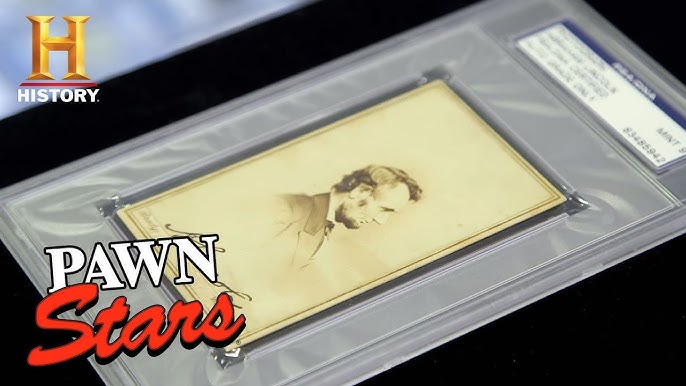
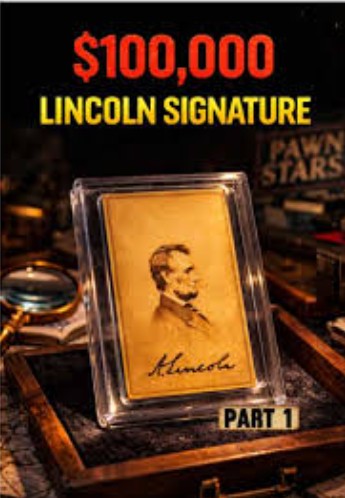
The episode opens with the dramatic arrival of a customer named Greg and a small Parlor Card (Carte de visite). This isn’t just a vintage souvenir; it represents a collision of two legends: President Abraham Lincoln and the era’s most renowned photographer, Mathew Brady. The most shocking detail? The image on this card is the exact original used for the U.S. five-dollar bill and the penny we use today.
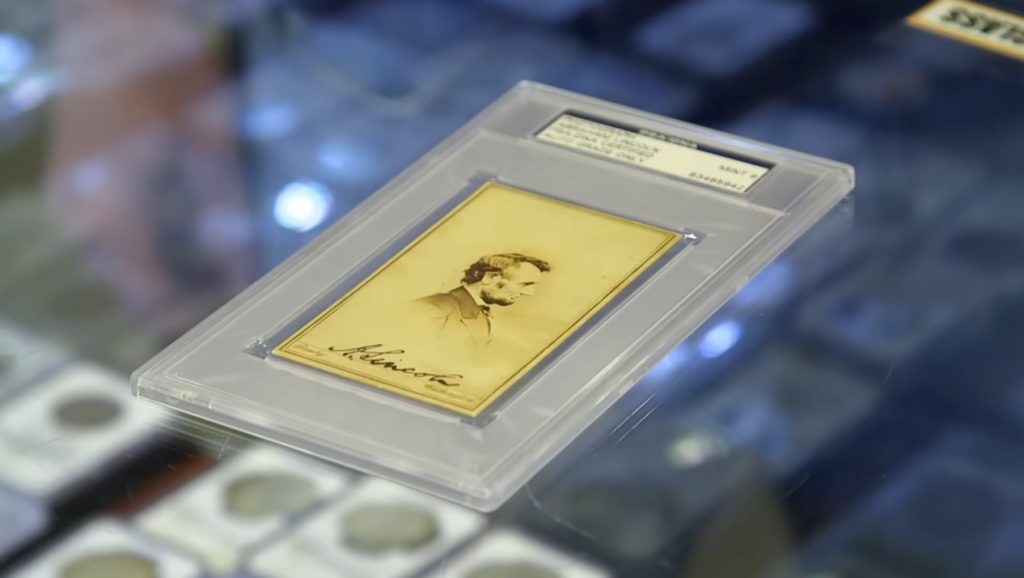
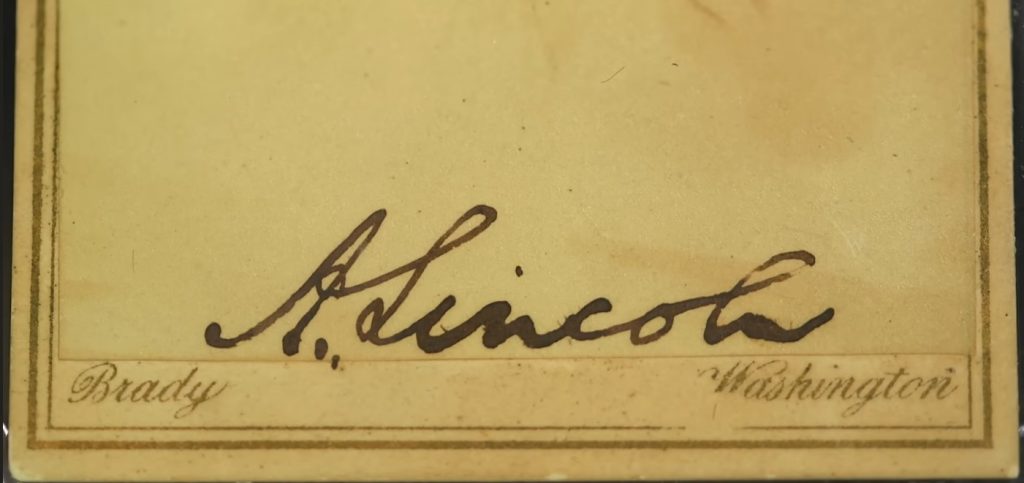
However, in the world of high-end collecting, the line between “rumor” and “truth” is razor-thin. While Rick Harrison immediately labeled it a “Holy Grail” of Lincoln memorabilia, the looming question remained: How can we be certain the “A. Lincoln” signature isn’t the product of sophisticated forgery?
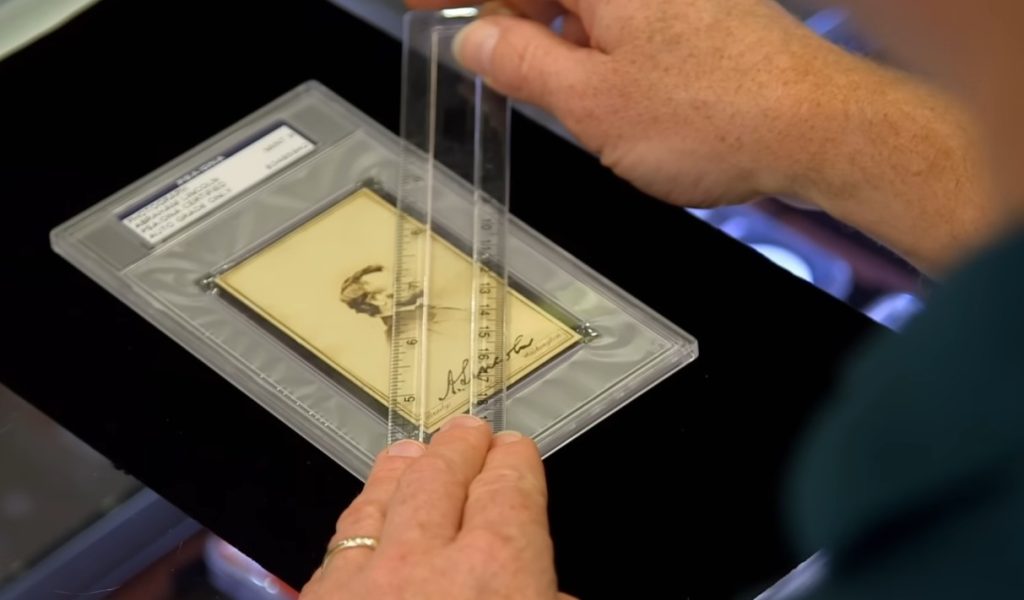
By connecting the dots, we see the power of forensic science in artifact authentication. Expert Stuart Lutz utilized precise handwriting analysis, specifically measuring the 45-degree slant of the letter “o”—a unique identifying trait of the 16th President. Once the authenticity was verified, the valuation skyrocketed to $150,000.
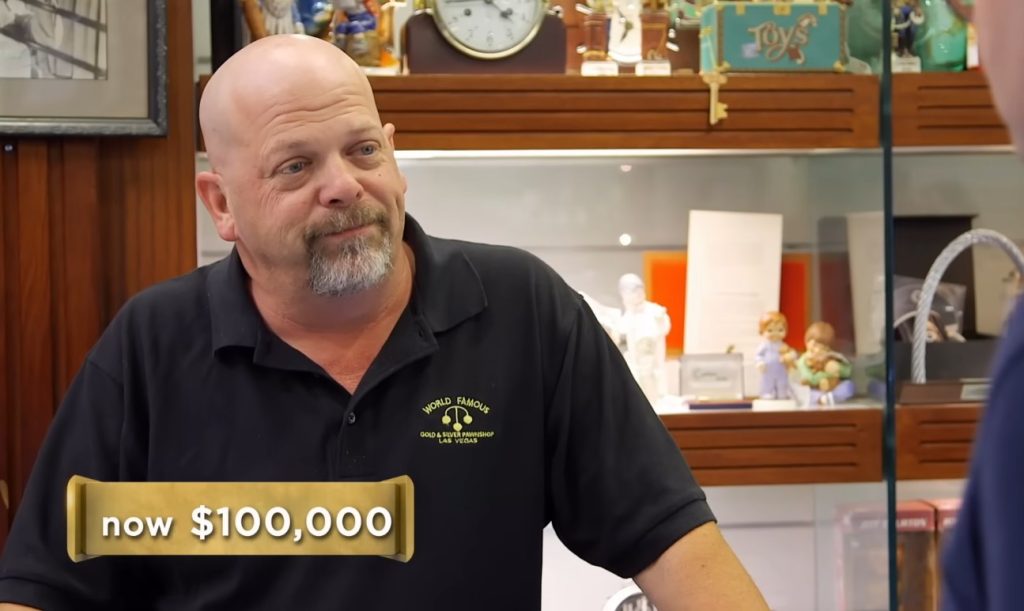
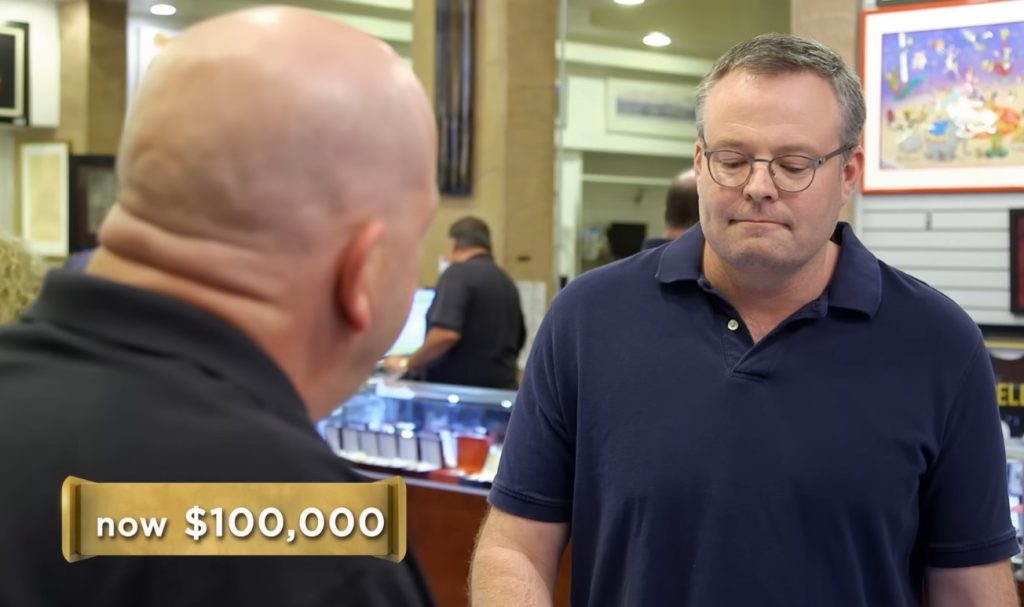
The subsequent negotiation was a masterclass in the liquidity of history. Rick made a decisive move, offering $100,000—a staggering sum for a piece of cardstock. The logic is clear: in elite collecting circles, provenance and rarity are the ultimate currencies. Greg’s acceptance of the deal confirms that both parties understood they were moving a piece of the American soul.
The Political Pulse: Campaign Tokens and Systematic Curation
The historical narrative continues with a shift toward Lincoln’s political machinery: an 1864 campaign token. Customer Craig brought in a small item that carries the heavy weight of a pre-digital era.
In the 19th century, these tokens were vital tools for voters to remember a candidate’s face and message. The fascinating logic here is that despite being much smaller than the Parlor Card, it underwent the same rigorous vetting process. Staff member Olivia’s cross-referencing of the specialized catalog number AL 1864-36 proves that at the Gold & Silver Pawn Shop, no artifact is too small to be taken seriously.
Conclusion: When the Pawn Shop Becomes a Living Museum
Based on the evidence and dramatic tension of these segments, we are witnessing a clear evolution: Pawn Stars has transitioned from a show about simple bargaining to a platform for historical validation. The alignment of technical forensic markers (signature angles, catalog references) with the grand historical context creates a compelling logical framework.
My verdict? Lincoln-related artifacts at the shop will only appreciate in value. Rick’s willingness to shell out $100,000 isn’t just a business move; it’s a bet on the immortality of history. The 200-year mystery of Lincoln has not faded; it is merely waiting to be illuminated under the magnifying glass of an expert.
Do you believe there are “Holy Grails” like this hiding in your own garage? The answer lies in persistence and a bit of historical knowledge—exactly the way the Harrison family plays the game every day.
A question for you: If you owned a relic signed by a legendary historical figure, would you keep it as a family heirloom, or would you be ready to bring it to the shop for a “shocking” payday?
 English