Oak Island Season 14 could turn Lot 8 into the center of the island’s most unsettling mystery.
Six feet below the surface, a buried ruin bearing unusual carvings has raised the possibility of a connection to the Knights Templar.
That interpretation remains unconfirmed, but the location and depth make the find difficult to dismiss.
If those marks belong to something larger than an isolated remnant, the search may no longer be following scattered clues.
It may be closing in on a deliberately hidden trail.
Six Feet Down, the Old Story Begins to Break
Lot 8 has suddenly become more than another point on a crowded treasure map.
The crucial detail is what appears to be concealed beneath it: a ruin approximately six feet below ground, marked by carvings that do not immediately fit the simplest explanations.
On Oak Island, depth alone never settles a mystery.
Yet something intentionally shaped or marked below the surface can transform an ordinary excavation area into evidence of a much larger design.
The ruin matters because it challenges the idea that every discovery on the island can be treated separately.
A carving is not merely decoration when it appears on a buried feature.
It may indicate identity, ownership, direction or purpose.
Without a confirmed reading of the markings, none of those possibilities can be declared fact.
But their presence creates a disturbing question: was this structure hidden by time, or was it placed below the surface because someone never wanted it found?
That uncertainty places enormous pressure on every earlier theory.
If the ruin belonged to a planned underground system, nearby clues could require a complete reinterpretation.
Objects and anomalies once considered unrelated might instead represent different parts of the same route.
Lot 8 would then be more than the site of a curious remnant.
It could be a missing junction in a search that has repeatedly seemed close to an answer, only to lose the trail underground.
The Templar Link Opens a Far Bigger Mystery
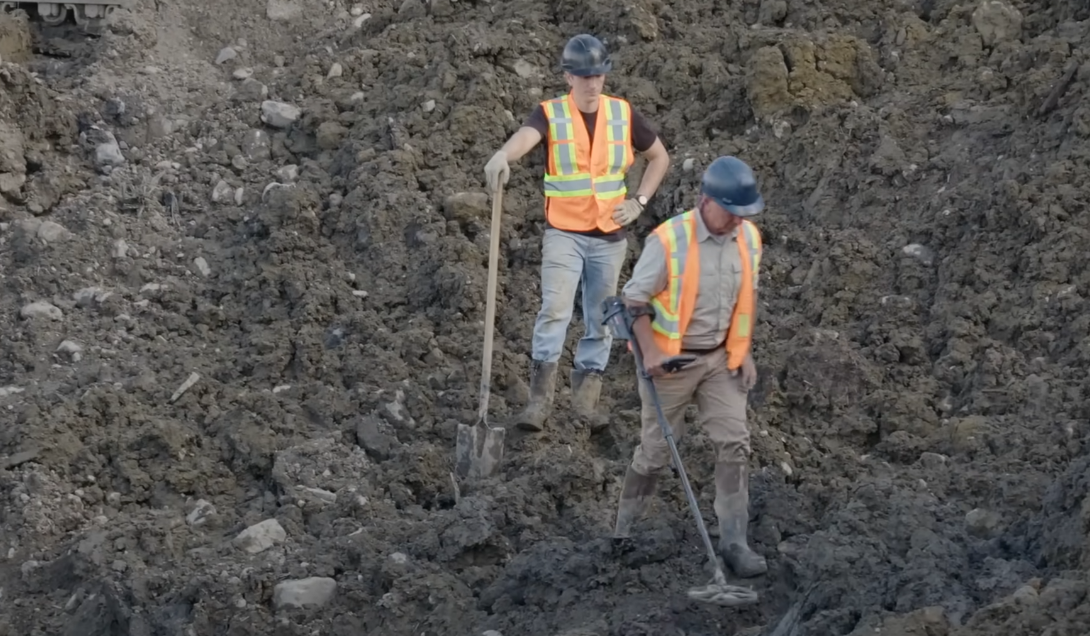
The alleged Templar connection is where the discovery becomes explosive.
The carvings are being interpreted as potentially connected to the Knights Templar, but resemblance is not confirmation.
No verified meaning, date or purpose has yet established that link.
Even so, the possibility cannot be separated from its consequences.
If the marks were deliberately created to carry Templar meaning, they could shift the mystery away from a randomly buried treasure and toward an organized operation with a specific historical purpose.
That would change the central question of Oak Island.
The search would no longer be only about what may have been concealed.
It would also become a hunt for the people who designed the hiding place, the route they used and the reason they chose this island.
A ruin at six feet could represent an entrance, a marker or merely one surviving piece of a larger construction.
Each possibility points in a different direction, and choosing the wrong one could bury the real trail beneath another generation of assumptions.
The carvings therefore carry more weight than their physical size suggests.
If they are meaningful, their position may matter as much as their appearance.
A symbol without context can mislead, while a symbol connected to a buried structure may reveal intention.
The tension lies in that narrow gap.
The ruin could support one of Oak Island’s most enduring ideas, or it could expose how easily hope turns an ambiguous mark into a desired answer.
One Wrong Move Could Erase the Island’s Next Answer

The discovery also creates a new danger for the search.
A buried ruin cannot simply be treated as another object to retrieve.
Its placement, surrounding ground and relationship to other underground features may hold the very information needed to understand it.
Disturbing that context too quickly could destroy the pattern before it is recognized.
Moving too cautiously, however, risks leaving the strongest clue trapped beneath layers of uncertainty.
If the Lot 8 feature is connected to a broader hidden system, the next step could determine whether that system finally becomes visible.
The carvings might point toward another location.
The ruin’s position could align with a route that has not yet been considered.
Or the entire Templar interpretation could collapse under closer examination.
Every outcome carries a consequence, because even disproving the connection would clear away a theory that has shaped expectations around the island’s buried past.
What remains is not proof of Templar treasure, and the lack of confirmation is precisely what makes the moment so volatile.
Oak Island has produced clues that appear decisive until the ground complicates them.
This time, however, the combination of depth, ruin and unexplained carvings threatens to reorganize the mystery itself.
If the marks are authentic indicators rather than coincidence, Lot 8 may stand above a trail intended to remain invisible.
If they are not, another powerful theory could fall apart just as the search reaches for it.
Either way, history beneath the island no longer feels still.
Something six feet down has forced the old assumptions open, and the next answer could validate years of belief or leave the entire treasure story facing a dramatic reset.