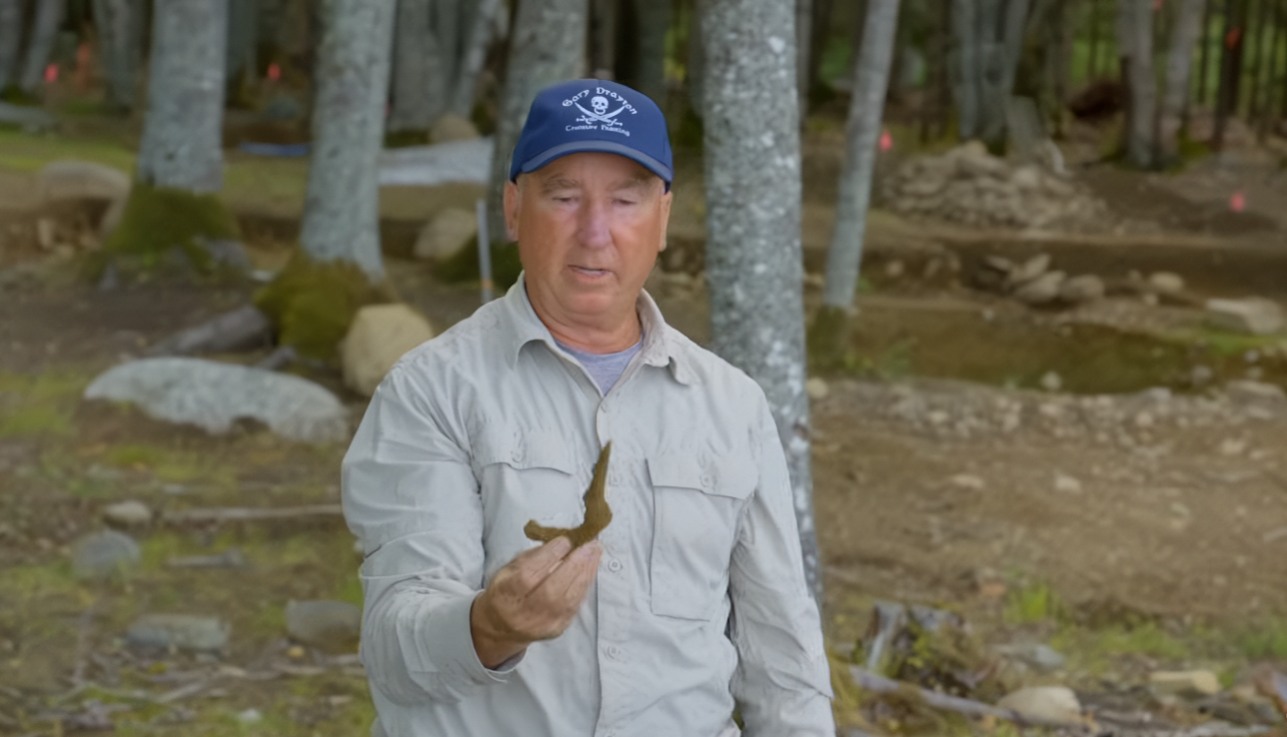
Marty first described it as a hook, while Gary suggested it might be a driven hook or even a pintle, a kind of pivot pin used in doors and gates.
A newly examined well on Lot 5 has opened another intriguing chapter in The Curse of Oak Island, after Marty Lagina and Gary Drayton uncovered an iron artifact that may challenge long-held assumptions about the age and significance of the site. What was once dismissed as a modern feature is now being reconsidered as part of a much older landscape of activity on the island.
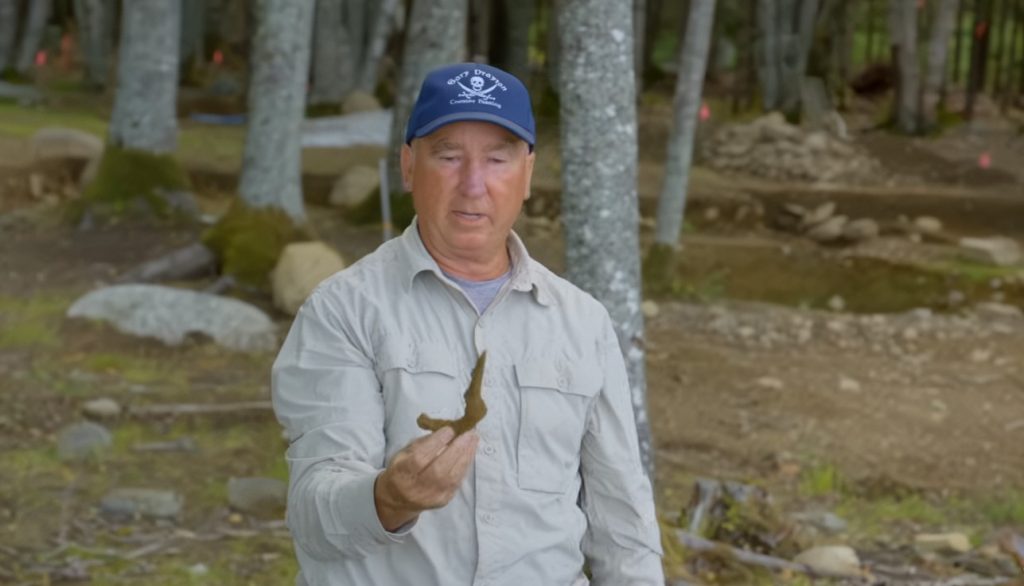
The discovery came as Marty and Gary returned to Lot 5, focusing their attention on a covered stone well located between the circular structure on the lot and the shoreline. The area had already drawn interest after Professor Adriano Gaspani’s earlier analysis suggested that the nearby round feature may date back to the early 13th century, based on its alignment with the night sky.
That claim alone had already pushed Lot 5 into more serious archaeological territory. Now the well, previously thought to be recent, is beginning to attract similar attention. At first, the search inside the well produced more questions than answers. After lifting the cover and climbing inside, Marty quickly realised the feature was deeper than expected.
Rather than reaching a firm base, he found himself standing on layers of soft leaves, with the true bottom still well below. There were no immediate metal signals in the walls, but both men came away convinced the site had been underexplored and that the visible upper section revealed very little about what might lie beneath.
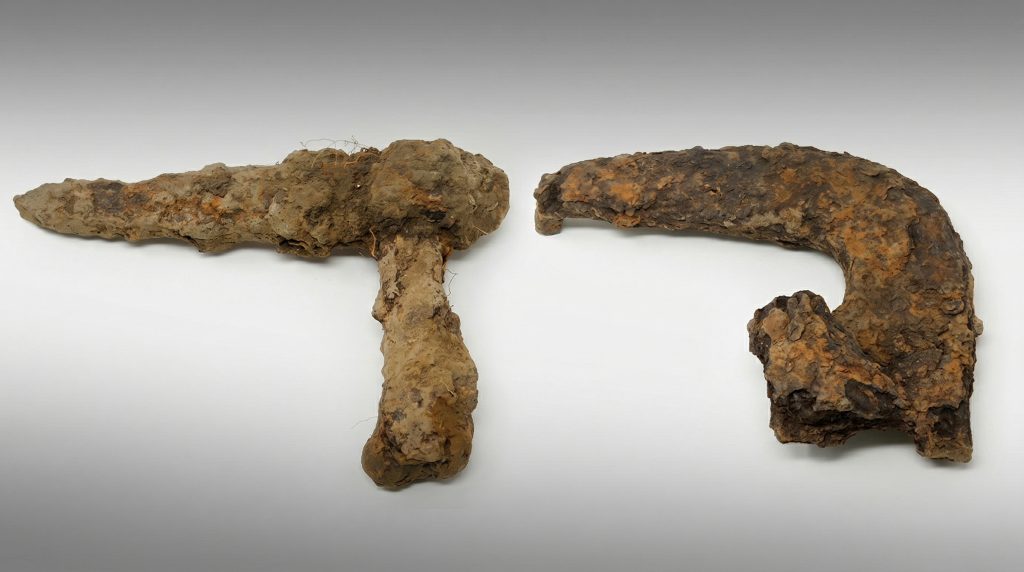
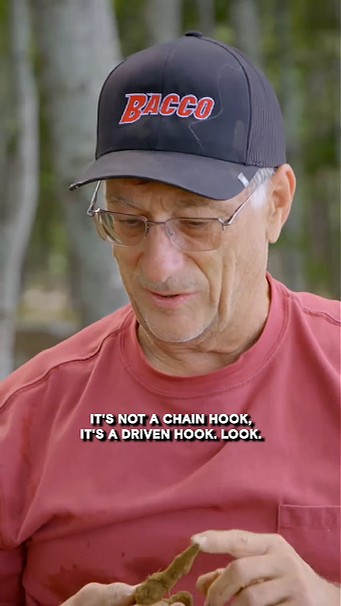
That sense of possibility strengthened moments later when Gary picked up a promising signal just outside the well. After clearing away rocks, the two men recovered an iron object that immediately sparked debate. Marty first described it as a hook, while Gary suggested it might be a driven hook or even a pintle, a kind of pivot pin used in doors and gates.
The distinction mattered, because possible pintles had already been found this season on Lot 8 and Lot 15, both in association with other notable features. If this object belonged to the same family, it could point to a wider pattern across multiple parts of Oak Island. The artifact was then taken to the lab, where Laird Niven and Emma Culligan examined it more closely.
Their conclusion was cautious but important. Emma said the team was leaning toward identifying it as a hook rather than a pintle, perhaps something driven into place to lower a bucket into the well. Yet the more striking result came from the material analysis.
She found no modern alloying elements, placing the object before the 1800s, and said the balance of evidence pointed most likely to the mid-1700s. That estimate immediately cast doubt on the old claim that the well itself was a 20th-century feature.
For Marty, that shift in dating was especially significant. He noted that earlier information linked to former Lot 5 owner Robert Young had described the well as modern. But as more of the team’s work on Lot 5 has shown, features once thought recent have increasingly appeared older and more complex than first believed.
The circular formation itself had once been regarded in much the same way, only to become one of the more fascinating archaeological zones on the island after its alignment and associated finds suggested a much earlier origin. Laird also pointed to another reason the well deserves closer scrutiny: context.
The stone ring surrounding it appears visually similar to the circular feature nearby, and wells are historically known as places where artifacts accumulate. People drop items into them accidentally while drawing water, and in some cases wells become places to hide objects from view.
That combination makes the unexplored lower section of the well especially appealing. If the upper layers are filled only with leaves and loose debris, the true base may still contain pottery, glass, metal, or other materials capable of clarifying when the well was built and how it was used.
The episode also highlights a larger theme that has increasingly defined recent seasons of The Curse of Oak Island. Rather than focusing only on the Money Pit, the team is now building a broader map of human activity across the island, linking roads, boulders, markers, structures and now wells into a possible network of older occupation. Lot 5, once treated as secondary ground, is steadily emerging as one of the most important pieces of that puzzle.
For now, the artifact itself does not solve anything. It does, however, strengthen the case that the well is older than previously thought and worthy of proper archaeological excavation. With Lot 8 currently taking priority, the team may not be able to investigate it immediately. But the message from Marty, Gary, Laird and Emma is clear: this is no longer a feature to ignore. In a search defined by overlooked clues and revised assumptions, the well on Lot 5 may prove to be exactly the kind of place Oak Island has been waiting for the team to examine more seriously.
 English