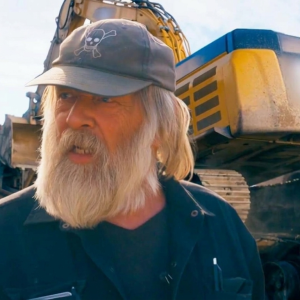
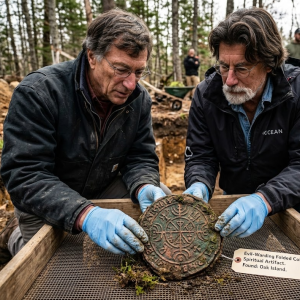
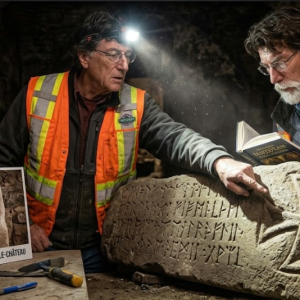
The search on Oak Island has always moved between hard evidence and difficult questions, but the latest developments on Lot 32 and Lot 5 may have widened the mystery in a significant way. What began as another careful metal-detecting effort by Gary Drayton and Jack Begley soon turned into a chain of discoveries that could point toward old maritime activity, possible cargo handling, and even a much deeper European connection to the island.
Gary and Jack returned to Lot 32, west of the swamp, where the team has been investigating signs of what may have been an ancient wharf. The area had already drawn attention because of previous finds nearby, including evidence linked to a possible landing site and a French cargo bag seal. With the land cleared and targets flagged, Gary began working through the area using his familiar methodical approach.
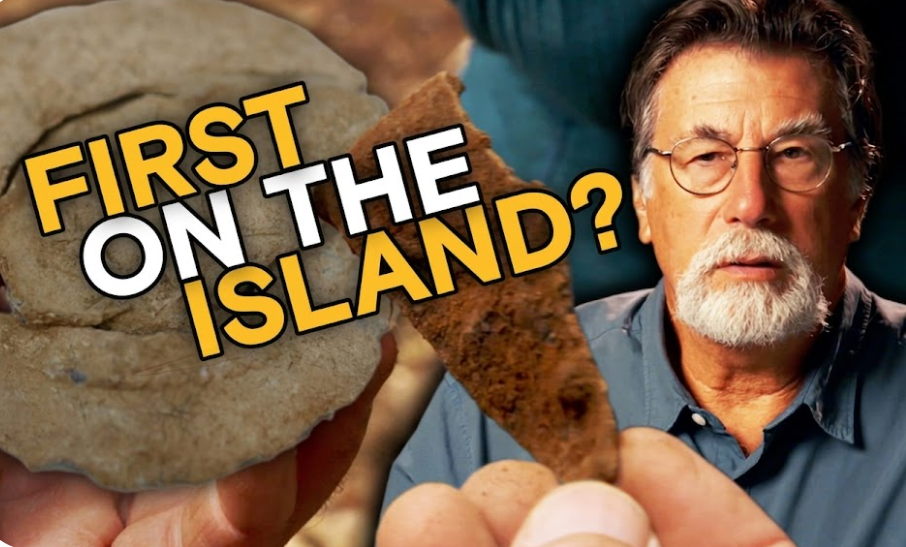
The first notable find was a curved piece of iron. Gary immediately considered the possibility that it could be part of a barrel hoop. That may sound simple, but on Oak Island, context is everything. If the object was indeed from a barrel, and if it was found near a suspected wharf, then it could support the idea that goods were once unloaded or stored in that part of the island. Gary noted that many items were transported in barrels in earlier centuries, including nails, coins, and other valuable cargo.
The possibility became even more intriguing when another object surfaced nearby. Jack first thought it might be a spike, but Gary suspected it could be some type of tool, possibly a small scythe or chopping implement. He pointed to its square-shanked form as a clue that the object could predate the 1800s. That detail matters because the Money Pit was first discovered in 1795. If the tool truly belongs to an earlier period, it may strengthen the idea that organized activity took place on Oak Island before the famous treasure story began.
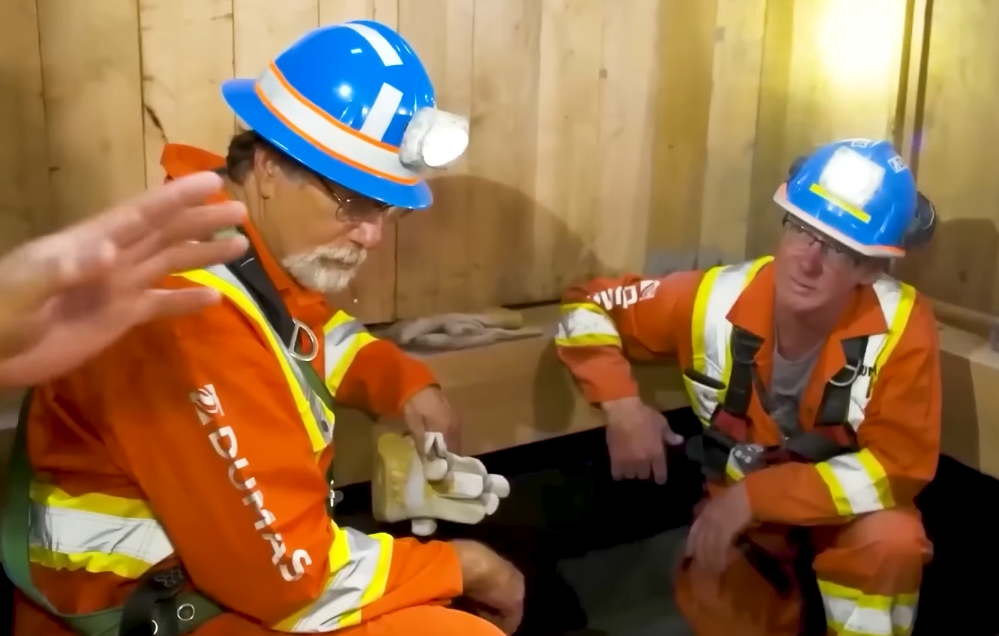
From a programme analysis perspective, this is exactly the kind of sequence that The Curse of Oak Island uses to build momentum. The objects themselves are modest: iron fragments, possible tools, and old metalwork. But their location and possible dating create a larger narrative. A wharf implies arrival. Barrels imply cargo. A tool implies work being carried out on land. Together, those elements suggest that Lot 32 may not have been a random patch of ground, but part of a working shoreline connected to a larger operation.
The visit from blacksmithing expert Carmen Legge added another layer. When Rick Lagina, Craig Tester, and Jack Begley presented the iron objects at the Research Center, Carmen’s analysis pointed toward the possibility of a very large cargo barrel. The suggestion that such a barrel could date as far back as the 1740s immediately caught Rick’s attention because that period overlaps with the era of the Duc d’Anville expedition. Rick was careful not to overstate the case, but he recognized why the date mattered. It offered a possible historical frame for why French-linked material might be appearing near a suspected wharf.
This is where the show’s central pattern becomes clear. Oak Island rarely provides a single conclusive answer. Instead, it assembles fragments that appear to lean in the same direction. A possible French bag seal, a potential wharf, an old cargo barrel, and pre-1800s tools do not prove a treasure deposit. But they do suggest the island may have seen more complex activity than many skeptics would expect.
Then came the bigger twist: the coin from Lot 5.
At the Oak Island Interpretive Center, Alex Lagina, Jack Begley, Emma Culligan, and numismatist Sandy Campbell examined a cut copper coin found earlier by Rick Lagina and Gary Drayton. The team had already used XRF and CT scanning, and the elemental results showed copper, lead, tin, arsenic, and a small amount of silver. Sandy explained that the presence of arsenic suggested a very old and unrefined copper object, potentially pre-1500.
The most striking moment came when Sandy suggested the coin might be Roman, or possibly Byzantine. He pointed to the style, the visible design elements, and the composition as reasons for that possibility. For the team, this was not simply another old coin. It was a potential Roman-era object found on Oak Island, raising the enormous question of how such an item could have arrived there.
The show immediately connected the find to earlier investigations in Portugal, where the team studied Roman roads and Templar-linked sites. The possible link between the Roman-style coin, the swamp road, Portuguese influence, and the broader Templar theory will almost certainly become a major thread going forward. Rick, as always, treated the find with both excitement and caution. He acknowledged the geographic and historical possibilities, while also emphasizing the need for more rigorous scientific analysis.
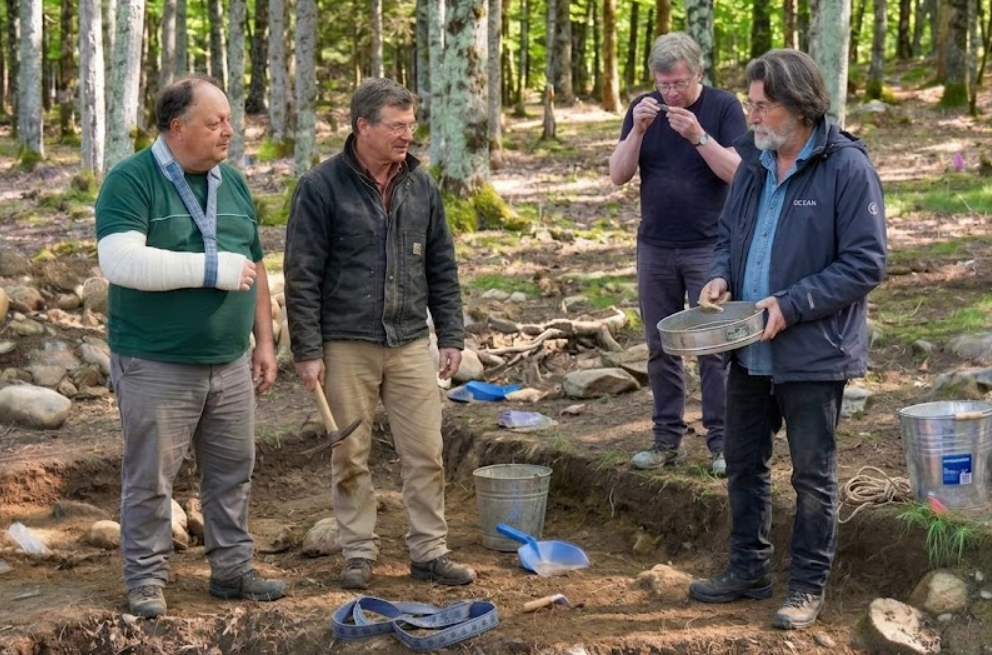
Looking ahead, several developments seem likely. First, Lot 5 will receive far more attention. The coin has effectively placed that area on the team’s priority map, and viewers should expect more metal detecting, archaeological review, and lab testing there. Second, Lot 32 may become central to the wharf theory. If more cargo-related objects emerge, the team may push harder to define the shape, date, and purpose of that shoreline activity.
Third, the Roman coin will likely invite outside expertise. The team will need more than one opinion to support such a major interpretation. Further analysis could examine the coin’s markings, metal composition, manufacturing method, and possible origin. If the Roman identification holds, the debate will shift from what the object is to how it reached the island.
The most careful prediction is that the discoveries will not solve the Oak Island mystery immediately, but they will expand its historical scope. Instead of focusing only on the Money Pit, the season may increasingly explore the idea that Oak Island was part of a much older network of movement, trade, military activity, or symbolic transport.
For fans, that is the value of this episode. The team did not simply find metal in the ground. They found pieces that may connect land, sea, cargo, and ancient currency into one of the show’s most fascinating new lines of inquiry. Oak Island remains uncertain, but after Lot 32 and Lot 5, it feels more historically charged than ever. Thought for 11s
Dưới đây là bài báo tiếng Anh khoảng 800 từ, theo góc nhìn phân tích chương trình The Curse of Oak Island, dựa trên chủ đề bạn đưa và phần nội dung trước đó về các phát hiện kim loại trên Oak Island.
Rare Metal Fragment Could Open a New Chapter in The Curse of Oak Island
The discovery of a rare metal fragment on Oak Island could become one of the most important turning points of the season, not because it immediately solves the mystery, but because of what it may suggest about the island’s earlier activity. For a programme built on fragments, patterns, and historical possibility, even a small object can reshape the direction of the investigation.
In The Curse of Oak Island, the most powerful finds are rarely large or obvious. They are usually damaged, corroded, incomplete, and difficult to interpret. That is exactly why a rare metal fragment appearing for the first time on the island carries such weight. It forces the team to ask not only what the object is, but who brought it there, when it arrived, and why it ended up in that particular location.
From an analyst’s perspective, the importance of this discovery depends on three factors: composition, context, and location. If the metal is unusual compared with other finds on the island, it may point toward a different period of activity or a different group of people. If it is found near a suspected work area, wharf, road, or cargo site, it becomes more than a loose artifact. It becomes part of a possible operating system on the island.
That is where Oak Island often becomes most interesting. The show does not simply ask whether an object is old. It asks whether the object belongs to a wider pattern. In recent investigations, the team has focused heavily on areas that may indicate organized movement of goods, tools, and materials. Finds connected to possible barrels, old ironwork, cargo handling, and Lot 5 have encouraged the idea that Oak Island may once have been used for more than casual visits.
A rare metal fragment could strengthen that theory. If expert analysis shows that the object contains an unusual alloy, traces of precious material, or signs of old manufacturing methods, it may push the investigation toward a more complex historical explanation. The team would almost certainly send the fragment for further testing, including XRF scanning, microscopic inspection, and possibly comparison with known European, military, maritime, or colonial-era objects.
Emma Culligan’s role would likely become central in this storyline. Her scientific work has become one of the show’s most reliable tools for separating speculation from evidence. A rare metal fragment would need more than excitement. It would need data. If Emma identifies unusual elements in the sample, the next question would be whether those elements occurred naturally in the object or were added through human production.
Carmen Legge could also become important if the object appears to be hand-forged, worked, or shaped. On Oak Island, metal does not speak for itself. Its age, purpose, and possible origin often depend on expert reading of its form. A square shank, a curve, a tool mark, or a method of fastening can change how the team understands a find. If the fragment shows signs of being part of a larger object, it may lead the team to search nearby for matching pieces.
The location of the discovery may prove even more important than the fragment itself. If it was found near the swamp, Lot 32, or a possible wharf area, it could support the theory that people used that part of the island for unloading or organizing materials. If it was found on Lot 5, it could add to the growing sense that the lot may contain older and stranger clues than previously expected. Either way, the find would likely redirect boots-on-the-ground work to the immediate area.
One possible development is that the fragment becomes linked to maritime activity. Oak Island has long invited theories involving ships, cargo, and hidden work zones. A rare metal object could have come from a tool, a fastener, a container, a weapon component, or a decorative fitting. Each possibility would carry a different meaning. A tool would suggest labor. A cargo-related fragment would suggest transport. A decorative or ceremonial piece would create a different historical question entirely.
Another possible direction is that the fragment leads the team toward a European connection. The show has frequently explored links to France, Portugal, and the wider Atlantic world. If the metal composition resembles old European manufacturing, or if its shape matches known artifacts from a particular period, the team may expand the investigation beyond Nova Scotia again. That would not prove any single theory, but it would give the season a stronger historical thread.
The most careful prediction is that this fragment will not deliver an immediate answer. Instead, it will become a catalyst. The team will likely use it to justify deeper testing, renewed searches around the discovery site, and a broader comparison with earlier finds. In television terms, it gives the season a fresh object around which multiple theories can gather.
For Rick Lagina, the emotional importance of such a find would be clear. Rick often responds most strongly to objects that appear to carry a human story. A rare metal fragment is not valuable only because of what it may be worth. It is valuable because it may represent a person, a journey, a task, or a hidden purpose from centuries ago.
For Marty Lagina and the more cautious side of the team, the question will be whether the evidence can support the excitement. The show works best when those two impulses meet: Rick’s belief in the meaning of small clues and Marty’s demand for proof. A rare metal fragment would sit exactly between those two forces.
Looking ahead, viewers should expect the discovery to trigger three likely steps. First, laboratory testing will determine the object’s composition. Second, experts will compare its form with known historical examples. Third, the team will return to the discovery area to see whether more related material is still in the ground.
That final step may be the most important. One fragment is interesting. Several fragments in the same area could become a pattern. And on Oak Island, a pattern is often what turns a small discovery into a major new direction.
If this rare metal fragment truly is the first of its kind on the island, it could mark the beginning of a new investigative chapter. It may not reveal the full answer yet, but it could point the team toward the people, activity, and hidden history that made Oak Island one of television’s most enduring mysteries.