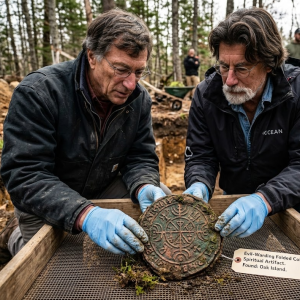
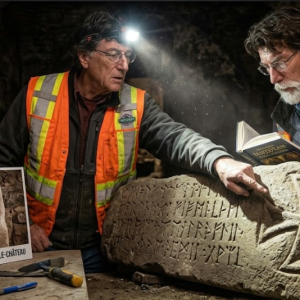
The mystery of Oak Island has long centred on the infamous Money Pit, but recent discoveries in the island’s swamp are increasingly reshaping that narrative. During a renewed investigation in the northern region of the triangle-shaped swamp, the Lagina brothers and their team have uncovered a series of compelling clues that suggest Oak Island’s secrets may extend far beyond a single shaft—and far deeper into history than once believed.
The latest excavation brings the team back to a location legendary treasure hunter Fred Nolan spent decades studying. Nolan, who drained the swamp in 1969, famously discovered pieces of large sailing vessels and 16th-century wooden survey stakes—evidence he believed proved the bog was artificially created to conceal valuables. Now, with Nolan’s son Tom present, Rick and Marty Lagina have returned to this same area with renewed purpose.
“This place is all about your dad,” Rick told Tom Nolan as digging began. “He believed there was something here to find.”
Almost immediately, the swamp began to reveal familiar signs. Hand-hewn wooden stakes—remarkably preserved—were pulled from the mud, their sharpened ends suggesting deliberate placement rather than natural occurrence. Metal detection expert Gary Drayton described them as “impressive,” noting how fresh they appeared despite centuries underground.
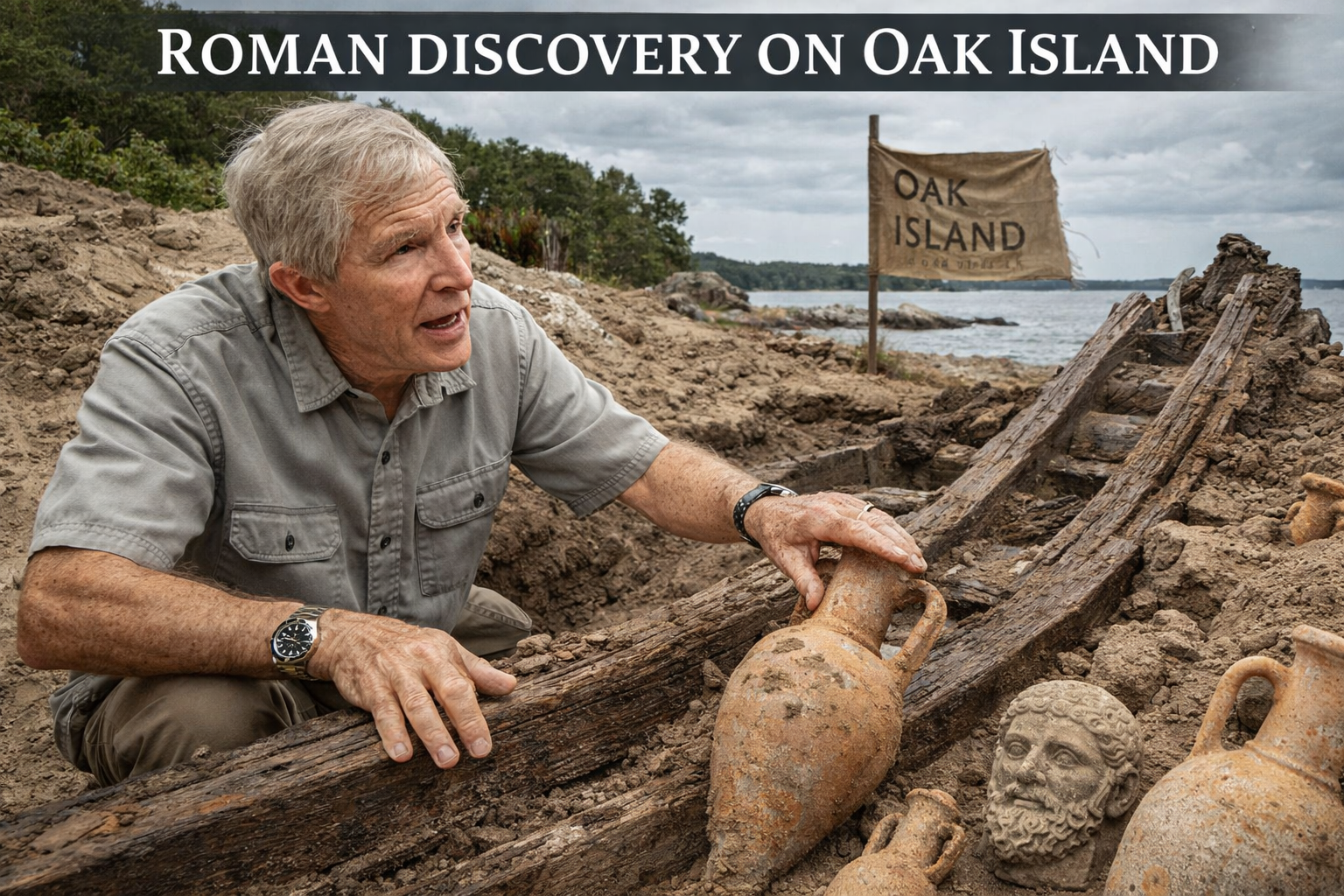
What made the find particularly significant was their location. While similar stakes had been found closer to the road years earlier, these were discovered deeper into the swamp than ever before. To the team, this strongly suggested purposeful surveying activity, not random settlement.
Moments later, another revelation emerged: cobblestones clustered near the stakes. The stones appeared stacked and aligned, raising the possibility that the team had uncovered yet another section of the mysterious cobblestone pathway previously identified elsewhere in the swamp.
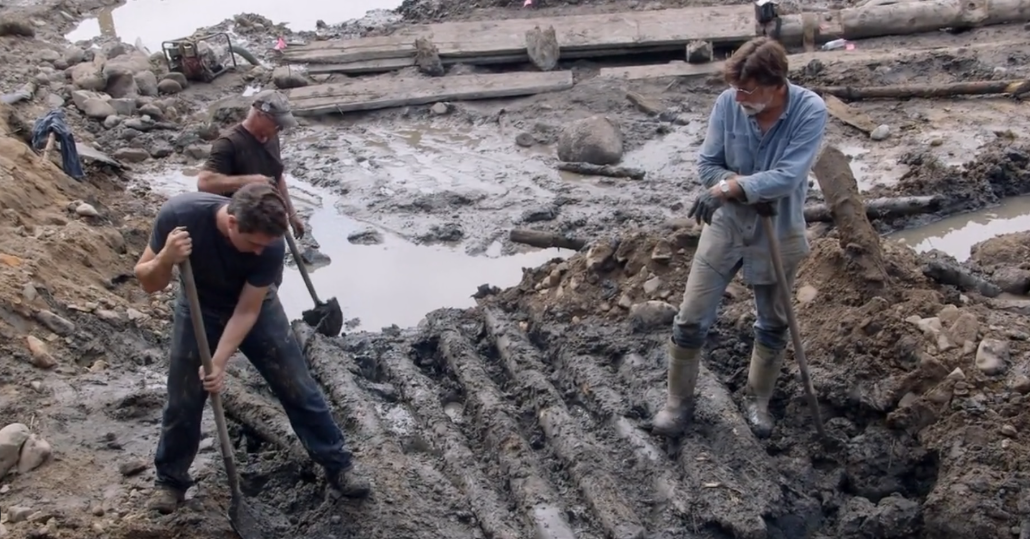
The presence of cobblestones near survey stakes echoed earlier discoveries—including a brick-and-slate, vault-like structure uncovered weeks earlier in the same northern region. Though empty, that structure raised a crucial question: if one vault existed, could others still lie hidden nearby?
To answer that, the team called in geoscientist Dr. Ian Spooner. After examining the stones and surrounding sediment, Spooner noted the uniform size of the rocks—each small enough to be carried by hand. “This was their path,” he concluded, suggesting intentional human construction rather than a natural formation.
Archaeologists Alex Lagina and Laird Niven recommended a targeted excavation approach, carefully exposing sections of the cobblestone feature to determine its extent and age. The goal was not just to identify another path, but to understand how it fit into the broader puzzle of Oak Island.
The following day, attention shifted to the war room, where surveyor Steve Guptill presented a digital map combining decades of discoveries across the swamp. His analysis revealed something extraordinary: the newly discovered stakes aligned almost perfectly along a north-south survey line first noted in Fred Nolan’s original plans.
“These things were put down for a reason,” Tom Nolan said. “It is consistent with a surveying use.”
Guptill’s mapping showed that the survey line intersected multiple known features—the cobblestone pathway, a wooden platform uncovered earlier in the season, and even cobblestones found near the brick vault. When projected further northwest, the line appeared to point toward Lot 5, another area producing ancient artifacts.
The implications were profound. According to Spooner, the features appear loosely connected in time, dating from the late 1600s to the mid-1700s—well before the documented discovery of the Money Pit in 1795. “In my opinion,” Spooner said, “it wasn’t farmers. It wasn’t fishermen.”
Instead, the team believes Oak Island may have been the site of a coordinated, island-wide construction effort, involving surveying, transportation routes, and engineered structures designed to conceal something of importance.
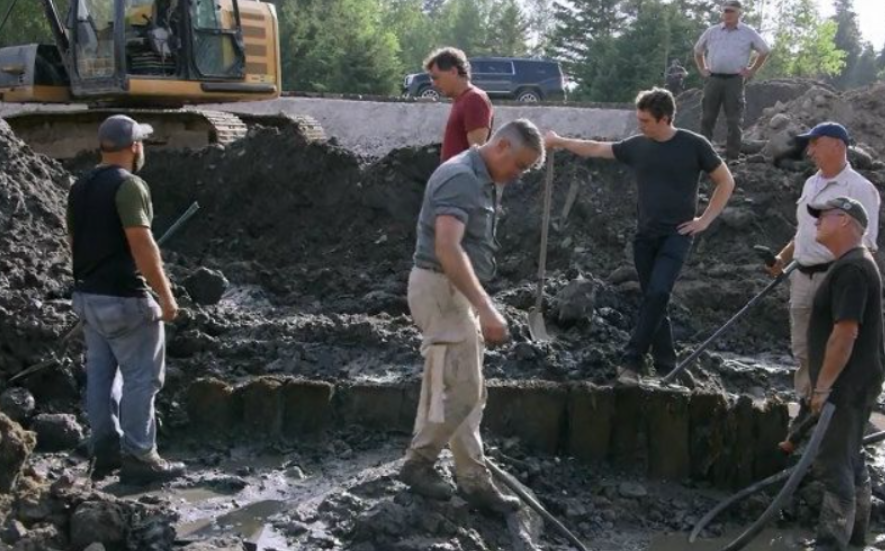
Rick Lagina summarized the growing consensus: “Whatever was going on on Lot 5 was going on in the swamp. Whatever was going on in the swamp was going on in the Money Pit.”
If true, this suggests the island functioned as a single, integrated operation—one that required enormous labour, planning, and technical skill. Some researchers have speculated about possible links to historic expeditions, including the Duc d’Anville expedition, though the team stresses that much remains unproven.
What is clear, however, is that the swamp is no longer a side story. Once dismissed as a natural bog, it is now seen as central to understanding Oak Island’s mystery.
“There’s now a belief,” Rick said, “that this is literally an island-wide mystery.”
As excavations continue across multiple sites, the team hopes these separate threads—Money Pit, Lot 5, and the swamp—will eventually converge. Whether they lead to treasure or deeper historical understanding remains to be seen. But for the first time, Fred Nolan’s long-held conviction that the swamp hides vital answers appears closer than ever to being vindicated.