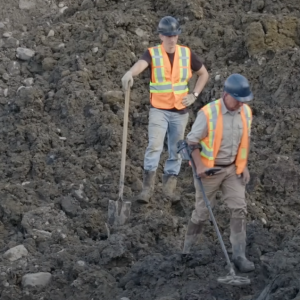
Oak Island gold ring speculation has opened a disturbing new possibility beneath the Money Pit.
A gold ring recovered from deep underground reportedly bears details unlike anything associated with the civilizations previously connected to the island.
The object may be small, but if its unusual design withstands closer examination, it could force the treasure hunters to reconsider who reached Oak Island, what they concealed there, and how much of the accepted timeline has been wrong.
A Small Object Emerges From the Island’s Darkest Depths
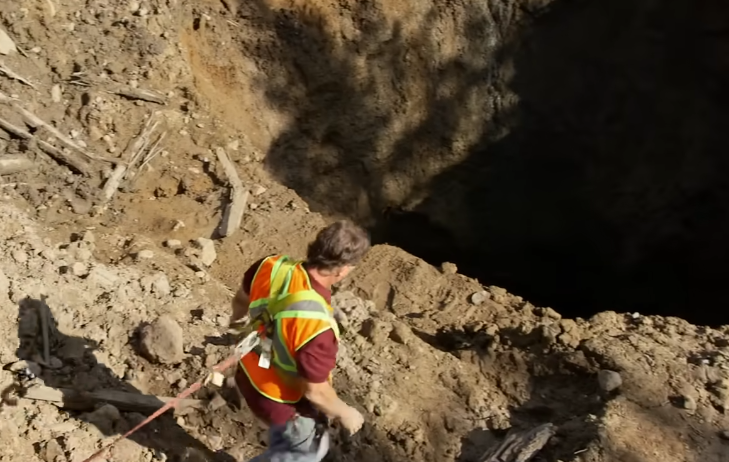
The Money Pit has never surrendered its clues cleanly.
Every fragment lifted from below arrives separated from its original world, surrounded by disturbed soil, flooded passages and centuries of unanswered questions.
The appearance of a gold ring from deep within that contested ground therefore carries a tension far beyond its size.
Unlike another piece of wood or metal, a ring is personal.
Someone may have worn it, valued it and carried it into the landscape that would become Oak Island’s most fiercely examined location.
Its placement immediately sharpens the mystery.
Depth can suggest age, but the Money Pit is not an untouched archaeological site with a simple sequence of layers.
Generations of digging, drilling and collapse have transformed the underground area.
Material can move, tunnels can fail, and earlier excavations can drag objects away from where they first rested.
The ring’s recovery point matters, yet it cannot reveal the complete story by itself.
What makes the discovery potentially disruptive is the claim that its details do not resemble material connected to any civilization previously identified on Oak Island.
No confirmed cultural attribution, age or specific meaning has been established within the available information.
That uncertainty does not weaken the drama.
It creates it.
The ring has entered the search as an object without a secure place in the island’s history, and that absence may be its most unsettling feature.
The Ring Threatens Every Familiar Oak Island Theory
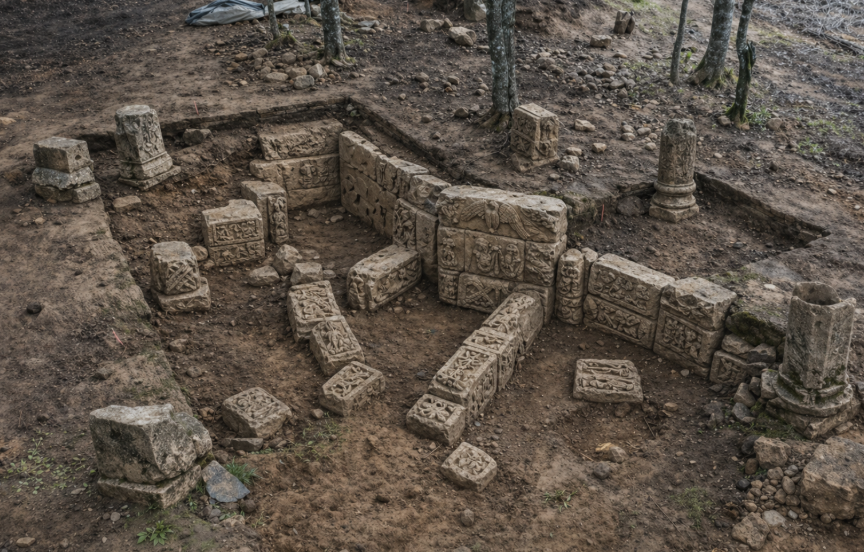
Oak Island theories often return to recognizable historical candidates: organized groups with the motive, resources and knowledge to hide something valuable.
Each theory depends on a chain of clues that appears to connect a particular people to the island.
An unfamiliar ring could break those chains.
If its design truly falls outside every established connection, the search may no longer be dealing with a missing piece of a known story.
It may be facing evidence of an entirely different story.
That possibility raises several competing explanations.
The ring could have arrived with a visitor whose presence left little other trace.
It could belong to a period not yet recognized in the Money Pit narrative.
It could also have entered the disturbed underground environment long after the event treasure hunters are trying to reconstruct.
None of those possibilities has been eliminated, and the ring’s appearance alone cannot prove a lost civilization, a treasure deposit or the identity of whoever altered the site.
Yet the object still places enormous pressure on the accepted timeline.
Its metal, workmanship and surface details would need to agree before any origin could become persuasive.
If those elements point in different directions, the ring may deepen the confusion rather than solve it.
If they converge, however, Oak Island could gain something it has repeatedly denied its searchers: a portable clue capable of linking human intention to the depths beneath the Money Pit.
That is why the ring cannot be treated as an isolated curiosity.
Its significance depends on whether it connects to other anomalies below ground.
A second object, a matching feature or a nearby structure could transform an intriguing artifact into the first visible part of a hidden system.
One Unanswered Detail Could Redirect the Entire Search

If the ring’s unusual characteristics are confirmed, the next consequence would be immediate.
Long-standing theories would have to compete with a new question: what if the people responsible for part of Oak Island’s underground story have not yet been correctly identified?
That would change more than the interpretation of one artifact.
It could alter which locations deserve attention, which underground features matter and which historical assumptions have been steering the search in the wrong direction.
The danger is that the Money Pit offers no easy way to test such a possibility.
Its depths remain unstable and heavily disrupted.
Any attempt to pursue the ring’s original context risks encountering collapsed material, water or another void whose purpose cannot be understood from the surface.
The closer the search moves toward a potentially undisturbed area, the greater the pressure becomes.
One wrong excavation could destroy the very relationship between objects and structures that investigators need to understand.
There is also a more sobering possibility.
The ring may eventually prove unrelated to the oldest Money Pit activity.
Even then, explaining how it reached such a depth would remain essential.
A later object inside the disturbed shaft could reveal movement underground, identify an earlier search phase or expose how unreliable the present arrangement of material has become.
In that outcome, the ring would not identify the original depositors, but it could still redraw the map of what happened beneath the island.
For now, the central mystery remains unresolved.
The ring’s origin, date and connection to the Money Pit have not been confirmed.
But its unfamiliar details have created a fracture in the story, and Oak Island’s strongest theories now stand on either side of it.
If the object belongs to an overlooked presence, history beneath the island has not merely been hidden.
It has been misidentified.
Season 14 could bring the search closer to validation, or force years of belief to collapse around one piece of gold.