Oak Island Season 14 brings Billy face to face with a discovery that could pull the search into uncharted historical territory.
A mysterious chest has emerged, but the real shock waits beneath its lid: ancient treasures, gold coins, and crude weapons apparently concealed long ago.
The objects are startling on their own, yet their presence together raises a far more unsettling question.
Who hid them, what were they protecting, and why does no known account explain the story they seem to tell?
The Lid Opens on a HIDDEN Past
Billy’s discovery begins with an object that already carries the weight of a secret.
The chest does not arrive with a neat explanation, a confirmed date, or a name tying it to one of Oak Island’s many theories.
It simply appears as another sealed piece of the island’s unstable past, waiting to reveal whether it holds a meaningful clue or another layer of confusion.
That uncertainty changes the moment the lid is opened.
Instead of finding an empty container or a collection of ordinary remains, the team is confronted by ancient looking valuables, gold coins, and primitive weapons that appear to have been stored away for many years.
The combination immediately makes the chest more important than any single item inside it.
These are not merely scattered objects.
They were seemingly gathered, placed together, and hidden with intent.
The reaction comes from what that arrangement could mean.
Coins may point toward wealth or trade.
Crude weapons suggest conflict, defense, travel, or survival.
Other old treasures could carry clues about the people who possessed them.
Yet none of those possibilities can be treated as proof until the objects are examined, dated, and connected to a credible historical setting.
For now, the chest offers something both irresistible and dangerous: a complete looking scene with its explanation missing.
Gold, Weapons, and a Story No Book Recorded

The deeper mystery is not simply whether the objects are old.
It is whether they belong together.
If they were deposited during the same period, the chest could preserve evidence of an event that escaped the written record.
Someone may have been protecting valuables, preparing for a return that never happened, or removing evidence from a larger operation.
Each possibility pushes the team toward the same unnerving conclusion: the chest may be a fragment of a story that history failed to keep.
Oak Island has always turned small discoveries into much larger questions.
A coin can suggest movement across oceans.
A tool can imply organized work.
A weapon can hint that the people involved expected resistance.
Inside this chest, those categories appear side by side, creating the impression of a deliberate cache rather than an accidental collection.
If that impression survives scrutiny, the find could challenge familiar assumptions about who reached the island, what they carried, and what forced them to leave their possessions behind.
But the most tempting interpretation is not automatically the correct one.
The gold coins must be identified.
The weapons need to be placed within a period and culture.
The chest itself may reveal construction details capable of narrowing its origin.
Even the way the items were arranged could matter.
Without those answers, the historical secret remains a theory rather than a confirmed revelation.
That gap between appearance and proof is where the tension intensifies.
The objects seem to promise a dramatic explanation, but they may also disrupt theories the team has spent years pursuing.
If the chest points to a different group, a different era, or a different motive, then previous clues may need to be reconsidered.
The discovery could strengthen the search, or it could expose how much of Oak Island’s hidden timeline is still misunderstood.
One Chest Could Change the Entire Search
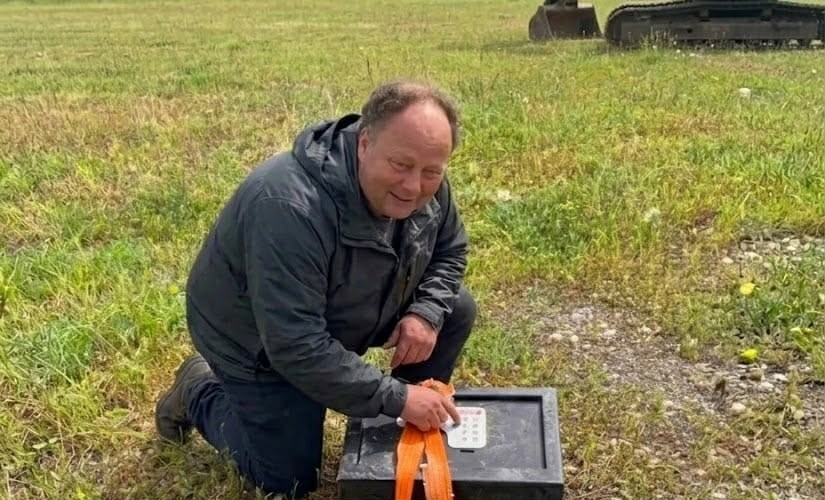
The immediate consequence is clear: Billy has not simply uncovered treasure.
He may have opened a new line of investigation.
The chest creates a physical connection between wealth, survival, and secrecy, three elements that rarely appear together without a reason.
Determining that reason could lead the team away from familiar expectations and toward a chapter of the island’s history no one anticipated.
If the contents are authenticated as a single historical deposit, the team will have to ask where the chest was meant to go and whether it was ever supposed to be recovered.
A cache of this kind could have been hidden temporarily, buried during a moment of danger, or left as part of a larger concealed system.
The possibility that other containers, structures, or pathways remain nearby would transform the find from an isolated surprise into a potential marker.
That prospect also raises the stakes.
Every new interpretation risks pulling attention from another theory, while every unanswered question increases the pressure to keep searching.
The chest could validate years of belief that Oak Island holds more than disconnected artifacts.
It could also force the team to confront an uncomfortable alternative: the island’s central secret may not match the story they expected to find.
For now, the lid is open, but the truth is not.
Billy’s discovery has placed visible treasure in front of the team while keeping its meaning just beyond reach.
Until the coins, weapons, chest, and other objects can be tied to a time and purpose, the greatest treasure remains the missing narrative itself.
Oak Island is no longer guarding only what was buried.
It is guarding the identity of the people who hid it and the forgotten event that made secrecy necessary.