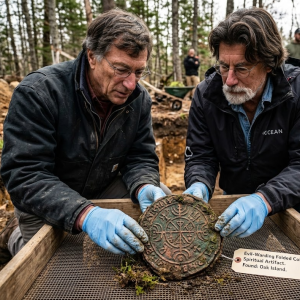
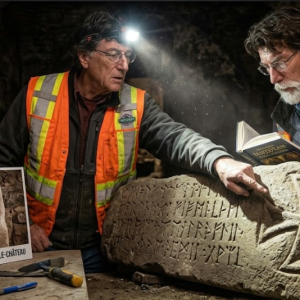
The story of Oak Island is not just a quest for gold bars or ancient manuscripts; it is a silent but fierce legal “battlefield.” When a treasure is discovered, it is not merely a moment of glory for the explorers—it is the moment when the laws of Canada and the province of Nova Scotia assert their ultimate authority.
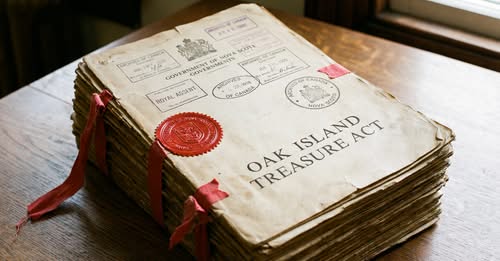
The following is an analysis of the legal complexities and why the government ensures they remain the ultimate stakeholders in whatever lies beneath the island.
1. Ownership and the Special Places Protection Act
In Canada, specifically in Nova Scotia, any object of historical or archaeological significance falls under the jurisdiction of the Special Places Protection Act. The government does not view treasure simply as private property; they view it as national heritage.
If the Lagina brothers or any other explorers discover an artifact of historical weight—such as a Knights Templar cross or original Shakespearean manuscripts—they do not have the right to pocket it or immediately head to an auction house. By law, every find must be reported to the Nova Scotia Museum. The government holds the right to inspect, preserve, and decide the fate of the item to ensure that historical value is not lost to international private collections.
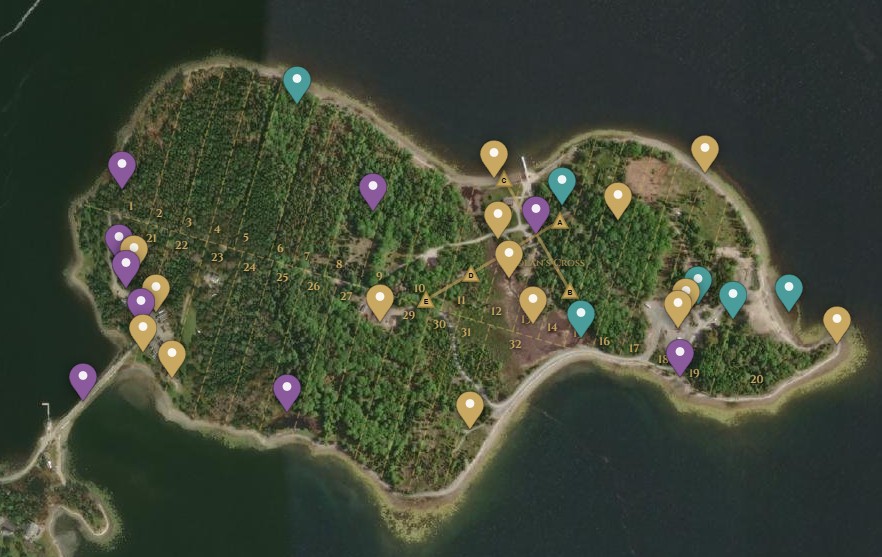
2. The Oak Island Treasure Act
In the past, Nova Scotia operated under the Treasure Trove Act, which allowed treasure hunters to keep a large portion of their finds after paying a royalty to the province. However, this act was repealed in 2010 and replaced by much stricter regulations.

Currently, explorers operate under the Oak Island Treasure Act. These modern regulations include:
- Royalty Distribution: The government typically claims a fixed percentage of the treasure’s value (often 10% or more, depending on the agreement).
- Strict Oversight: All excavation activities must be monitored by licensed archaeologists. This explains why, in televised depictions, experts are always on hand to inspect every bucket of mud pulled from the “Money Pit.”
3. Why the Government “Takes No Risks”
The idea that the government “isn’t taking any risks” reflects a masterclass in administrative strategy. They do not invest their own capital into the digging—an endeavor costing tens of millions of dollars with a high probability of failure. Instead, they have built a legal net to ensure a win-win scenario for the state:
- In Case of Failure: Private investors bear the entire financial loss.
- In Case of Success: The government collects tax revenue, secures priceless cultural artifacts, and boosts local economy and tourism through the island’s fame.
Furthermore, the government enforces rigorous environmental standards. Any risk to the ecosystem of Mahone Bay can result in the immediate suspension of permits. In essence, they protect public assets while allowing private individuals to “gamble” against the island’s legendary curses.
Conclusion
The discovery of treasure on Oak Island would trigger a complex new chapter of litigation and asset division. Regardless of how much sweat, blood, and capital the hunters pour into the soil, the ultimate “winner” will always be the law. The government has constructed a legal framework tight enough to ensure that whether the treasure is solid gold or merely ancient pottery, it serves the interests of Nova Scotia long before it reaches the pockets of any individual.