A mysterious 130-foot-long mound, evidence of medieval activity, and a silver coin dating back more than 300 years: Rick and Marty Lagina’s latest discoveries have reignited one of the greatest treasure mysteries in history.
But could these extraordinary finds finally reveal what lies beneath Oak Island — or are they only the beginning of an even bigger puzzle?
A Mysterious Mound Hiding an Ancient Secret
For centuries, Oak Island, Nova Scotia, has fascinated treasure hunters with stories of buried riches, secret tunnels, and unexplained structures.
Now, the Lagina brothers’ investigation has turned toward Lot 15, where a strange earth-and-stone formation has raised astonishing questions.
Stretching approximately 130 feet, the feature has been nicknamed the “Serpent Mound” because of its unusual snake-like appearance.
Archaeologists examining the site discovered charcoal, suggesting that people may once have carried out significant activities in the area.
But the biggest surprise came when the material was subjected to radiocarbon dating.
According to the team’s findings, the charcoal produced a date range of approximately 1320 to 1440.
That result immediately captured everyone’s attention.
Could human activity on Oak Island stretch back centuries before the legendary Money Pit was discovered in 1795?
And who might have been responsible?
The Knights Templar Theory Returns
The medieval date range inevitably revived one of Oak Island’s most controversial theories: a possible connection to the Knights Templar.
The medieval religious and military order has long featured in speculation about secret voyages, hidden relics, and lost treasure.
Some Oak Island enthusiasts believe that members or successors of the order could have reached North America long before the island became famous.
However, the charcoal discovery does not establish such a connection.
Radiocarbon dating can help determine when organic material originated, but it cannot identify who deposited it or explain why.
Nevertheless, the discovery offers an intriguing reason to investigate the mound more closely.
Gary Drayton Uncovers a Strange Iron Object
Elsewhere on Lot 15, metal-detecting expert Gary Drayton joined David Vernetti and Michael John to investigate another mound near a suspected pine tar kiln.
The team hoped to uncover objects that might explain the area’s historical use.
Then Gary’s detector produced a promising signal.
Buried beneath compacted earth was an unusually large, heavy piece of iron.
The object surprised the team, but its exact purpose and age remained uncertain.
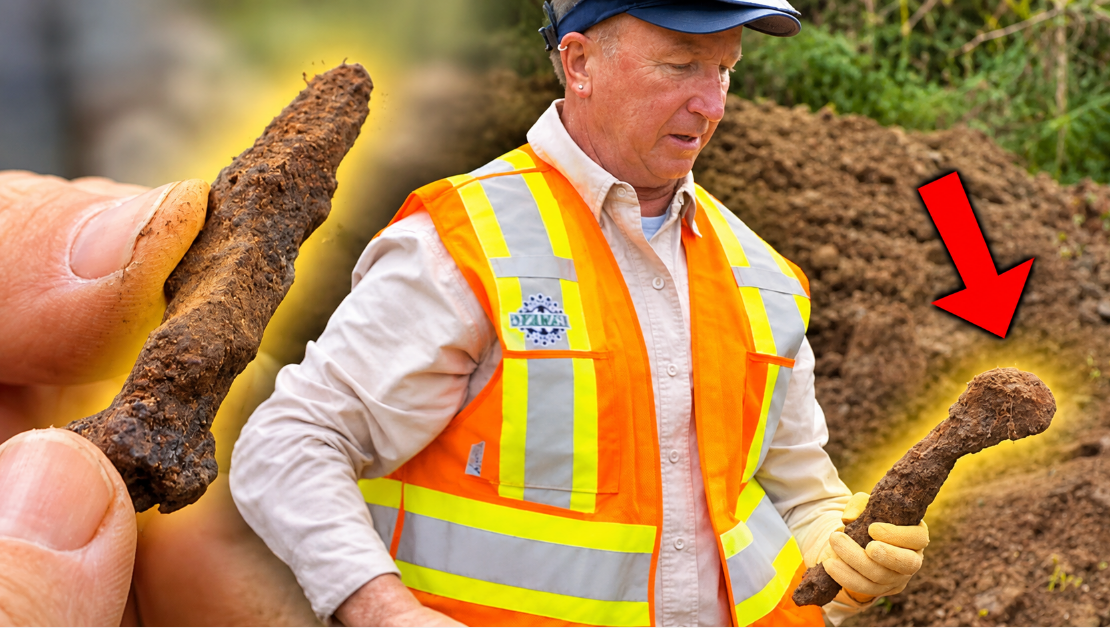
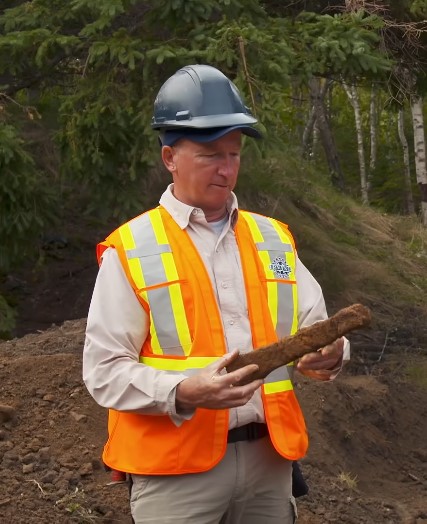
Later, while examining the Serpent Mound area, Gary recovered another potentially significant artifact: an old-looking, hand-forged iron spike.
Its distinctive shape suggested that it might once have served a specialized construction purpose.
Could it have belonged to an old wooden platform, dock, or other structure?
The team considered those possibilities, although no definitive identification was established.
A Stunning Discovery Near the Money Pit
The investigation took an even more dramatic turn near the legendary Money Pit.
There, Steve Guptill, Katya Drayton, and Billy Gerhardt searched piles of soil left behind by treasure hunter Robert Dunfield’s massive 1965 excavation.
The discarded material had never been thoroughly examined for historical artifacts.
Then Katya’s metal detector registered a promising signal.
Moments later, she uncovered a small object that appeared to be a silver coin.
The discovery was exciting, but the real revelation came in the laboratory.
The Silver Coin That Changed Everything
Researcher Emma Culligan examined the coin using scientific imaging and compositional analysis.
Her findings confirmed that it was made from a silver alloy containing approximately 87% silver.
Despite extensive wear, the surviving markings provided enough detail for identification.
Emma matched the object to an English sixpence issued during the reign of King William III.
Its estimated date range was 1697 to 1701.
For the Lagina brothers, the implications were enormous.
The coin had been minted nearly a century before the traditional discovery date of the Money Pit.
Marty considered the discovery especially significant because it had been recovered from material associated with earlier excavation work near the famous site.
But one crucial question remained unanswered.
How did the coin get there?
It could have been lost during historical activity, deposited in disturbed soil, or introduced through some other process.
Its presence alone cannot prove that a hidden treasure chamber exists.
The Final Meeting Brings an Emotional Twist
As the exploration season concluded, Marty gathered the team for an emotional final meeting.
He displayed a Canadian gold Maple Leaf coin as a symbol of the treasure they still hoped to discover.
But his message went far beyond precious metals.
The relationships, dedication, and shared experiences of the Oak Island team had become a different kind of treasure.
Rick, meanwhile, made it clear that the mystery was far from over.
Despite the discoveries, the definitive answer remained elusive.
Has Oak Island Finally Revealed Its Greatest Clue?
The Serpent Mound, mysterious iron artifacts, and centuries-old silver coin have added remarkable new chapters to the island’s history.
Yet none of these discoveries conclusively establishes that the Knights Templar visited Oak Island or that an enormous treasure remains buried beneath it.
What the evidence does suggest is that the island’s past may be far more complicated than the familiar Money Pit legend.
And for Rick and Marty Lagina, that possibility is reason enough to keep digging.
Could the next excavation finally reveal the secret that generations of treasure hunters have spent their lives trying to uncover?