The Gold Rush audience sees the gold, the giant machines and the dramatic cleanups, but there is another side of the series that rarely receives the same attention: the money behind the operation. Parker Schnabel, Tony Beets, Rick Ness and their crews are working in one of the most expensive and demanding mining environments in television, raising an obvious question about what the people on screen actually earn.

The answer is more complicated than many fans might expect.
There is no official public Discovery payroll showing exactly how much each star receives for appearing on Gold Rush. Individual television contracts are private, and many figures circulating online are estimates rather than confirmed salaries. What can be established, however, is that the financial structure behind the show involves far more than a television paycheck.
For the miners themselves, the real money can come from a combination of mining wages, overtime, bonuses, business profits and television-related income.
PARKER’S CREW PAY OFFERS A RARE GLIMPSE
Parker Schnabel has provided one of the clearest public glimpses into what his mining employees can earn.
In comments reported by Looper, Parker said new members of his crew started at around $28 an hour, while the median wage was closer to $34 an hour. He also explained that workers could put in roughly 75 hours per week during a mining season lasting around 25 weeks.
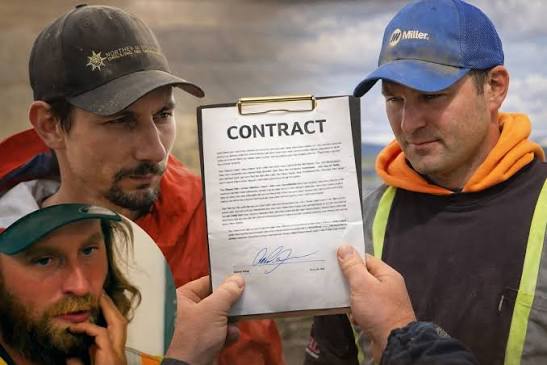
Using Parker’s figures, a starting employee could earn roughly $65,000 in gross wages before bonuses during a season.
That figure does not represent a Discovery television salary.
It represents compensation from Parker’s mining operation.
And there is another important factor.
Parker said his workers could receive significant bonuses, while housing and food were provided while they were working on site.
That means the value of the job cannot be judged simply by looking at the basic hourly rate.
THE BONUS CAN CHANGE THE EQUATION
Gold mining is fundamentally different from an ordinary nine-to-five job.
A crew can work for months under brutal conditions, moving enormous quantities of material without knowing exactly how much gold will ultimately be recovered.
That is why performance incentives can become important.
Parker has previously indicated that bonuses form part of his compensation structure, although he has not publicly disclosed the exact formula or amounts.
The arrangement makes sense from a business perspective.

If the crew keeps the wash plants running, reduces downtime and recovers more gold, the entire operation benefits.
The workers therefore have a financial reason to push for higher production.
But the opposite is also true.
A mechanical failure, poor ground or prolonged downtime can hurt the operation’s bottom line even though the crew still has to be paid.
PARKER’S PERSONAL RISK IS ON ANOTHER LEVEL
The difference between Parker and an ordinary employee becomes even clearer when the scale of his operation is considered.
Ahead of Season 16, Parker told People that his operation was spending roughly $100,000 per day in base costs, with total expenses rising to approximately $200,000 to $250,000 per day when acquisition costs were included.
That changes the meaning of a bad mining day.
For a worker, a breakdown may mean lost production and frustration.
For Parker, it can mean hundreds of thousands of dollars moving in the wrong direction.
The mine boss therefore carries a level of financial exposure that is dramatically different from that of even a highly paid employee.
THE TELEVISION MONEY IS A DIFFERENT STORY
The biggest mystery remains what Discovery actually pays the stars of Gold Rush.
Unlike Parker’s comments about crew wages, there is no comparable official public breakdown of the television compensation received by Parker, Tony, Rick or other regular cast members.
Online estimates vary widely.
Some websites claim specific per-episode figures, while others publish annual salary estimates. But without contracts or direct statements from Discovery or the cast, those numbers should not be treated as confirmed facts.
That distinction is particularly important because Gold Rush combines two separate businesses.
There is the mining operation.
And there is the television production.
A person appearing on the programme can potentially receive compensation connected with the show while also earning money through their actual mining work.
Those two income streams should not automatically be combined into one supposed “salary.”
TONY BEETS HAS A DIFFERENT FINANCIAL MODEL
Tony Beets is not simply a television personality who happens to mine.
Discovery describes him as a veteran Klondike miner who operates one of the biggest mining operations in the region. His family is also deeply involved in the business, with his wife Minnie and children working within the family operation.
That means Tony’s financial position is closely connected to the underlying mining business itself.
The television series has certainly made him internationally recognisable, but his mining operation existed long before his Gold Rush fame.
For Tony, therefore, the value of television exposure and the value of the gold business are intertwined but not identical.
RICK NESS FACES A DIFFERENT KIND OF PRESSURE
Rick Ness occupies another position entirely.
Unlike Parker and Tony, whose operations have become large-scale mining businesses, Rick has spent much of his Gold Rush journey trying to establish and rebuild his own operation.
That means his financial risk can be particularly intense.
Every machine costs money.
Every worker has to be paid.
Fuel, transportation, repairs and ground preparation all require capital before the gold reaches the sluice.
A television appearance can provide valuable exposure, but it does not remove the underlying risks of mining.
In fact, being on television can make those risks more visible.
Fans see the setbacks.
They see equipment failures.
They see disappointing cleanups.
And they see the pressure on mine bosses when production falls behind.
THE CREW MEMBERS MAY BE THE MOST OVERLOOKED
Parker, Tony and Rick are the names printed on the promotional material.
But a mining operation cannot function without the people behind them.
Truck drivers.
Mechanics.
Wash-plant operators.
Foremen.
Excavator operators.
Gold-room workers.
Each role carries its own responsibilities, and experienced employees can become extremely valuable to a mine boss.
Parker has repeatedly built his operation around trusted people, and his public comments about crew wages demonstrate that skilled workers can earn substantial seasonal compensation.
The physical demands are also enormous.
Long hours, heavy machinery, cold conditions, dust, mud and constant mechanical problems are part of the job.
The paycheck is therefore compensation for much more than simply appearing on television.
THE FAME COMES WITH ANOTHER KIND OF VALUE
There is also an intangible financial benefit to becoming a recognizable Gold Rush personality.
Television exposure can create opportunities beyond mining.
Cast members can build social-media audiences, participate in appearances, develop merchandise, pursue business opportunities or use their television profile to expand other projects.
That means the long-term financial value of appearing on Gold Rush cannot necessarily be measured by an episode fee alone.
A miner who becomes a fan favourite may have opportunities that did not exist before the cameras arrived.
WHY THE NUMBERS ARE SO HARD TO VERIFY
The biggest problem with Gold Rush salary stories is that viewers naturally want a simple answer.
How much does Parker make?
How much does Tony get?
What does Rick earn?
How much does a crew member receive?
But the available evidence does not provide a complete public answer.
Parker has disclosed certain details about his crew compensation.
He has also spoken openly about the extraordinary costs of operating his mining business.
Discovery has publicly documented Tony’s role as a major mine boss.
But the exact terms of individual television contracts remain private.
That means precise figures circulating online should be treated cautiously unless they can be traced to a direct statement or reliable documentation.
THE REAL PRICE OF GOLD RUSH FAME
The most interesting part of the financial story may therefore be the contrast between what viewers see and what actually happens behind the scenes.
A television audience sees a gold cleanup and sees millions of dollars in gold value.
But that does not mean the mine boss simply pockets the entire amount.
Before the gold becomes profit, there are wages, fuel, equipment, repairs, land costs, transportation and countless other expenses.
Parker’s own comments about spending hundreds of thousands of dollars per day demonstrate just how quickly mining revenue can be consumed by operating costs.
The same principle applies to the crews.
A worker may earn a strong seasonal wage, but that money comes in exchange for months of demanding work in an environment that few people would voluntarily choose.
MILLIONS IN GOLD DO NOT MEAN MILLIONS IN PAYCHECKS
That may be the biggest misconception surrounding Gold Rush.
When viewers see a gold haul worth hundreds of thousands or even millions of dollars, it is easy to assume everyone involved is becoming wealthy.
Reality is more complicated.
The gold has to cover the cost of finding it.
The crew has to be paid.
The machines have to be maintained.
The operation has to survive the next breakdown.
And the mine boss has to prepare for another season.
That is why the financial divide between owners, senior crew members and ordinary workers can be significant.
THE PRICE BEHIND THE SHOW
Ultimately, the real financial story of Gold Rush is not simply about how much Discovery pays its stars.
It is about an entire economic ecosystem built around gold mining and television.
Parker has the enormous responsibility of financing an expanding operation.
Tony has decades of mining experience and a family business behind him.
Rick continues to fight for his place among the established mine bosses.
And the crews do the physically demanding work that keeps the entire system moving.
The exact television contracts remain private, but some numbers are clear enough to show the scale of the business.
Parker has publicly described substantial crew wages and bonuses, while his own operating expenses can reach extraordinary levels.
That paints a very different picture from the simple idea that Gold Rush stars are merely being paid to dig for television.
Behind every ounce recovered is a workforce.
Behind every gold cleanup is a massive financial gamble.
And behind every familiar face on screen is an economic story that is far more complicated than the cameras reveal…