The decade-long search for answers on Oak Island has taken a sophisticated turn as a series of “dazzling” finds on the island’s western end suggests that 18th-century high society—and perhaps a massive military expedition—may be the key to the legendary Money Pit.History
In a dual-front investigation spanning the triangle-shaped swamp and the mysterious Lot 5, the team led by Rick and Marty Lagina has unearthed artifacts that bridge the gap between crude structural remains and elite European wealth.
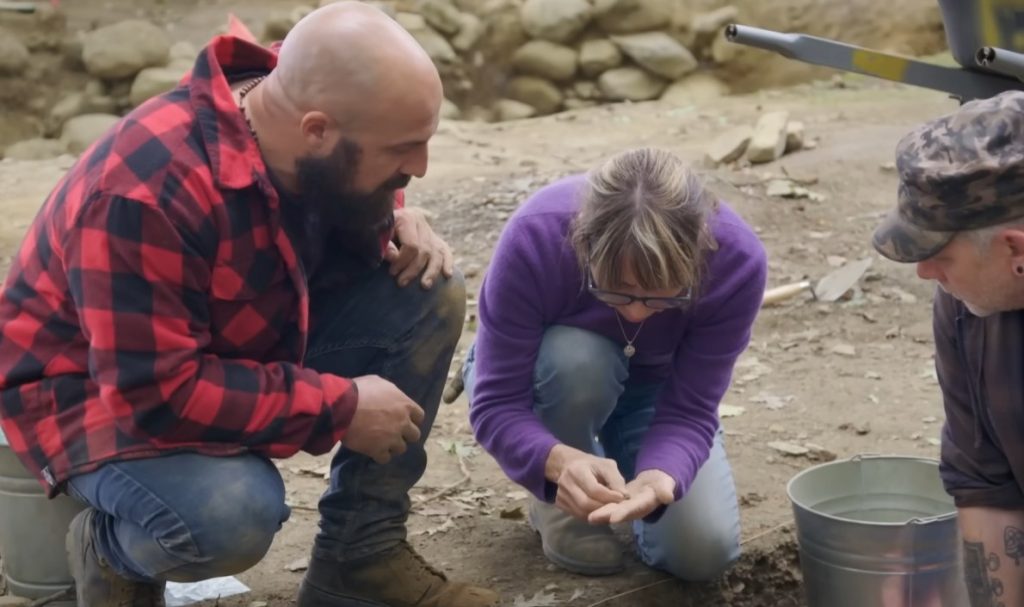
The “Dazzler” of Lot 5
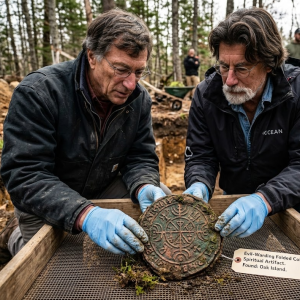
The most significant breakthrough occurred near a round stone foundation on Lot 5. Archaeologist Fiona Steele and her team uncovered a triangular metal hinge, potentially from a small chest, followed immediately by a shimmering, multifaceted artifact.
Initially thought to be a diamond or cut glass, the “gemstone” was rushed to the Oak Island laboratory for archaeometallurgical analysis. Expert Emma Culligan revealed that the artifact possesses an incredibly high lead content—far exceeding modern glassware.
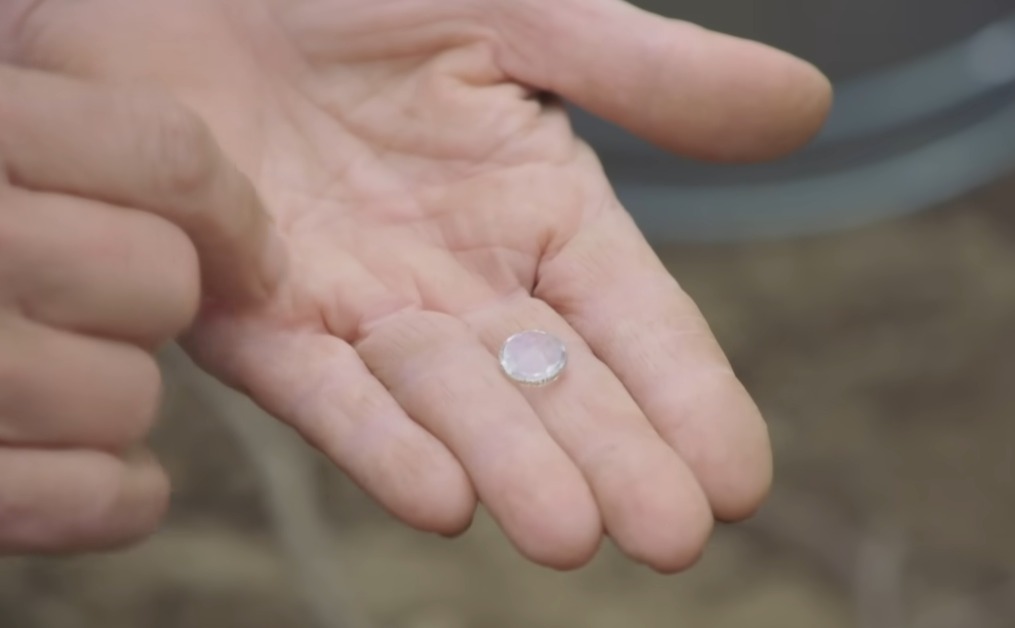
“It’s what we call ‘paste,’” explained archaeologist Laird Niven. He identified the find as flint glass, a high-lead crystal ground into powder and pressed into a mold to simulate the brilliance of a diamond. This specific process was pioneered in the early 18th century by French jeweler Georg Friedrich Strass and became a hallmark of the French aristocracy.
The Duc d’Anville Connection
The chemical composition of the glass “jewel” points to a date between 1734 and the mid-1700s. For Marty Lagina, this date is a “square fit” for the ill-fated Duc d’Anville expedition of 1746, a massive French naval fleet sent to reclaim Acadia.
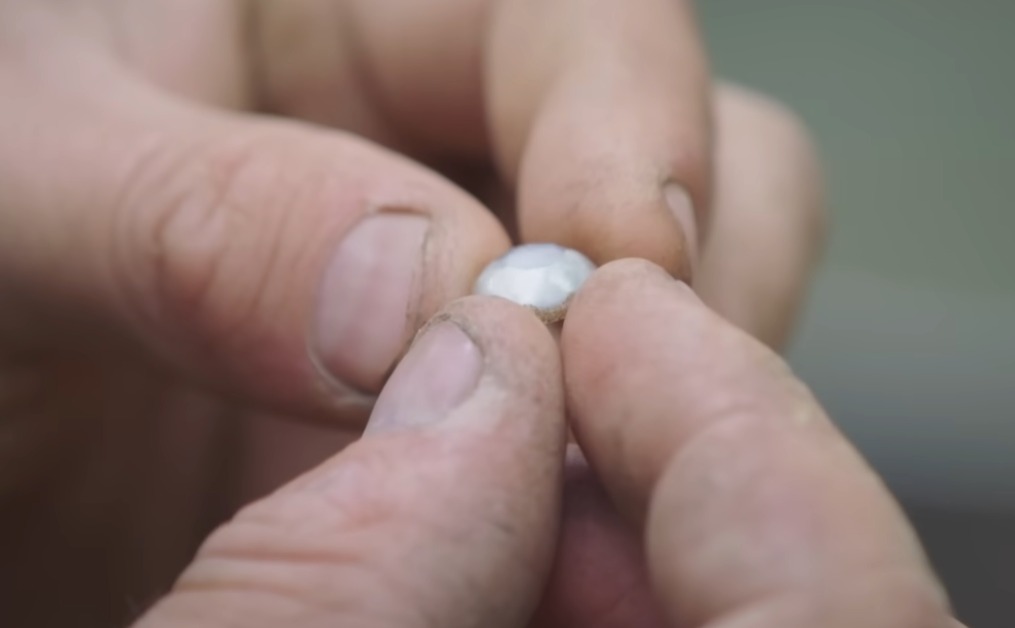
“This underscores that someone of importance and wealth was on Lot 5,” Marty noted. “They were either visiting or overseeing a significant operation.”
The presence of such an elite artifact at a seemingly “crude” stone structure suggests the site may have served as a high-level command center or a workers’ camp during a clandestine burial operation.
The “Smoking Gun” Soil
Perhaps most startling is the geological link between Lot 5 and the Money Pit. Lab tests confirmed that mortar-like material found within the round foundation on Lot 5 matches soil samples recovered from over 100 feet deep in the Money Pit area.

This connection suggests that the same individuals who were building structures on the surface of Lot 5 were also involved in deep-earth excavations nearly half a mile away. The varied artifacts found at the site, ranging from the 14th to the 18th centuries, indicate that the feature was modified and used by different groups over several eras—further supporting the theory of multiple treasure caches.
Deep Secrets in the Swamp
Simultaneously, in the northern region of the triangle-shaped swamp, Rick and Alex Lagina uncovered a piece of shaped wood buried three feet deep. The depth of the find has raised new questions about how many layers of human activity are hidden beneath the muck.
“The boards didn’t get there on their own,” remarked heavy equipment operator Billy Gerhardt. “We continue to show that people were working in the swamp for something.”
As the team prepares to deploy CT scanners to further analyze the “dazzler” gem, the focus remains on finding its “brothers and sisters.” If a French nobleman’s jewelry was lost on Lot 5, the fellowship believes the source of that wealth is still waiting to be found in the depths of the Money Pit.