A massive granite boulder on Oak Island’s Lot 8 has become the centre of an extraordinary treasure theory, one that suggests the island’s greatest secret may lie far beyond the famous Money Pit. What initially appeared to be an unusual arrangement of stones has inspired speculation about a concealed underground entrance, a network of hidden tunnels, and a possible treasure chamber containing historic riches worth an estimated $830 million. For Rick and Marty Lagina, the renewed attention surrounding Lot 8 raises a fascinating possibility: could generations of treasure hunters have been searching in the wrong location?
The theory builds on genuine archaeological interest in Lot 8, where investigators have examined a mysterious boulder structure and previously recovered significant historical artifacts. However, the claims of an $830 million vault, recovered silver bullion, and an extensive connected tunnel network described in the source narrative have not been independently confirmed. Their significance lies in the questions they raise about the island’s history and what future investigations might establish.
A Massive Boulder With an Unusual Secret
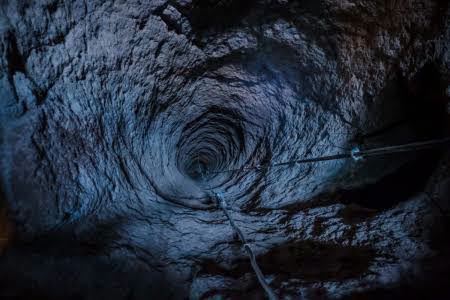
For more than two centuries, the Money Pit has dominated the Oak Island investigation. Since its reported discovery in 1795, treasure hunters have invested enormous resources attempting to understand the underground structures and recover whatever might be concealed beneath them.
Lot 8 presents a different direction.
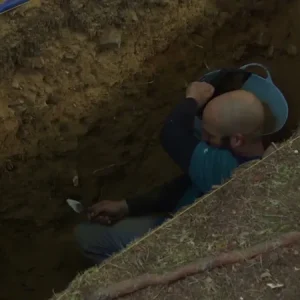
The area has attracted attention because of its mysterious stone formations and archaeological discoveries. In February 2026, HISTORY highlighted the team’s investigation of a potentially man-made boulder structure, including questions about an iron object and possible material beneath the surface.
The source narrative takes this mystery considerably further, describing a giant boulder supported by deliberately positioned stones above a concealed opening.
Under that interpretation, the boulder would not simply be a natural feature. It could have been incorporated into an engineered structure intended to conceal or protect access to something underground.

Such an arrangement would require careful archaeological investigation. Researchers would need to establish whether the supporting stones were deliberately placed, whether the surrounding soil had been disturbed, and whether any cavity was natural or constructed.
Until those questions are answered, the idea of a secret entrance remains a theory.
Could Lot 8 Conceal an Underground Treasure Chamber?
The most ambitious interpretation suggests that Lot 8 could contain an alternative entrance to Oak Island’s underground mysteries.
According to the supplied account, hypothetical subsurface surveys identify linear anomalies extending beneath the terrain, raising the possibility of passages connecting the boulder to other areas of the island.
The theory proposes that the Money Pit may not have been the final destination of a historical treasure deposit.
Instead, it imagines the famous shaft as part of a larger underground system, potentially directing attention away from a separate chamber built to safeguard valuable cargo.
An estimated figure of $830 million is attached to the proposed treasure in the narrative.
Yet no verified inventory, recovered treasure deposit, or established valuation supports that amount.
The figure is therefore best understood as an element of the speculative theory, rather than the assessed value of a documented discovery.
Nevertheless, the broader question is intriguing: if early visitors constructed substantial features across Oak Island, could some of those structures have served interconnected purposes?
Gary Drayton’s Discoveries Give Lot 8 Historical Importance
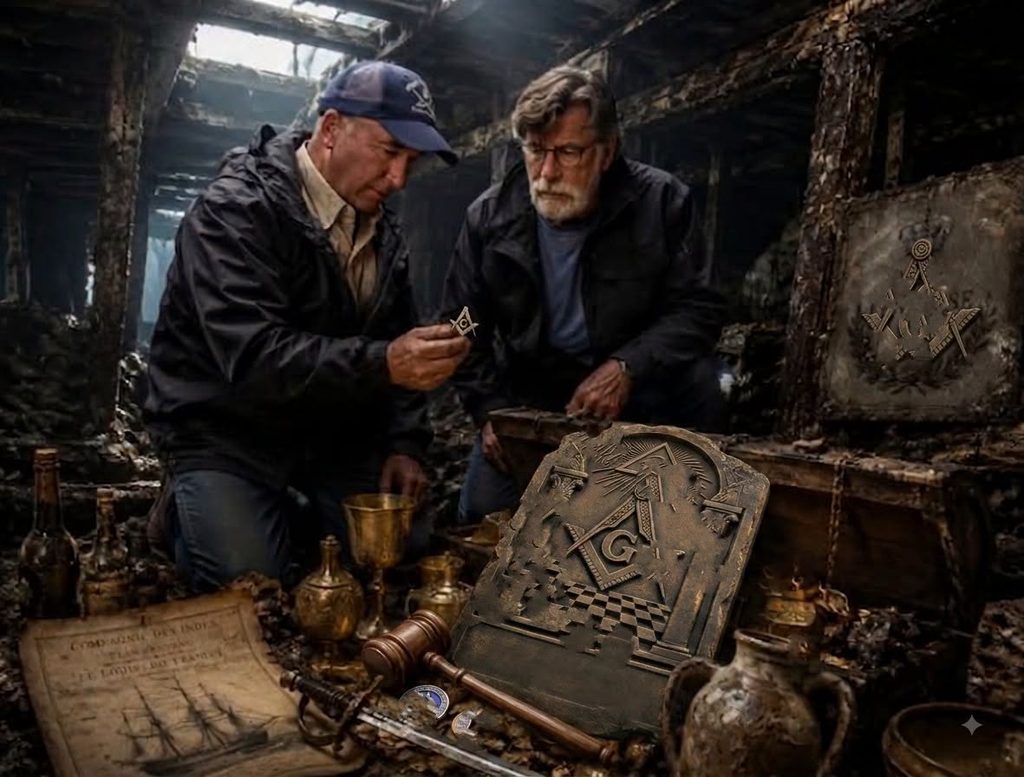
Lot 8 is not merely an area of theoretical interest.
Gary Drayton has previously recovered artifacts there that have encouraged further examination of the island’s early history.
Among the most notable is a garnet-studded pin believed to date potentially as far back as the 16th century.
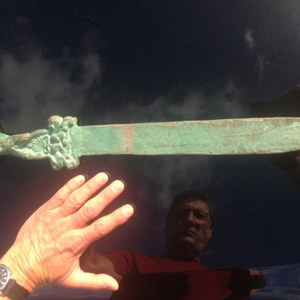
Another important discovery involved a copper-rich artifact bearing unusual markings, recovered by Gary and Jack Begley in 2022. The object’s design has prompted discussions about possible European religious connections and even earlier historical influences.
These discoveries are documented by HISTORY’s official Oak Island findings map.
Neither artifact establishes the existence of a hidden treasure vault.
However, their presence demonstrates why Lot 8 remains an interesting area for archaeological research.
They also raise questions about the movement of people and objects across the island long before the modern treasure-hunting era.
Could Lot 8 have served as a stopping point for European visitors? Was it used for activities connected to the nearby shoreline? Or are its artifacts remnants of several unrelated historical periods?
Those questions are more grounded than any claim of a confirmed underground fortune.
The $830 Million Silver Vault Scenario
The most extraordinary section of the source narrative describes an imagined sequence in which drilling beneath Lot 8 reveals a stone-lined chamber.
Within this scenario, investigators supposedly discover a timber-supported underground structure containing metallic bars.
One object is described as a silver ingot bearing a double-barred cross, potentially associated with European historical symbolism.
The narrative then connects this supposed discovery to the possibility of a vast collection of precious metals concealed within the chamber.
If such an artifact were genuinely recovered, it would require extensive scientific examination.
Metallurgical analysis could help identify the material, while manufacturing marks might provide clues about its origin. Archaeological dating of associated materials could establish whether the deposit belonged to a particular historical period.
But even an authentic silver ingot would not, by itself, establish the existence of hundreds of millions of dollars in treasure.
The important distinction is that the chamber, silver bars, and claimed valuation form part of the supplied speculative scenario. They are not verified recoveries.
A Possible Connection to the Knights Templar
The theory also revisits one of Oak Island’s most enduring historical possibilities: a connection to medieval European religious and military orders.
Supporters of this interpretation frequently point to unusual crosses, possible European artifacts, and geometric arrangements of stones across the island.
The source narrative proposes that Lot 8 could have formed part of a sophisticated system designed to conceal valuable religious or royal possessions.
It further imagines that Nolan’s Cross, a famous arrangement of large stones, may have functioned as a geographic guide to underground locations.
That would be a remarkable proposition if supported by reliable evidence.
However, geometrical patterns and medieval-looking artifacts do not establish who constructed an underground feature or what they intended to conceal.
There is currently no demonstrated link between the proposed $830 million chamber and the Knights Templar.
The historical theory remains intriguing, but its central claims require proof.
Could the Island’s Western Shore Hold Another Clue?
Another development in the supplied scenario moves the mystery beyond Lot 8 and into the waters surrounding Oak Island.
The imagined silver ingot supposedly carries markings that point toward an offshore location.
Under this interpretation, an ancient ship might have transported valuable cargo to the island, where it was subsequently moved into concealed storage areas.
The narrative goes further by describing a sunken wooden vessel and additional artifacts beneath the seabed.
Those events have not been verified.
Nevertheless, maritime history remains relevant to understanding Oak Island.
The island’s position in Nova Scotia means that seafaring activity, trade, transport, and settlement must all be considered when interpreting historical artifacts.
Previous investigations have examined potential maritime features, including the stone roadway through the swamp and structures near Smith’s Cove.
Determining whether such features are related requires more than geographical proximity. Dating evidence, construction methods, and reliable archaeological context must support any proposed connection.
The Bigger Question Facing Rick and Marty Lagina
For the Lagina brothers, Lot 8 represents an opportunity to broaden the investigation beyond the Money Pit.
A compelling discovery does not necessarily need to involve gold or silver.
Establishing why a particular stone structure was built, determining when a historical object reached the island, or identifying evidence of previously unknown human activity could meaningfully advance the investigation.
That is why the boulder structure remains significant.
Its true importance may lie in the possibility of understanding historical activity across a wider part of Oak Island, rather than proving the existence of a single enormous treasure chamber.
Future investigations would need to distinguish natural geological formations from engineered features, identify the origins of recovered artifacts, and establish reliable dates before drawing larger conclusions.
And if genuine underground structures were eventually identified, researchers would still need to determine whether they belonged to treasure hunters, earlier settlers, or entirely different historical activities.
A Mystery That Has Yet to Reveal Its Final Answer
The possibility of an $830 million treasure vault beneath Lot 8 is an extraordinary storyline, but the strongest evidence currently available supports a more measured conclusion.
Lot 8 contains historically interesting artifacts and a stone structure that has warranted further investigation.
The more ambitious claims of silver bullion, a sealed vault, elaborate underground passages, and an offshore treasure vessel remain unverified elements of the supplied narrative.
That distinction does not diminish the fascination surrounding the location.
Instead, it highlights what makes Oak Island so compelling: apparently ordinary objects can raise questions about centuries of forgotten activity, while each new excavation offers another opportunity to test the island’s enduring legends.
The greatest mystery of Lot 8 may not be whether $830 million in treasure lies beneath its massive boulder, but whether the unusual stone structure conceals evidence capable of explaining who came to Oak Island centuries ago — and what they left behind.