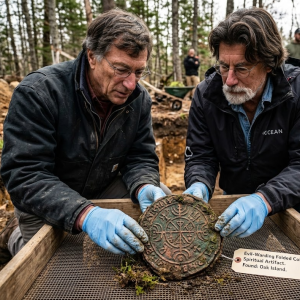
On a windswept section of Oak Island’s western shore, a moment months in the making finally arrived. After weeks of careful excavation and speculation, the team behind The Curse of Oak Island gathered around a massive 40,000-pound boulder on Lot 8, hoping that what lay beneath it might provide new insight into one of North America’s most enduring historical mysteries.
For Rick Lagina, Marty Lagina, and their partners, the operation was not simply about moving a rock. It was about testing a theory: that the enormous stone had been deliberately positioned centuries ago to conceal something hidden below the surface. A Carefully Planned Operation The team’s interest in the boulder began when excavation around its base revealed something unusual.
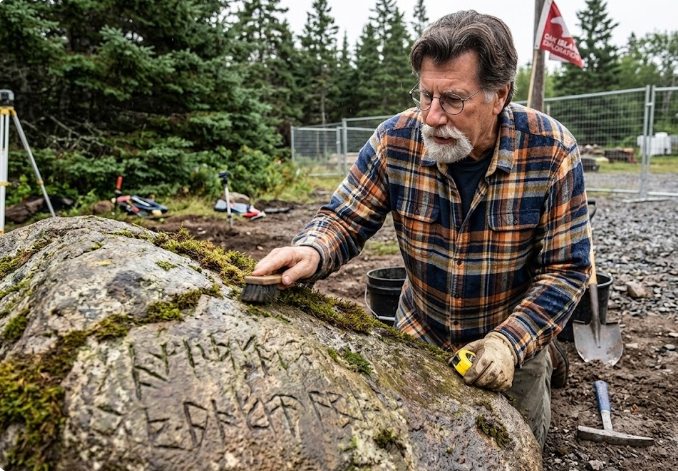
Beneath the massive stone, researchers discovered a pattern of evenly spaced rocks appearing to support it from below. In addition, the soil surrounding the structure showed signs of disturbance — a possible indicator that the area had been intentionally filled in after earlier digging. Archaeologist Laird Niven granted permission for the stone to be lifted using a 130-ton crane, an operation that required careful preparation to avoid disturbing any potential evidence beneath it. When the moment finally came, the crane’s chains tightened around the giant rock, and slowly, the boulder rose into the air.
For a brief moment, the entire team watched in silence. “Look at that,” Marty Lagina said as the massive stone cleared the ground, revealing the soil beneath it for the first time in modern history.
Evidence of Human Activity Initial inspection of the newly exposed ground immediately raised new questions.
According to archaeologist Laird Niven, the soil beneath the boulder did not match what would normally be expected under a natural rock formation. Instead of sterile subsoil, the team observed darker organic material that appeared to have been introduced artificially. “That dark soil isn’t supposed to be under it,” one team member noted. The discovery strengthened an emerging theory: the boulder may have been intentionally placed over a previously excavated hole or shaft.
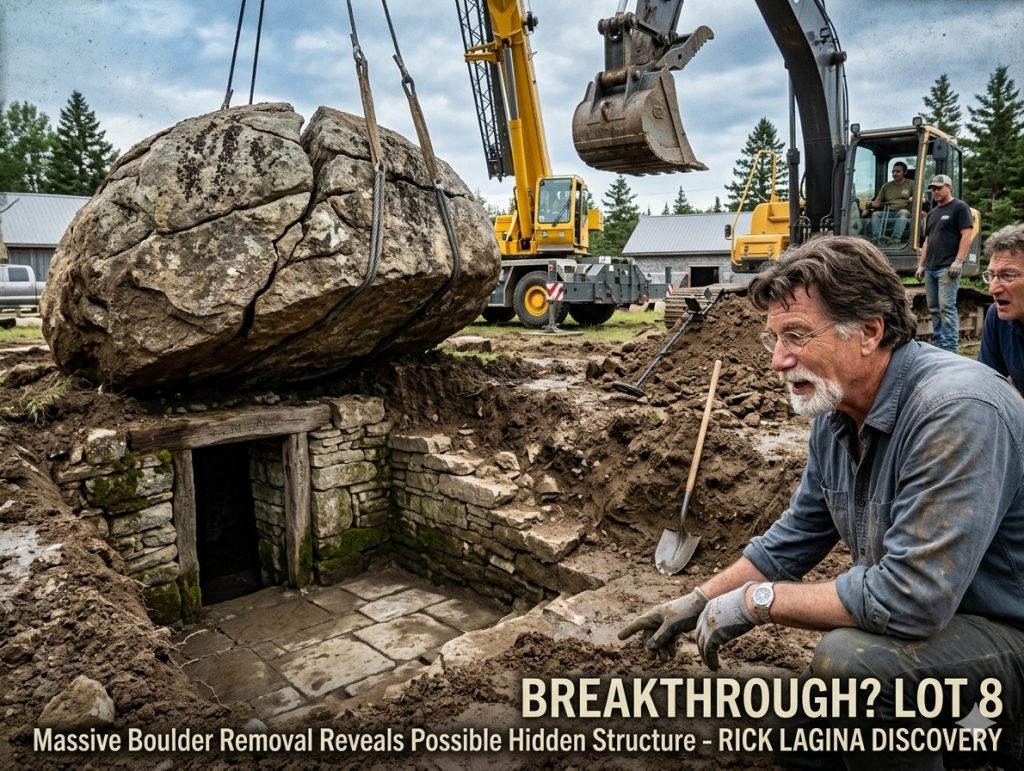
If true, it would suggest that someone — likely centuries ago — carried out a coordinated effort to conceal something underground. Moving a stone of that size without modern equipment would have required significant manpower and planning. “People don’t do that even today for no reason,” one researcher commented at the site.
Metal Traces Raise New Questions The team’s interest in the area had already been heightened by earlier scientific tests. Soil samples taken from beneath the boulder showed unusually high concentrations of lead — reaching as much as 140 parts per million. Such readings are uncommon in undisturbed soil and often point toward past human activity, including mining or metal storage.
To investigate further, geoscientist Dr. Ian Spooner returned to the site with a portable XRF spectrometer, a device capable of detecting metallic elements in soil using X-ray analysis. As Spooner scanned the newly exposed layers, the instrument produced intriguing results. Alongside the previously detected lead, the device identified traces of both copper and silver within the soil. The findings immediately caught the attention of the team. “Silver is exciting,” archaeologist Fiona Steele remarked while reviewing the readings.
Could There Be More Below? While the readings remain preliminary, the presence of silver raises an intriguing possibility. In many archaeological contexts, silver traces can indicate the presence of coins or other metallic objects buried deeper underground. According to Spooner, metals can sometimes migrate upward through soil over long periods of time, carried by moisture or trapped air moving through underground spaces.
If that process is occurring at Lot 8, it could mean the original metal source lies somewhere beneath the layers currently being excavated. “If there was silver here at one point, it could leach into the soil,” Spooner explained. That possibility quickly sparked speculation among the team. “What if it’s still there underneath?” Steele asked. The question echoes a theme that has driven the Oak Island search for more than two centuries: whether the island hides a concealed vault or deposit left behind by an unknown group of builders.
A Complex Historical Puzzle The new findings also align with earlier discoveries made elsewhere on the island. In previous seasons, researchers uncovered artifacts including coins, metal fragments, and structures that suggested large-scale engineering activity dating back hundreds of years. Some historians have theorized that Oak Island may have been used as a storage site for valuables transported across the Atlantic during the colonial era — or possibly even earlier.
However, concrete evidence of a central deposit has remained elusive. The Lot 8 boulder may now represent another piece of that puzzle. The Work Is Far From Over Despite the excitement surrounding the lift, the team emphasized that the discovery raises as many questions as it answers. No visible structures or objects have yet been uncovered directly beneath the stone.
Instead, archaeologists are now focusing on carefully removing layers of soil to determine how deep the disturbed ground extends. According to Niven, the excavation must proceed slowly to preserve any historical evidence that may still be present. “We’re going to clean up the loose soils and see how far down it goes,” he said.
The process could reveal whether the suspected void beneath the boulder connects to a larger underground system — possibly even a tunnel or shaft. A Season-Defining Discovery? For Rick Lagina, the discovery carries enormous potential. “This could absolutely be the highlight of this year’s efforts,” he said as the team prepared for the next stage of excavation.
After years of searching across Oak Island, moments like this remain rare: a tangible sign that the island’s secrets may still lie hidden just beneath the surface. Whether the traces of silver and copper lead to a deeper discovery remains uncertain. But one thing is clear: the mystery of Oak Island continues to evolve — one carefully lifted stone at a time.