At Cusco’s Coricancha, one of the most important sacred sites of the Inca Empire, Josh Gates and the Expedition Unknown team use ground-penetrating radar to test a legend that has lived for centuries: that a secret tunnel runs beneath the monastery and across the historic city.
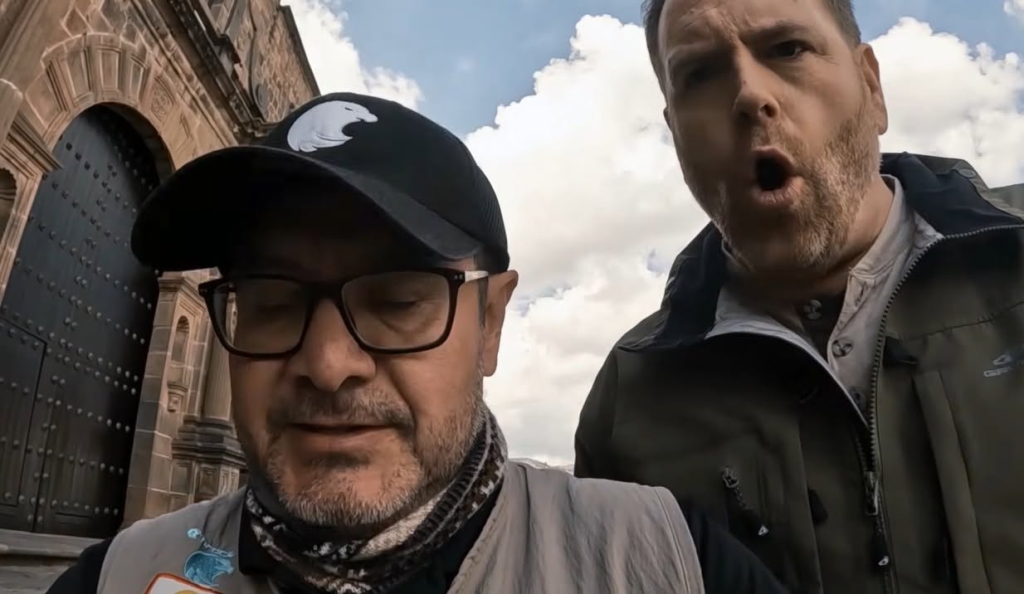
What begins as a local story becomes something far more compelling — a scientifically grounded archaeological hypothesis, and perhaps the first real glimpse of a hidden underground network beneath one of South America’s most storied cities. A legend beneath the street suddenly feels real Some mysteries survive because people keep repeating them. Others survive because the landscape itself refuses to let them die.
The tunnel story beneath Cusco belongs to that second category. For generations, locals and historians have spoken about a hidden underground passage system linked to Coricancha, the Temple of the Sun, one of the most sacred places in the Inca world. That site later became home to the Church and Convent of Santo Domingo, a reminder that Cusco has always been a city where layers of history sit directly on top of one another.
What makes Josh Gates’ investigation so striking is that it does not begin with fantasy. It begins with method. Discovery’s own coverage of the episode describes Gates helping with a first-ever radar scan under the busy streets of Cusco, where the search for lost Inca treasure tunnels is tied to one of Peru’s most famous urban landmarks.
In Gates’ own social post, he pointed to the tunnel rumor beneath the Inca capital and noted that ground-penetrating radar and related measurements were identifying possible passages between Coricancha and Sacsayhuamán. That is the heart of the story. A legend that once sounded like folklore is now being treated like a real archaeological question. The excitement does not come from proof alone. It comes from the moment the old story stops being just a story.
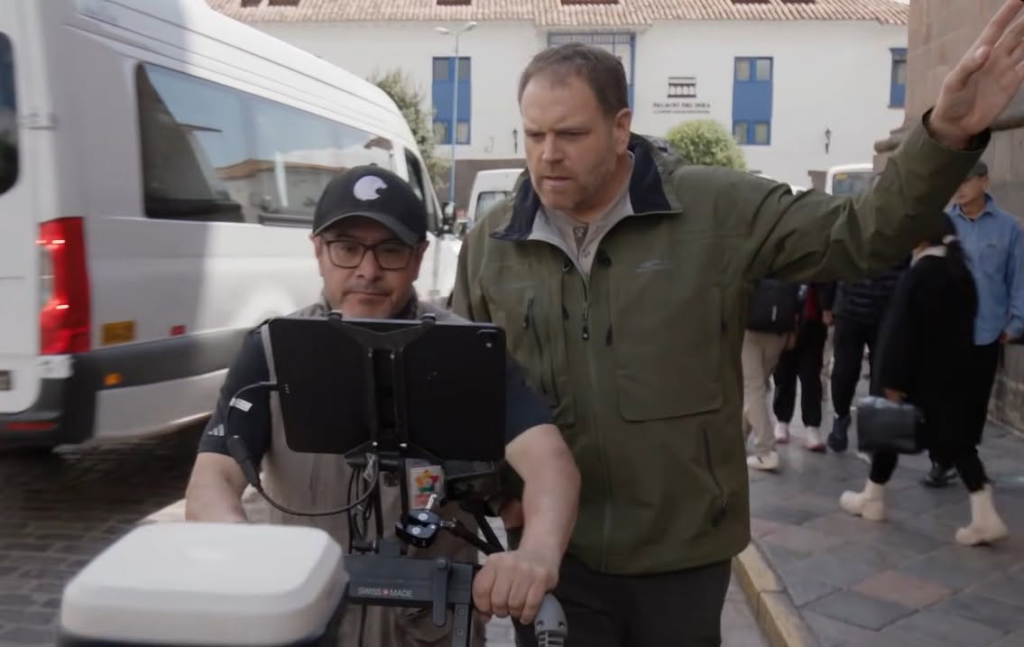
When the radar begins producing repeated anomalies, the tone changes. What was once whispered about in Cusco suddenly feels worthy of instruments, maps, and serious study. Ground-penetrating radar turns rumor into evidence The most powerful part of this search is how carefully it unfolds. Ground-penetrating radar does not deliver a dramatic answer all at once.
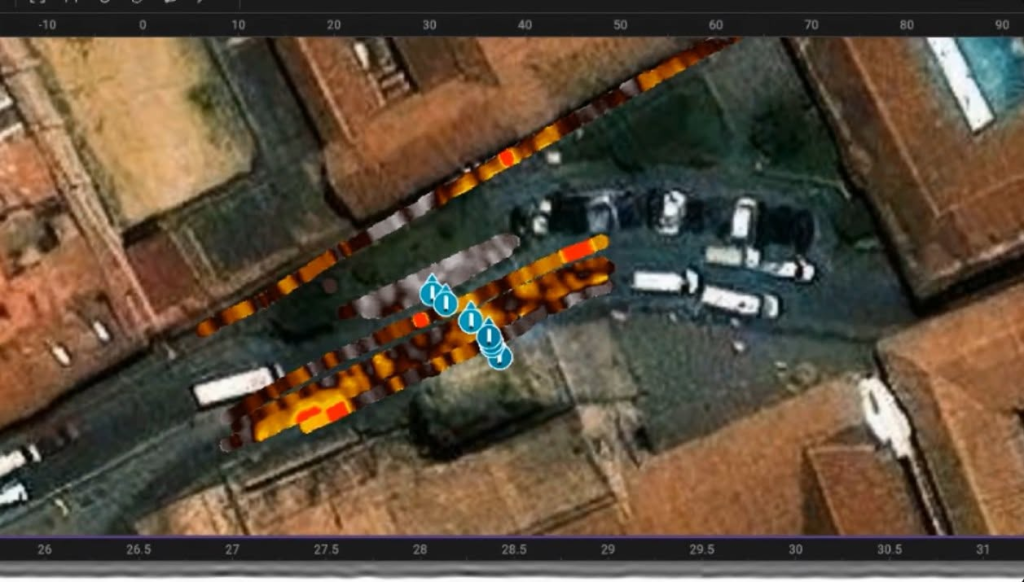
It produces signals, patterns, and anomalies that have to be interpreted. In this case, the scans reportedly revealed subsurface structures that appear interconnected, extending from the monastery’s window area across the street along a specific trajectory. That does not yet prove the existence of a fully excavated ancient tunnel, but it does move the story far beyond speculation.
That shift matters because archaeology often advances not through certainty, but through the slow conversion of old legend into testable hypothesis. Smithsonian reported in 2025 that a 1594 Jesuit text described a tunnel beginning at the Temple of the Sun and running beneath the city toward Sacsayhuamán. Archaeology Magazine later noted that researchers confirmed more than a mile of tunnels beneath Cuzco, with the main route radiating from Coricancha toward the fortress on the edge of the city. Together, those accounts give the radar search a foundation in both historical record and modern analysis.
That is what makes this expedition feel different from a simple treasure hunt. Gates is not waving a flashlight in a dark cave and hoping for spectacle. He is watching modern technology test a centuries-old claim against the ground itself. The real drama lies in the discipline of the search. Each scan adds weight, each anomaly raises the stakes, and each new reading forces the team to ask whether they are looking at a natural void, a disturbance in the soil, or part of something much larger hidden below the street. In the process, the story becomes less about one tunnel and more about the possibility of a connected underground system.
The idea that the structures may extend from the monastery area toward Sacsayhuamán gives the whole investigation an urban scale, as though Cusco’s surface streets are only the top layer of a much older city still working underneath the present. That is the kind of discovery that changes not just a theory, but a way of thinking about the place itself. Why this matters far beyond the monastery wall The emotional power of the story is that it does not stop at “we found something underground.”
It asks a larger question: what does it mean when a city turns out to still be hiding a network of history beneath its daily life? Coricancha is already one of the most symbolically loaded places in Cusco. It was the Inca Temple of the Sun, and the Spanish later built the Church and Convent of Santo Domingo over its foundations, making it a site where conquest and continuity are literally built into the same stone.
That layered history is exactly why a tunnel story matters so much. If the rumors are true, then the passage beneath Coricancha was never just a hidden route. It was part of a much larger sacred and political landscape, one that may have connected major Inca sites and perhaps served practical, ceremonial, or defensive purposes.
Smithsonian’s account of the Jesuit text and Archaeology Magazine’s report of a tunnel system beneath Cuzco both point to a story that is no longer easy to dismiss. What used to sound mythical now feels like a serious archaeological frontier. Josh Gates’ role gives that frontier a human face. He has always been good at taking a big mystery and making it feel immediate. In Peru, that skill matters because the issue is not only whether a tunnel exists.
It is how modern tools can help reveal what centuries of legend could only hint at. The radar, the maps, the city streets, and the monastery walls all become part of the same story. Gates is not merely searching for a hidden passage. He is helping translate a local legend into a language modern archaeology can actually use. And that is why the investigation is so compelling. It does something rare: it gives the past another way to speak.
If the anomalies ultimately prove to be part of an ancient tunnel network, then the story will not just add a new discovery to the record. It will change the way people understand Cusco itself, revealing a city that still contains an unseen dimension beneath its streets. Even if the search ends without full excavation proof, the fact that the legend has become a serious scientific hypothesis is already a major step forward. A mystery that now feels impossible to ignore The best part of this story is that it remains open.
The radar hints are strong, the historical records are intriguing, and the scale of the possible underground system is enough to keep researchers, historians, and viewers hooked. But the mystery is not solved yet, and that uncertainty is exactly what gives the episode its energy. It feels like the kind of investigation that could eventually lead to something far larger than a single tunnel beneath a monastery wall. It could reshape the map of what people think lies under Cusco.
That is the kind of search Josh Gates does best. He does not treat history as a finished thing. He treats it as a conversation still in progress, one that can be advanced by technology, patience, and a willingness to stand in the middle of a city and ask what might still be buried beneath it. In Cusco, that approach has turned a centuries-old rumor into a live archaeological possibility. And once that happens, the story is no longer just about a legend. It is about what the ground itself may still be trying to reveal.