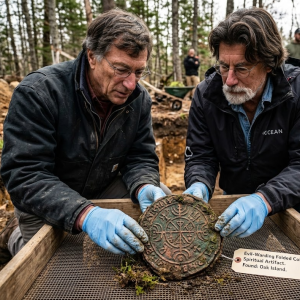
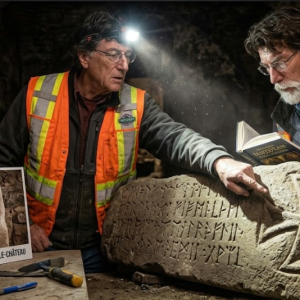
A major new discovery on The Curse of Oak Island may be one of the most significant in the show’s history, as Rick and Marty Lagina’s team uncovered a carefully engineered stone feature beneath a massive 40,000-pound boulder on Lot 8—an area previously believed to be untouched by earlier searchers.
What lies beneath that boulder is now at the centre of intense investigation, with early scientific readings and archaeological observations pointing toward a level of sophistication that challenges long-standing assumptions about who may have worked on Oak Island, and when.
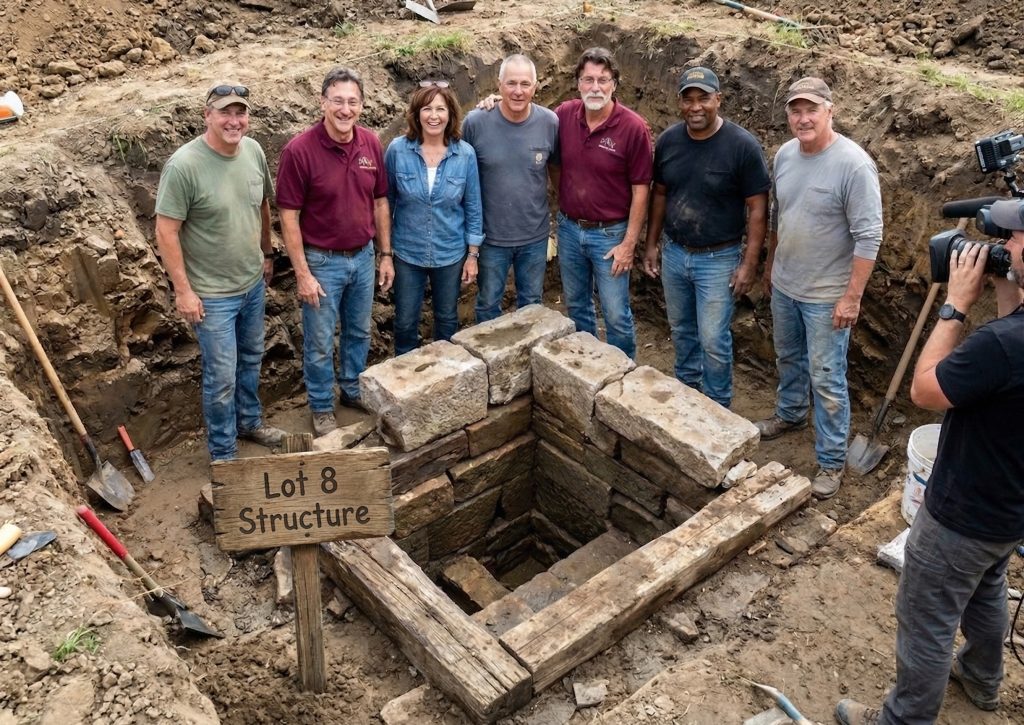
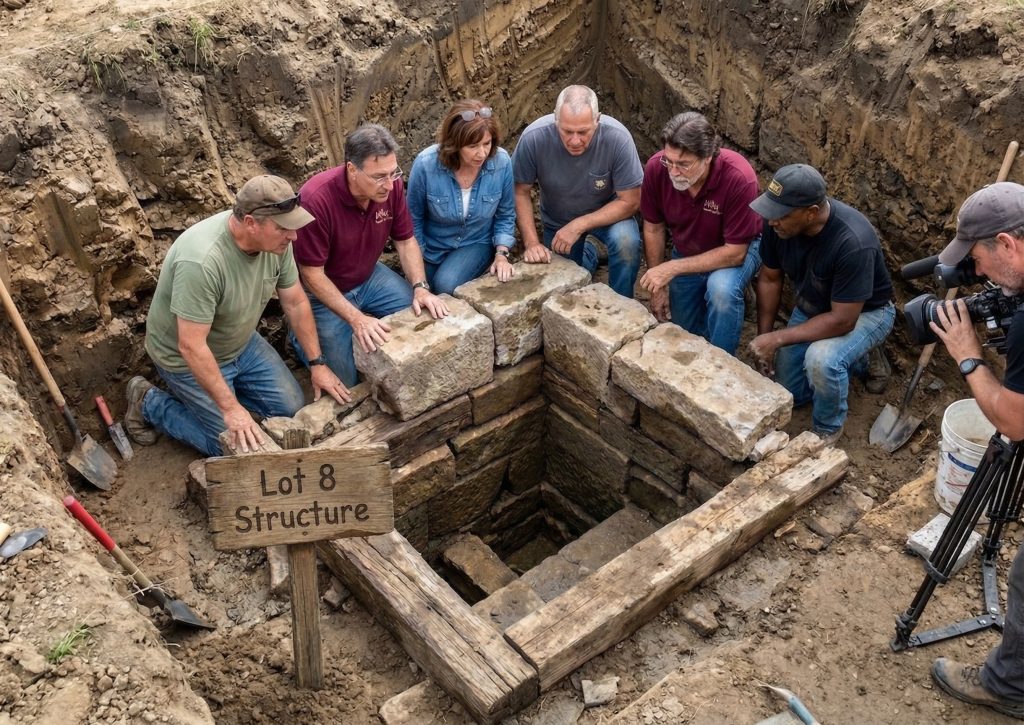
A Discovery Unlike Any Before The breakthrough began when the team removed a massive boulder, weighing approximately 20 tons, revealing a structured arrangement of smaller stones beneath it. Rather than a random geological formation, the stones appeared deliberately placed, forming what experts believe to be a constructed cradle supporting the boulder above.
Below this formation, the team encountered tightly packed soil consistent with a backfilled shaft—suggesting that the area had once been excavated and then deliberately sealed. Crucially, no historical records indicate that earlier explorers or treasure hunters had ever worked in this specific location. That absence of documentation has added weight to the theory that the structure may predate all known search activity on the island.
For Rick Lagina, the visual evidence alone was compelling. The asymmetrical placement of stones, combined with the scale of the boulder, suggested intention rather than coincidence. Moving such a massive object without modern machinery would have required planning, manpower, and technical knowledge.
Scientific Evidence Points to Something Deeper The most striking development came when geoscientist Dr Ian Spooner conducted X-ray fluorescence testing on soil samples taken from beneath the boulder. The results revealed elevated levels of silver and lead—findings that immediately stood out from all previous samples collected across the island.
According to Spooner, the presence of silver in such concentrations is highly unusual and cannot easily be explained by natural processes or surface contamination. Even more significant were the lead signatures, which he linked to a specific historical mining technique.
The chemical patterns are consistent with controlled underground fires used for ventilation in deep mining shafts—a method widely documented in medieval European mining operations, particularly in regions such as Cornwall. If confirmed, this would suggest that whoever created the structure on Lot 8 possessed specialised knowledge of underground engineering and ventilation, and may have excavated to a depth requiring sustained airflow management.
Archaeological Analysis Supports Man-Made Origin Archaeologist Fiona Steel, working alongside the team, reinforced the interpretation that the structure is not natural. Her examination of the site revealed a circular arrangement of stones surrounding the feature, forming what appears to be a defined boundary. Beneath the backfilled soil, she identified a tightly packed layer of stones arranged in a way that suggests deliberate construction rather than natural deposition. The presence of organic material intertwined with the stones further complicates any geological explanation.
Steel noted that she had not encountered similar formations elsewhere in Nova Scotia, strengthening the argument that the feature may represent a unique or imported building tradition. Both Steel and Spooner independently concluded that the evidence points toward human activity—carefully planned and executed. European Connections and Historical Implications The emerging theory among the team is that the structure may be linked to European builders, potentially predating known colonial activity in the region.
This hypothesis aligns with previous findings on Oak Island, including a 14th-century Portuguese coin recovered from the Money Pit and a stone road discovered in the swamp believed to be several centuries old. The construction style observed on Lot 8 bears similarities to megalithic traditions found in parts of Western Europe, where large stones were used in combination with smaller structural elements to create enduring formations. If the Lot 8 feature is indeed part of this tradition, it would suggest that a group with advanced engineering knowledge travelled to Oak Island, excavated a deep shaft, and then sealed it with remarkable precision.
Such an operation would have required not only technical expertise but also significant resources and coordination—raising questions about the purpose of the excavation and what may have been placed within it. A Site Intentionally Left Undisturbed One of the most puzzling aspects of the discovery is the complete absence of artifacts. Despite the scale of the operation implied by the structure, the team has found no tools, personal items, or debris that would typically accompany human activity.
This absence may indicate that the builders intentionally removed all traces of their presence before leaving the site. Alternatively, it could suggest that the structure is far older than previously assumed, with any organic materials having decomposed over time. Rick Lagina has pointed to this lack of evidence as a key detail, suggesting that it reflects either deliberate concealment or extreme antiquity.
A Careful Approach to the Next Phase Given the potential significance of the find, the team has emphasised a cautious approach to further excavation. Rather than rushing to uncover what lies beneath, they plan to document the site thoroughly, including detailed cross-sections of the structure. This method reflects lessons learned from past explorations on Oak Island, where rapid excavation has sometimes led to the loss of critical evidence. The next steps will involve carefully removing additional layers of stone and soil to determine whether the shaft continues deeper—and whether it connects to other known features on the island.
A Turning Point in the Oak Island Mystery For over two centuries, Oak Island has been the subject of speculation, exploration, and repeated attempts to uncover its secrets. While many discoveries have generated excitement, few have presented such a consistent combination of physical, chemical, and structural evidence. The Lot 8 feature stands out not only for its scale but also for its apparent isolation from previous search efforts. If it remains undisturbed since its original construction, it could provide the clearest insight yet into the origins of the island’s mystery.
As the team prepares to continue their work, one question remains at the forefront: what lies beneath the sealed shaft—and why was it considered important enough to hide so completely? The answer, if it exists, may redefine everything known about Oak Island.