For seven seasons, Skinwalker Ranch has done what the best mysteries always do: it keeps moving the answer just out of reach. The lights change, the signals shift, the ground responds, and every new experiment seems to uncover another layer instead of a conclusion. But if there is one place that has carried the weight of the entire investigation, it is the Mesa. It has become the ranch’s most studied and most stubborn question, the place where radar, drilling, aerial tests, and underground searches keep converging without ever fully resolving what lies beneath.
What makes the Mesa story so gripping is that it is no longer just about one anomaly. It is about a long-running hunt that has unfolded across years of testing, each season adding another clue and another complication. Season 7 in particular makes that clearer than ever: ceramic materials from the Mesa, buried metallic objects, drilling operations, the Triangle, the Bubble, and even a shamanic ritual all begin to feel like pieces of one larger underground puzzle rather than separate events.
The Mesa Became the Center of Gravity
Skinwalker Ranch has always been about more than strange lights in the sky. According to the History Channel, the team is looking underground because the ranch has been associated with paranormal and UFO activity for more than 200 years, and Season 7 continues that underground focus rather than backing away from it. That framing matters, because it turns the Mesa from a scenic landmark into the emotional core of the investigation.

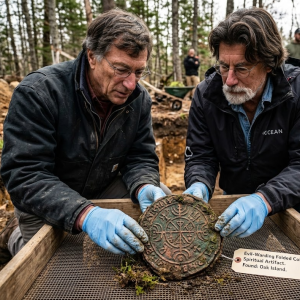
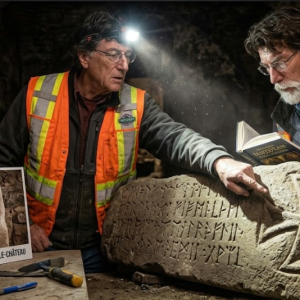
The reason the Mesa keeps pulling the team back is simple: it behaves like a source, not a side note. In the season 7 episode guide, the Mesa repeatedly produces new evidence — ceramic materials, buried metallic objects, and drilling targets that refuse to behave like ordinary geology. Episode 1 begins with new tests revealing clues about ceramic materials extracted from the Mesa, while Episode 2 follows with evidence of buried metallic objects. Episode 3 pushes the team into a large-scale drilling operation.
That sequence gives the Mesa a narrative power that few locations can match. It is no longer just the place where something strange might be hidden. It is the place where the investigation keeps starting over. Every time the team thinks it has moved on, the Mesa pulls the story back into its orbit. That is why it feels less like a landmark and more like a locked door. The team can measure it, scan it, and drill into it, but they still cannot say with confidence what it is protecting.
Seven Seasons Turned the Search Into a Layered Investigation
What makes the Mesa hunt feel so different in Season 7 is the way the investigation now connects multiple hotspots into one sequence. The episode guide shows the story expanding from the Mesa into the Triangle and then into the Bubble: Episode 4 deepens the mystery of the Mesa ceramics while also producing new clues at the Triangle and along the Bubble boundary; Episode 5 brings in a Navajo Shaman and a sacred ritual at Homestead Two; Episode 6 then delivers a bewildering new discovery at the center of the Bubble.

That progression matters because it changes the way viewers should read the entire ranch. The Mesa is no longer the only possible source of the mystery, but it still feels like the anchor point. The Triangle begins to look like a transition zone where clues become distorted. The Bubble feels like the place where the effects become undeniable. And the shamanic ritual introduces a collision between scientific measurement and a very different framework for understanding what the ranch is doing.
Taken together, those episodes make the season feel less like a collection of separate phenomena and more like one continuous system under pressure. A ceramic sample leads to buried metal. Buried metal leads to drilling. Drilling leads toward the Bubble. The Triangle keeps shifting the signal. The ritual changes the atmosphere. The story keeps moving deeper, but it never becomes simpler. That is what gives the Mesa its power: it is the first place where the pattern starts to feel real, and the last place the team can afford to stop looking.
Why the Mesa Still Refuses to Give Up Its Secret
The most important part of the Mesa story is not that the team has found strange things there. It is that they have found enough strange things to justify continuing, but not enough to finish the case. That gap is where the entire mystery lives. One discovery supports the next, but none of them closes the loop. A ceramic fragment hints at buried structure. A radar reading suggests depth. A drill uncovers material, but not an answer. A later test points to the Bubble, but the Mesa remains unresolved.

That is why the Mesa is still the central mystery of Skinwalker Ranch. It has never been just about what the team has found. It has been about what each finding implies. The more the team learns, the more the Mesa begins to look deliberate — not in the sense of a finished explanation, but in the sense that it behaves like a place built to resist easy conclusions. Every season adds evidence, and every piece of evidence makes the next question heavier.
And that may be the real reason the Mesa continues to dominate the investigation after so many years. It is not because the team has failed to look hard enough. It is because the Mesa has become the place where the ranch most clearly reveals its structure while still withholding its meaning. It gives the investigation form, but not closure. It offers pattern, but not confession. It looks less like a hill now and more like a seal over something the team has not yet been allowed to open. That is why the hunt continues. Not because the mystery is fading, but because every new test suggests the same unsettling possibility: the Mesa is still holding the most important part back.