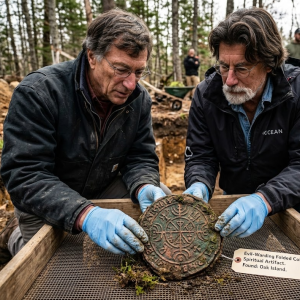
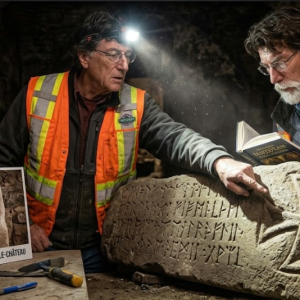
The Oak Island team may have uncovered one of its most intriguing clues yet after a possible ancient mining tool was recovered from deep inside the Money Pit area, raising fresh questions about who worked underground on the island centuries ago.
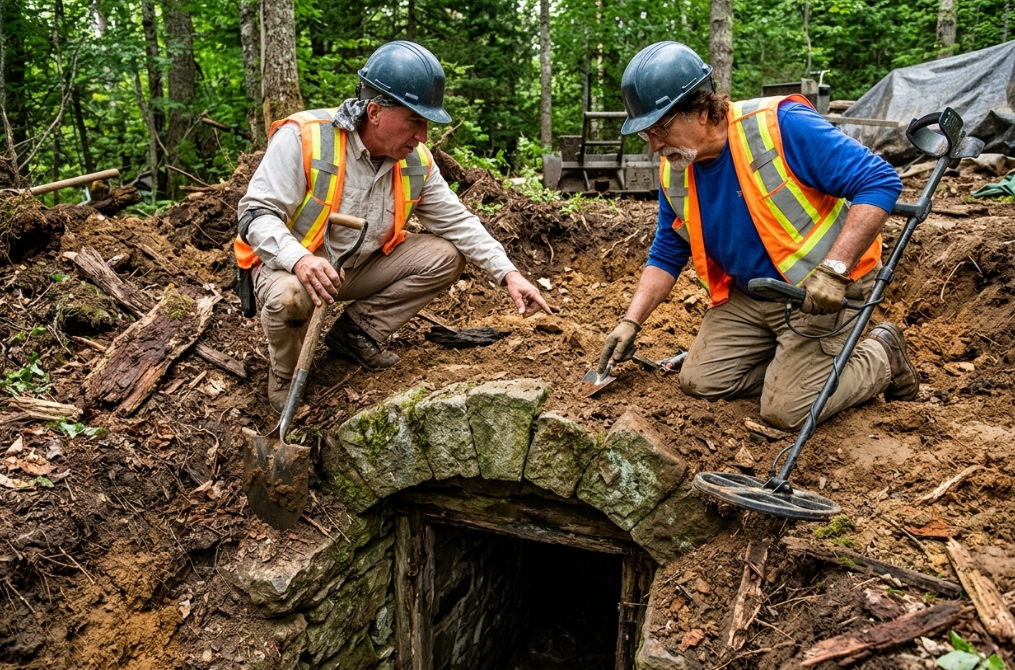
The discovery came during work in the TOT-1 shaft, where Jack Begley, geologist Terry Matheson and other members of the team were monitoring progress as the caisson moved deeper toward what they hope could be a solution channel more than 200 feet below ground. The shaft had already passed 140 feet when large amounts of wood began appearing in the excavated material, suggesting the team was cutting through the side of the historic Chappell Shaft.
That detail mattered. The Chappell Shaft was built in 1931 by Melbourne Chappell, his father William Chappell and treasure hunter Frederick Blair, in an attempt to recover a vault believed to have been discovered decades earlier. Their effort did not bring up the long-sought treasure, but it became part of the island’s complicated search history.
For the current team, reaching and passing that zone offered an encouraging sign. If TOT-1 continued below 200 feet, it could enter ground that earlier searchers never fully explored. That made every bucket of material from the shaft important.
Then came the find that immediately drew attention.
While examining material from a depth of more than 160 feet, Marty Lagina and metal detection expert Gary Drayton discovered a heavy piece of old iron. At first glance, it appeared to be part of a tool. Its shape, weight and handwrought appearance led Drayton to suggest it could be the tip of an old pickax.
The location made the find especially significant. According to the team, the object appeared to come from below the Chappell Shaft, placing it outside the area normally associated with modern searcher activity. Marty noted that the artifact seemed out of place for a relatively modern shaft and said it could tell an important story, even if it was not the single object the team had been looking for.
The discovery also recalled a similar find made in 2019, when part of an old pickax was recovered from another shaft less than five feet away. The new object, however, carried added weight because of its depth and possible connection to earlier underground work.
To better understand the artifact, the team brought it to the Oak Island laboratory, where blacksmithing expert Carmen Legge examined it alongside other specialists, including archeometallurgist Emma Culligan. Legge observed that the iron showed signs of repeated impact, with folded grain patterns suggesting the tool had been used to strike hard material such as stone or rock.
His assessment was striking. Legge said the piece could be part of a heavy old pickax or mining tool, possibly dating from the 1500s or early 1600s. Emma’s analysis of the composition also pointed toward an early date range, with impurities in the iron suggesting a period between the 1500s and 1700s.
If those conclusions prove accurate, the artifact could predate the commonly accepted discovery of the Money Pit in the 1790s by a considerable margin. That possibility is central to the team’s broader theory that significant work may have taken place on Oak Island long before the first documented searchers arrived.
The find also arrived shortly after members of the team visited Malta, where they studied 16th-century underground tunnels and heard suggestions that similar tools may have been used by the Knights of Malta. That connection remains speculative, but for the Oak Island team, the age and depth of the tool make it a clue worth pursuing.
Rick Lagina appeared particularly interested in the implications. For him, the artifact may represent evidence of people working deep underground in the Money Pit area before the known searcher period. That would support one of the central questions of the Oak Island mystery: whether the original underground works were constructed for a purpose far older and more complex than previous searchers understood.
The episode did not end in the Money Pit area. The team also continued searching Smith’s Cove, where Gary Drayton and Alex Lagina used metal detection along the shoreline. After receiving a strong signal beneath heavy rocks and wet ground, they called in help and recovered a large, heavily encrusted iron object.
Back in the lab, Emma Culligan and archaeologist Laird Niven cleaned and examined the object. It was eventually identified as a cast-iron stove door bearing a distinctive starburst design. While less ancient than the possible pickax fragment, the stove door still raised questions because its design appeared similar to a starburst button previously found on Lot 5.
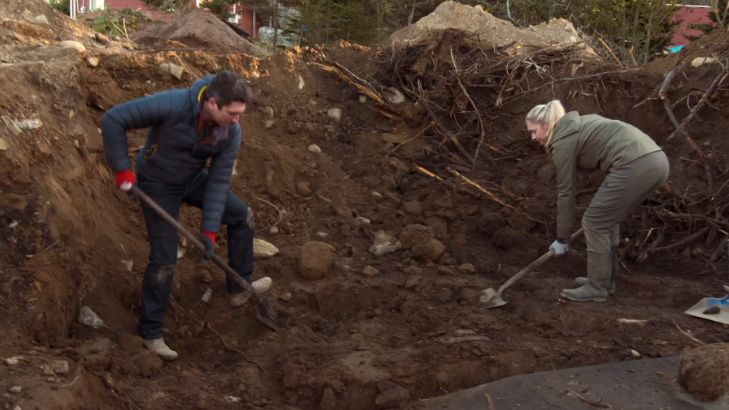
The team also continued excavating in Smith’s Cove in search of evidence linked to the Restall family’s 1961 work and the possible location of a vertical shaft connected to the flood tunnel system. Modern nails and wooden remains suggested they may be close to the right area, giving the team hope that further digging could help locate the tunnel believed to feed seawater into the Money Pit.
Taken together, the discoveries add another layer to Oak Island’s long-running investigation. The possible pickax fragment points toward deep and potentially early underground work. The Smith’s Cove finds may help connect the Money Pit to the island’s flood tunnel theories. And the lab analysis continues to turn small artifacts into larger historical questions.
For the Lagina brothers and their team, the latest finds do not solve the mystery outright. But they may narrow the search. If the iron tool truly dates back centuries and was used underground at depth, it could become one of the strongest indicators yet that someone was working in the Money Pit area long before the modern treasure hunt began.