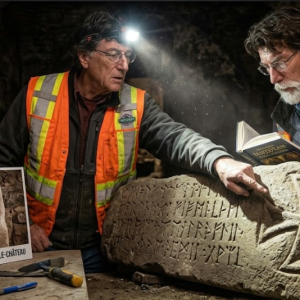
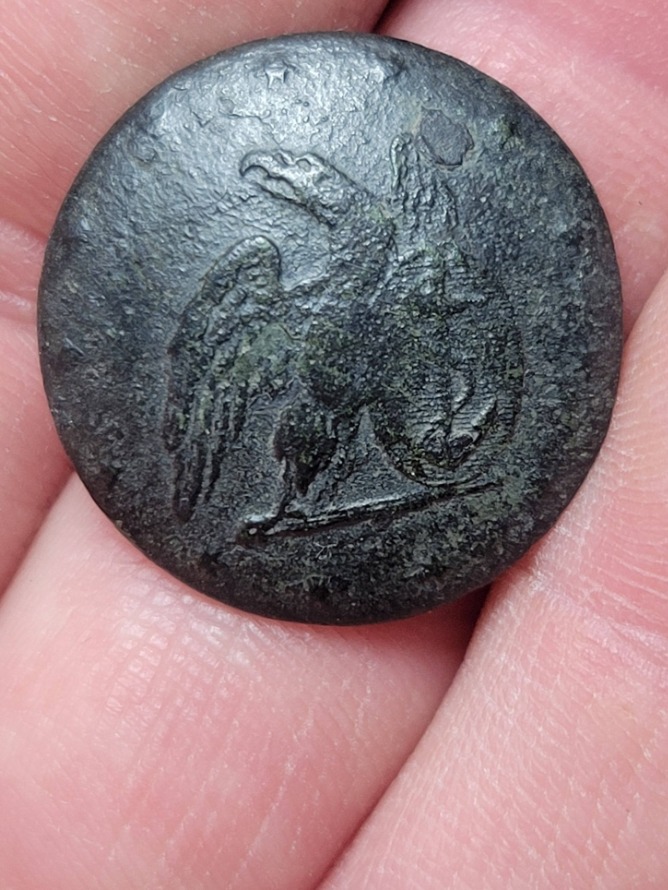
The Military Button That Changed the Conversation. At first glance, the circular metal piece looked like debris — darkened by oxidation, its surface rough and uneven. But when cleaned, faint details emerged: a raised number encircled by stars, and on another piece, what appears to be a double-headed eagle emblem.
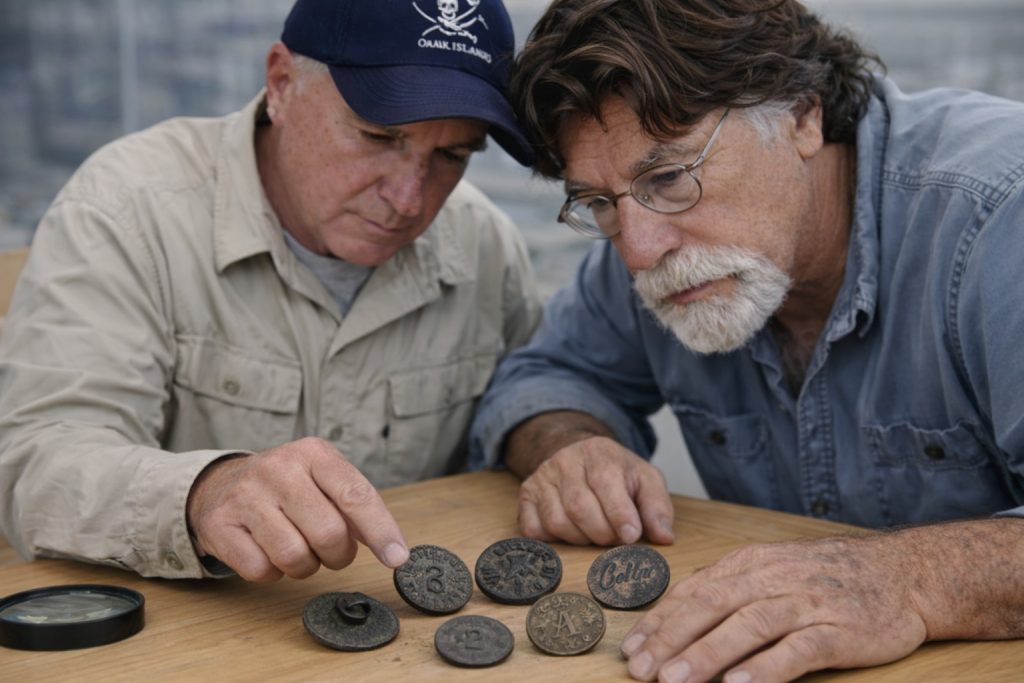
This is not decorative ornamentation. The double-headed eagle has long been associated with imperial powers — most notably the Russian Empire and certain European dynasties. The numbered button style, particularly those surrounded by stars, resembles 18th–19th century military uniform insignia. If authentic and period-confirmed, this suggests something unsettling: Uniformed personnel — not pirates, not random settlers — were present on Oak Island.
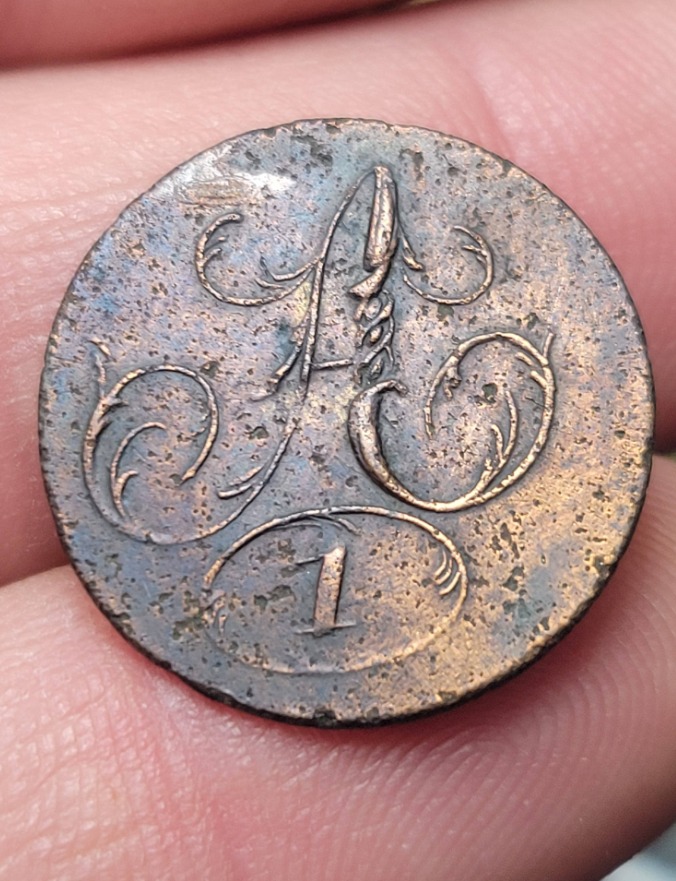
The Monogrammed Coin and the Question of Allegiance Among the finds was a coin engraved with an ornate “A” intertwined with a numeral “1,” along with scrolling flourishes typical of European minting styles. Another heavily worn piece appears stamped with stylized initials — possibly “W” or “M” — though corrosion makes definitive reading difficult.
These are not crude trade tokens.
The craftsmanship suggests official minting, likely European. The typography and decorative motifs resemble 18th-century imperial coinage styles rather than colonial North American currency. If these coins arrived on Oak Island during their circulation period, they indicate international movement — and not the kind associated with small-scale smuggling. Coins travel with soldiers, merchants, state-sponsored missions. They fund operations. And when found in isolation, far from known settlements, they raise a critical question: What operation required imperial currency on this remote island?
A Pattern, Not a Collection What makes these discoveries powerful isn’t their individual value — it’s their convergence. A military-style button.An imperial emblem.European-style coinage.Multiple artifacts, consistent in age range, recovered from similar stratigraphic layers.
This is no longer random scatter. It suggests presence. And presence suggests planning. Oak Island’s long-standing narrative has centered on pirates, secret caches, and buried treasure. But pirates rarely carried standardized imperial insignia. They avoided it. These items feel institutional. They feel sanctioned. If confirmed through metallurgical and historical analysis, the implications are dramatic: Oak Island may not have been a rogue hiding place.It may have been part of a state-backed mission.
The Bigger Implication Small objects tell large stories. Buttons identify uniforms.Coins identify economies.Emblems identify allegiance. And together, they identify power. These finds do not scream treasure.They whisper infrastructure. If imperial forces once stepped onto Oak Island — even briefly — then the mystery shifts from outlaw legend to geopolitical intrigue. And that would mean the island wasn’t hiding stolen wealth. It was protecting something far more strategic. Season 13 may not have uncovered a chest of gold. But it may have uncovered something more dangerous: Proof that Oak Island was never random. It was organized.