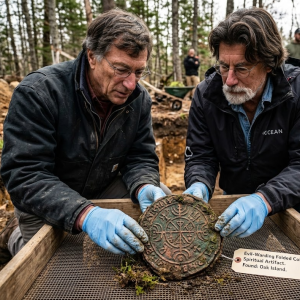
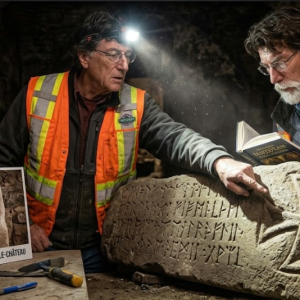
What looked like a handful of scattered finds at Lot 5 may actually be pointing to something much larger beneath the surface of Oak Island. Between the discovery of refined pottery, a coin dated earlier than the traditional Money Pit timeline, and the strange stone features surrounding them, the island may be revealing signs of organized activity that began long before most people ever thought to look.
The Porcelain That Should Not Be There
The pottery fragments found near the stone road and the circular stone feature at Lot 5 may be some of the most important clues the team has uncovered. Gary Drayton and Rick Lagina immediately recognized that these were not ordinary broken pieces. Some appeared to resemble Chinese porcelain, a refined material
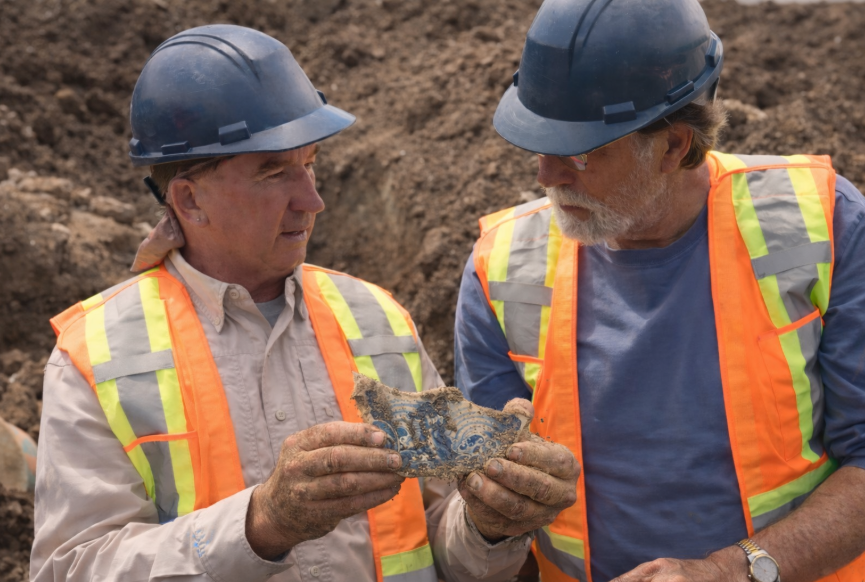
strongly associated with long-distance maritime trade and high-value cargo. That matters because items like this do not usually appear in remote places without a larger story behind them.
If these pieces truly reflect imported porcelain, then Oak Island starts to look less like an isolated treasure legend and more like a site connected to older trade routes and purposeful human movement. The discovery suggests that people with access to ships, goods, and established networks may have been active here. And when pottery of that quality appears right beside one of the island’s strangest engineered features, the stone road no longer feels like a random structure. It begins to feel like part of something organized.
The Coin That Pushes the Timeline Backward
The second major clue comes from the coin found in the circular stone structure at Lot 5. Emma Culligan used a CT scanner to study it, and the result suggested it may be an English penny or half penny from the reign of George III, likely dating to the 1770s. That detail is extremely significant because it places activity at
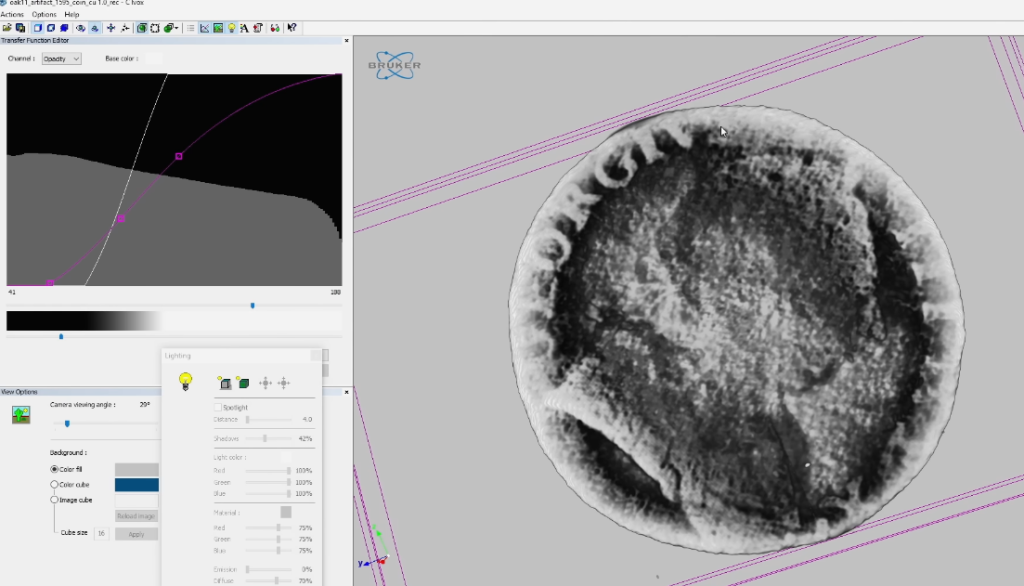
the site before the commonly cited 1795 discovery of the Money Pit.
This does not prove exactly who was there, but it does make one thing much harder to ignore: Oak Island may already have been known and used before the mystery entered popular history. A coin from the 1770s changes the tone of the search because it suggests the island’s story was already underway decades earlier. In that sense, the old pirate theory begins to feel more believable than before — not as proven fact, but as a stronger possibility within a growing pattern of early maritime presence and concealed activity.
Lot 5 May Be Revealing a Bigger Maritime Secret
Taken together, the porcelain, the early coin, and the surrounding stone features create a far more unsettling picture than any one artifact could alone. These are not just isolated objects. They suggest context. The pottery hints at international trade connections. The coin pushes the known timeline backward. The stone

road and nearby structures imply that this part of Oak Island may once have served a deliberate function.
That is why Lot 5 may matter so much. It may not simply be another place where old items were dropped or lost. It may be part of a larger operational zone tied to movement, supply, storage, or concealment. If that is true, then Oak Island was never just a site of buried treasure. It may have been a carefully used maritime waypoint connected to people who arrived with purpose, left traces behind, and then disappeared into history. And if the island really was linked to an older network of seaborne activity, then the mystery beneath Oak Island may be much older and much bigger than the Money Pit alone.